Let's face it - your wrench skills might be top-notch, but if customers can't find you online, you're leaving money on the table faster than a dropped pipe fitting. As a home service business owner in North Carolina, you've probably heard about content marketing, but maybe you've been too busy fixing emergency calls to give it much thought. (Trust me, I get it - that leaky pipe waits for no blog post.)
Here's the thing: while you're out there providing essential services, your potential customers are online searching for answers. And if your competitors are the ones providing those answers... well, let's just say you're not the only one who knows how to fix a leak in your business.
The good news? Content marketing isn't just for tech startups and fashion bloggers. It's a powerful tool for home service businesses, and it works even when you're not actively working. Think of it as hiring a digital employee who works 24/7, never calls in sick, and doesn't need workers' comp insurance. (Though, unfortunately, it can't help you with that emergency call at 2 AM.)
The Content Marketing Institute reports that 6 out of 10 content marketers successfully attract customers, 7 out of 10 educate their audience effectively, and 6 out of 10 build lasting customer loyalty. For home service businesses, these numbers aren't just statistics - they're potential service calls waiting to happen.
In this guide, we'll cover:

Written By: Adam Bennett | March 17, 2025
Adam is the president and founder of Cube Creative Design and specializes in private school marketing. Since starting the business in 2005, he has created individual relationships with clients in Western North Carolina and across the United States. He places great value on the needs, expectations, and goals of the client.

Sarah stared at the tiny black dots marching across her kitchen counter, her morning coffee forgotten. These weren't just any ants – they were the same persistent invaders that had sent her previous pest control company on four failed missions. Frustrated, she pulled out her phone, but instead of calling the same company again, she opened Instagram.
Twenty minutes later, she had found her solution. Not from an ad, but from a local pest control company's profile filled with before-and-after photos, educational Reels about different ant species, and genuine customer reviews. Their latest post? A time-lapse video showing how they solved an identical ant problem using pet-safe treatments. She clicked their bio link and scheduled an appointment before her coffee even got cold.
This isn't just a story – it's happening thousands of times every day. Modern customers like Sarah aren't reaching for the phone book or calling the first Google Ad they see. They're researching, watching, and deciding based on social media presence. They want to see proof, understand your process, and trust your expertise before they ever pick up the phone.
Here's the million-dollar question: When they search, are they finding your pest control company, or just your competitors?
Most pest control companies are missing out on these customers because they're stuck in the past. They're either completely invisible on social media or posting the same tired content that nobody engages with.
I've helped dozens of companies transform their social media from dead zones into lead-generating machines. This guide shares the exact strategies working in 2025 – no fluff, just proven methods that drive real business growth.

Written By: Hannah Kilpatrick | March 17, 2025
Hannah Kilpatrick Cube Creative DesignHannah Kilpatrick graduated from Western Carolina University in 2021 with a Bachelor of Science in Communication with a Minor in Marketing and a Concentration in Public Relations. She has been around social media since its creation. (Meaning, she was in the first grade when Facebook became available to the general public.) As our very own professional Gen-Z, Hannah is a whiz when it comes to social media creation and paid advertising.

Ever feel like finding skilled technicians is harder than finding a leak in a mile-long pipe? You're not alone. Across the home services industry, from plumbing to HVAC, roofing to landscaping, businesses are facing a serious shortage of skilled professionals. And while the demand for home services keeps climbing faster than a roofer on a hot summer day, the supply of qualified technicians isn't keeping pace.
But here's the thing: waiting for perfect candidates to fall into your lap is about as effective as trying to fix a leak with a paper towel. Smart home service business owners are taking matters into their own hands by developing in-house training programs. Think of it as growing your own garden of skilled professionals instead of hoping to find the perfect plants at the store.
In this comprehensive guide, we'll show you exactly how to cultivate your own team of skilled professionals through in-house training programs. Whether you're running a plumbing business in need of certified technicians or a landscaping company looking to train equipment operators, we've got you covered. We'll break down everything from setting up your program to measuring its success, all while keeping it practical for small to medium-sized businesses.

Written By: Chad J. Treadway | March 17, 2025
Chad is our Chief Smarketing Officer. He will help you survey your small business needs, educating you on your options before suggesting any solution. Chad is passionate about rural marketing in the United States and North Carolina. He also has several certifications through HubSpot to better assist you with your internet and inbound marketing.

In today's digital-first world, your private school's social presence isn't just nice to have—it's a necessity. According to recent education marketing studies, schools that regularly track social media performance see enrollment inquiry increases at twice the rate of those that don't measure their efforts. Schools leveraging platforms like Instagram, Facebook, and LinkedIn for branding and engagement experience improved visibility and credibility, with a significant portion of students and parents now incorporating social media into their decision-making process when selecting an educational institution.
As someone who's helped countless educational institutions navigate the ever-changing landscape of social media, I can tell you that metrics aren't just numbers—they're the story of your school's digital presence.
What Metrics Should You Actually Care About?
Engagement: Quality Over Quantity
Forget vanity metrics—real engagement tells you when your content resonates with your audience. Track these:
- Comments per Post: Shows genuine interest and conversation
- Shares: Indicates content worthy of amplification
- Saved Posts: Particularly on Instagram, shows high-value content
- Comment Sentiment: Are responses positive, questioning, or concerned?
At Greenfield Academy, their highest engagement came from student achievement posts and behind-the-scenes classroom moments—content that showcases educational excellence while feeling authentic.
Reach and Impressions: Building Your Digital Footprint
Understanding your audience size helps measure growth and potential impact:
- Follower Growth Rate: How quickly is your audience expanding?
- Impression Trends: Are more people seeing your content over time?
- Reach by Content Type: Which formats (video, images, carousels) reach more people?
- Time of Day Performance: When is your school community most active online?
Optimal Posting Times
Educational content typically sees 4x higher reach when published during parent commuting hours rather than during the school day—a crucial insight for scheduling. The effectiveness of posting times differs across platforms:
- Facebook: Tends to see peak engagement on Monday mornings and Saturday evenings
- Instagram: Often experiences highest engagement on Friday mornings
- LinkedIn: Weekday mornings work best for professional content
- X (Twitter): Typically performs well on Saturday evenings
Generally, posting on weekends or evenings appears more effective for reaching parents of prospective students.
Content Performance Metrics
Engaging content is crucial for educational institutions' social media success. Key considerations include:
- Click-Through Rates: Getting clicks means your content motivates action
- Link Clicks from Profiles: How often users visit your main site
- Story Swipe-Ups: Effectiveness of your Instagram Stories
- Click Maps: Where on your posts people are most likely to click
- Cross-Platform Traffic: Which platform sends the most visitors to your website
- Content Categories:
- Video content, particularly short-form, typically drives higher interaction rates
- Personalized communication and tailored content are essential for engaging prospective students
- Showcasing authentic campus experiences and highlighting unique programs helps build emotional connections
- When academic content underperforms, pair it with student stories rather than just facts
- Conversion Tracking: The ultimate goal—turning social engagement into real-world results
- Inquiry Attribution: Social media's contribution to information requests
- Event Registrations: Open house or virtual event sign-ups from social
- Application Starts: Initial application begins traced back to social
- Campus Visit Scheduling: Tours booked through social channels
Jordan Grayson, Director of Admissions at Greenfield Academy, found that virtual tour links in Instagram Stories drove the most qualified campus visit requests compared to any other social referral source.
Platform-Specific Analytics: Your Focused Strategy
Rather than tracking everything everywhere, focus on each platform's unique strengths for schools:
Instagram: Your Visual Campus Showcase
Instagram excels for showcasing your campus culture and student experiences:
- Story Completion Rate: If below 70%, try shorter story sequences with stronger opening frames
- Content Categories Performance: When academic content underperforms, pair it with student stories rather than just facts
- Parent vs. Student Engagement Split: If students dominate engagement, adjust posting times to reach parent audiences (typically 7-8am and 8-9pm)
Facebook: Your Parent Community Hub
Facebook remains the primary platform for parent communication:
- Group Activity Metrics: If parent group engagement drops, introduce weekly discussion prompts about education topics
- Event Response Analysis: When event RSVPs underperform, try posting event announcements on Sundays between 1-3pm when family planning discussions typically happen
- Ad Performance by Parent Segment: Target highest-performing parent demographics with similar lookalike audiences
LinkedIn: Your Institutional Authority Builder
LinkedIn is where you establish educational credibility:
- Faculty Content Performance: When faculty spotlights outperform other content, create a regular "Expert Educator" series
- Alumni Success Stories: Track which career fields generate most engagement and align with your school's specialized programs
- Prospective Parent Professional Demographics: Use these insights to tailor open house presentations to address career-specific educational concerns
Creating a Reporting Framework That Actually Gets Used
Weekly Snapshots: The Pulse Check
Quick metrics to monitor weekly:
- Top performing post and why
- Any significant follower changes
- Emerging content opportunities
- Competitor activity highlights
Keep this brief—a single page that can be scanned in under two minutes.
Monthly Analysis: The Strategy Guide
Deeper insights for monthly marketing meetings:
- Platform performance comparisons
- Content theme effectiveness
- Community engagement quality
- Upcoming content calendar adjustments
This should directly inform your next month's content plan.
Quarterly Reviews: The Big Picture
Comprehensive analysis for leadership:
- Enrollment funnel attribution
- Platform investment recommendations
- Content strategy pivots
- Competitor positioning analysis
Connect these directly to enrollment goals and broader school marketing objectives.
Success Indicators: Beyond the Numbers
Growth With Purpose
Track growth that matters:
- Follower Quality: Are new followers matching your ideal parent profile?
- Engagement-to-Follower Ratio: Quality of your audience
- Share of Voice: Your visibility compared to competing schools
- Parent-to-Student Engagement Ratio: Ensuring you're reaching decision-makers
Community Building Metrics
Measure the strength of your online school community:
- Parent Tag Rate: How often families tag your school in their content
- User-Generated Content Volume: Families creating content about your school
- Comment Thread Depth: Conversations, not just comments
- Ambassador Activity: Current parents/students promoting your school
From Content Consumers to Campus Visitors
The journey metrics that matter most:
- Content-to-Contact Rate: How often social media leads to direct inquiries
- Digital-to-Physical Journey: Social engagement to campus visit pipeline
- Parent Sentiment Tracking: Positivity trends in comments and messages
- Referral Tracking: Current families referring prospective families through social
Cost-Per-Enrollment Reduction
Educational institutions using data-driven social strategies report cutting their cost-per-enrollment by nearly half compared to traditional marketing approaches alone. Larger schools often see a higher return on investment for their enrollment management efforts. Institutions employing strategic digital marketing have reported significant increases in student inquiries and improved conversion rates.
The most successful private schools don't just collect metrics—they build stories from them. Use your data to:
- Refine your unique value proposition based on what resonates most
- Allocate resources to platforms with the highest enrollment impact
- Create content that authentically showcases your educational excellence
- Build a genuine online community that supports recruitment
Competitive Analysis Framework for School Marketers
Understanding your position in the educational landscape requires strategic comparison:
- Identify Your True Competitors:
- Direct geographic competitors (schools within your enrollment radius)
- Value proposition competitors (schools with similar educational philosophy)
- Aspirational competitors (institutions you aim to emulate)
- Metrics to Benchmark:
- Engagement-to-follower ratio (not just total followers)
- Content frequency and consistency
- Response time to comments and messages
- Visual consistency and brand coherence
- Quarterly Competitive Audit:
- Track content themes that perform well for competitors
- Note their community-building tactics
- Identify gaps in their communication you can fill
- Benchmark your growth rates against theirs
Jordan at Greenfield Academy conducts a "social strengths assessment" each semester, identifying one competitive advantage to maintain and one gap to address in their upcoming content calendar.
Essential Tools for School Social Media Analytics
Don't get overwhelmed by manual tracking. These tools can streamline your metrics management:
- Native Platform Analytics: Facebook Business Suite, Instagram Insights, and LinkedIn Analytics offer robust free options
- VistaSocial, Hootsuite, or Sprout Social: Comprehensive dashboards that combine all platforms for easier comparison
- Google Data Studio: Create custom dashboards that connect social performance to website traffic
- Mention: Monitor when parents, students, or community members discuss your school online
The right tool depends on your budget and specific needs, but having at least one centralized dashboard saves hours of manual data collection each month.
Remember that your metrics should always connect back to your school's mission and values. Numbers without context are just digits—metrics with meaning become your roadmap to enrollment success.
Ready to transform your school's social media strategy with metrics that matter? Let's talk about your specific goals and challenges and develop a customized approach for your institution.
Written By: Hannah Kilpatrick | March 12, 2025
Hannah Kilpatrick Cube Creative DesignHannah Kilpatrick graduated from Western Carolina University in 2021 with a Bachelor of Science in Communication with a Minor in Marketing and a Concentration in Public Relations. She has been around social media since its creation. (Meaning, she was in the first grade when Facebook became available to the general public.) As our very own professional Gen-Z, Hannah is a whiz when it comes to social media creation and paid advertising.
Are you tired of watching potential customers scurry away to your competitors? In the pest control industry, attracting new customers can sometimes feel like trying to catch flies with chopsticks – frustrating and inefficient.
As a pest control business owner, you're likely all too familiar with the challenges: seasonal revenue swings that leave you scrambling during slow months, the pressure to respond instantly to emergency calls, and the constant battle against big national chains with their massive marketing budgets not to mention the rising customer acquisition costs that can eat away at your profits faster than termites through a wooden beam.
Many pest control businesses face these exact challenges. The turning point often comes when they develop a systematic marketing approach rather than relying on sporadic, reactive marketing efforts
In this comprehensive guide, we'll explore proven strategies to help your pest control business stand out from the swarm of competitors. You'll discover how to build a digital presence that attracts qualified leads, leverage social proof to build trust, create content that positions you as the local pest control authority, and implement systems that turn one-time customers into loyal advocates. Let's exterminate your marketing problems once and for all.
Written By: Chad J. Treadway | March 12, 2025
Chad is our Chief Smarketing Officer. He will help you survey your small business needs, educating you on your options before suggesting any solution. Chad is passionate about rural marketing in the United States and North Carolina. He also has several certifications through HubSpot to better assist you with your internet and inbound marketing.
In the pest control industry, where customer relationships can last for years, email remains one of the most powerful tools in your marketing arsenal. With an ROI of $36-42 for every $1 spent, email marketing continues to outperform nearly every other digital channel. But here's the catch—sending generic "spray and pray" emails won't cut it anymore. Today's customers expect personalized, timely, and relevant communications.
Let's face it, nobody wakes up excited to read about rodent infestations while sipping their morning coffee—unless that coffee happens to be sitting next to a mouse trap. That's precisely why strategic email marketing is crucial; it helps you communicate essential information in a way that engages rather than annoys your subscribers.
Written By: Chad J. Treadway | March 12, 2025
Chad is our Chief Smarketing Officer. He will help you survey your small business needs, educating you on your options before suggesting any solution. Chad is passionate about rural marketing in the United States and North Carolina. He also has several certifications through HubSpot to better assist you with your internet and inbound marketing.

It's Tuesday morning, peak season. You're sitting in your office, watching yet another competitor's truck buzz by your window. (Speaking of buzz, that's more action than your phone's seen all week.) Your technicians are giving you that look – the one that says, "So... when's our next job?" Meanwhile, the stack of bills on your desk is starting to look taller than the termite tunnel you treated last month.
If this scenario makes you squirm in your seat, you're not alone. Every pest control business owner has been there, caught in the feast-or-famine cycle that can bug even the most seasoned professionals.
Here's the good news: You don't have to stay trapped in this feast-or-famine cycle. Just like you help customers eliminate pest problems, we're going to help you eliminate your lead generation problems with proven lead generation strategies that work specifically for pest control businesses.
Ready to start attracting leads like mosquitoes to a backyard barbecue? Let's dive in and build a lead generation system that keeps your schedule full and your team busy.
Written By: Chad J. Treadway | March 12, 2025
Chad is our Chief Smarketing Officer. He will help you survey your small business needs, educating you on your options before suggesting any solution. Chad is passionate about rural marketing in the United States and North Carolina. He also has several certifications through HubSpot to better assist you with your internet and inbound marketing.
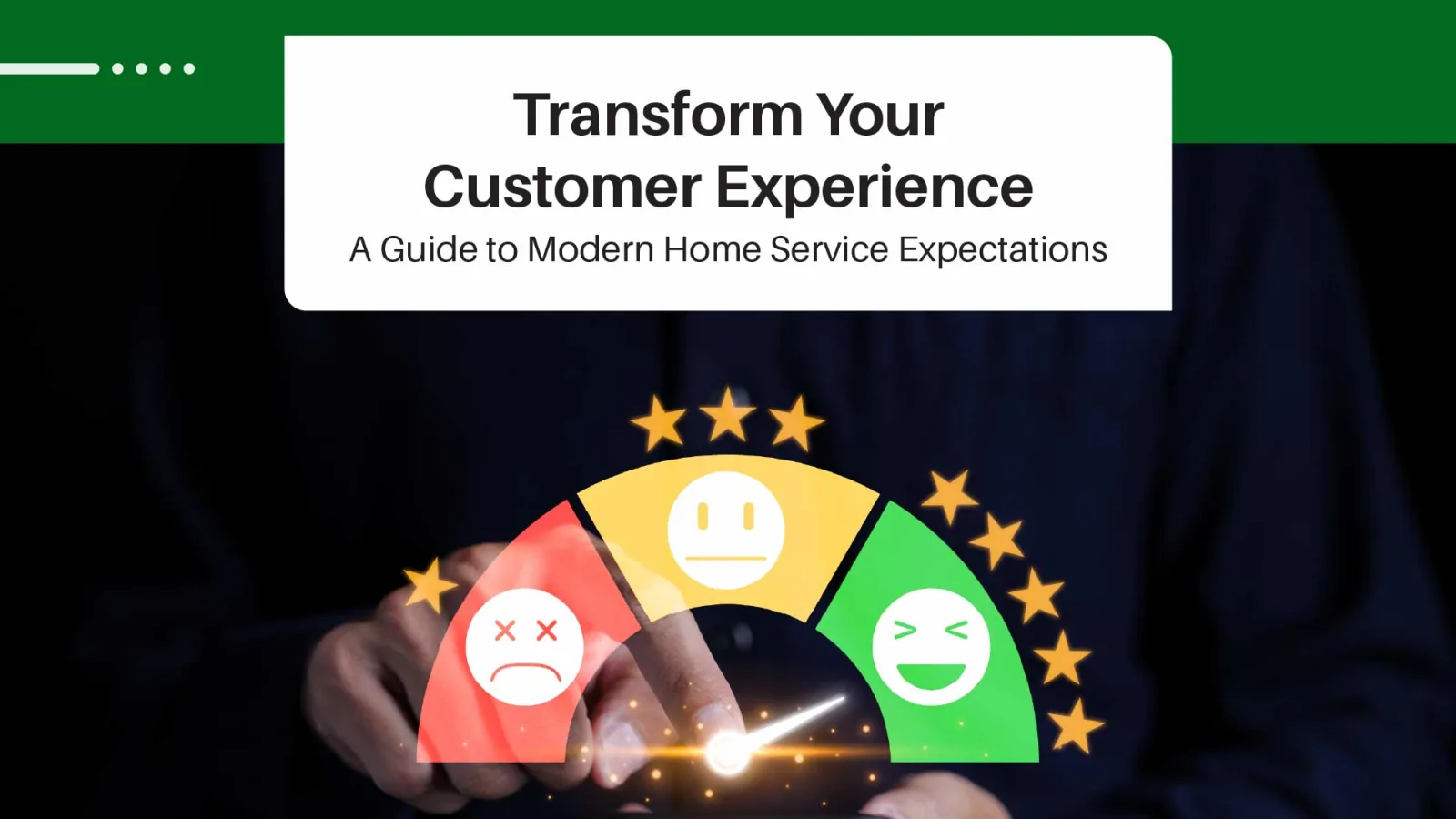
Let's face it: running a home service business isn't getting any easier. Your customers don't just want good service anymore – they want an experience. According to SuperOffice's latest research, delivering that experience is now the top priority for businesses over the next five years. Why? Because more than 8 out of 10 customers are willing to pay more for better service.
The numbers tell a compelling story: the home services market is projected to grow by $6.54 trillion by 2028, with a remarkable 40.34% annual growth rate,according to Technavio. Even more impressive, the online on-demand segment alone is expected to reach $9.03 billion by 2028. That means there's never been more opportunity – or more competition.
Written By: Adam Bennett | March 12, 2025
Adam is the president and founder of Cube Creative Design and specializes in private school marketing. Since starting the business in 2005, he has created individual relationships with clients in Western North Carolina and across the United States. He places great value on the needs, expectations, and goals of the client.

Picture this: A potential customer needs your services. Maybe their pipe just burst (plumbers), their AC died during a heatwave (HVAC), or their roof is doing a brilliant impression of a waterfall (roofers). They Google your business, click your link, and... wait. And wait. And wait some more. Congratulations! They've already hit the back button and called your competitor, who's probably driving to the job while your website is still trying to load that massive header image you thought looked cool.
If this scenario makes you break out in a cold sweat, stick around – because we're about to dive into how your website's speed is directly impacting your bottom line. And unlike those motivational posters in your office, these numbers actually mean something.
Written By: Chad J. Treadway | March 12, 2025
Chad is our Chief Smarketing Officer. He will help you survey your small business needs, educating you on your options before suggesting any solution. Chad is passionate about rural marketing in the United States and North Carolina. He also has several certifications through HubSpot to better assist you with your internet and inbound marketing.

If you've been following tech news lately (or if your phone has been bombarding you with alerts about Google), you've likely heard rumblings about Google's "Chrome divestiture." As a pest control business owner, you might wonder if this is yet another digital apocalypse that threatens to exterminate your hard-earned online presence.
First, take a deep breath. While the words "Google" and "changes" in the same sentence are enough to send shivers down any business owner's spine—rivaled only by the words "termite infestation" in your own customers’ homes—the situation isn't as dire as some headlines suggest.
The digital marketing landscape has always been something of a moving target. Just when you've figured out how to rank for "best pest control near me," something shifts. But here's the good news: understanding these changes gives you a competitive advantage, and with the right approach, your pest control business won't just survive—it might even thrive.
In this article, I'll break down what's actually happening with Google Chrome, how it affects your pest control website, and the practical steps you can take to ensure customers still find you when they're frantically searching "how to get rid of bedbugs at 2 AM" (we know these searches happen, and yes, your business should be there when they do).
Written By: Chad J. Treadway | March 11, 2025
Chad is our Chief Smarketing Officer. He will help you survey your small business needs, educating you on your options before suggesting any solution. Chad is passionate about rural marketing in the United States and North Carolina. He also has several certifications through HubSpot to better assist you with your internet and inbound marketing.

If you've been keeping up with tech news lately, you might have seen some alarming headlines about Google having to "break up" with its Chrome browser. As a home service business owner who's worked hard to establish your online presence, it's natural to worry about what this means. Will your carefully crafted website suddenly disappear from view? Will potential customers no longer be able to find you when their pipes burst or their AC goes kaput?
Take a deep breath. While the term "divestiture" sounds like something that might require a prescription medication to treat, the reality is far less concerning for your business website than those dramatic headlines suggest.
In this comprehensive guide, we'll unpack what Google's Chrome divestiture actually means in plain English, clarify some important distinctions between Google's search engine and its browser, and, most importantly, explain why the core principles that drive your website's visibility remain rock solid. We'll also provide practical, levelheaded strategies to ensure your home service business continues to thrive online, no matter what browser changes may come.
So, before you start frantically calling your web developer in a panic, let's dive in and separate fact from fiction. After all, when it comes to your online presence, it's better to be informed than in-fear-med.
Written By: Chad J. Treadway | March 11, 2025
Chad is our Chief Smarketing Officer. He will help you survey your small business needs, educating you on your options before suggesting any solution. Chad is passionate about rural marketing in the United States and North Carolina. He also has several certifications through HubSpot to better assist you with your internet and inbound marketing.

In the increasingly competitive landscape of private education, digital visibility isn't just nice to have—it's essential for enrollment success. Your prospective families are researching schools online long before they ever set foot on your campus for that meticulously planned open house. So when news breaks about major changes to Google Chrome—the browser used by approximately 65% of internet users worldwide—it's natural for admissions directors and school marketers to feel a twinge of panic.
Let's take a collective deep breath.
The recent announcement of Google's Chrome divestiture has caused ripples across the digital marketing world, leaving many educational institutions wondering what this means for their carefully crafted SEO strategies and online enrollment funnels. Will prospective parents still find your virtual tours? Will your application forms still function properly? Is your admissions team about to watch years of digital marketing work go up in smoke?
Short answer: No.
While changes are certainly coming to the browser landscape, your school's digital marketing foundation remains solid. In fact, understanding these changes might even reveal new opportunities to distinguish your institution from competitors who are too busy panicking to adapt.
This guide will walk you through what Google's Chrome divestiture actually means for your private school's digital presence, why the fundamentals of private school SEO strategies remain unchanged, and the smart adjustments you can make to ensure your enrollment marketing continues to thrive regardless of which browsers parents use to research their children's educational options.
Written By: Adam Bennett | March 11, 2025
Adam is the president and founder of Cube Creative Design and specializes in private school marketing. Since starting the business in 2005, he has created individual relationships with clients in Western North Carolina and across the United States. He places great value on the needs, expectations, and goals of the client.