
Digital marketing has never stood still. Every few years, new platforms emerge, consumer behaviors shift, and technology changes the way brands interact with their audiences. But while strategies and tools evolve, one thing is becoming clearer than ever: design is not just part of the equation—it’s leading the conversation. Creative design studios are driving that shift, playing a bigger role in how brands are seen, understood, and remembered in the digital space.
Traditionally, marketing agencies handled messaging and strategy while design was sometimes treated as a finishing touch. That mindset is changing fast. Today’s most effective digital marketing efforts are built with design at the core from day one. Creative studios are not only crafting how things look but shaping how they function, feel, and perform.

Social media marketing has transformed from a simple way to connect with friends and share photos into a powerful business tool. Today, it’s a major driver of brand awareness, customer engagement, and sales for companies of all sizes. But with so many platforms, trends, and tactics, it can feel overwhelming to figure out where to start and how to see real results. The truth is that social media marketing isn’t just about getting likes or followers. When done strategically, it can directly impact your bottom line—helping your business grow sustainably and measurably.

In 2025, social media is no longer just a place for home service companies to showcase their work. It has become a space where trust, accountability, and community connection define brand success.
As more customers book services online, companies see that old posting strategies no longer match evolving expectations. Short-form videos, localized targeting, and interactive content are reshaping how businesses connect with audiences. Additionally, broader concerns about data privacy, ethical advertising, and the influence of digital platforms on society are also driving change.
As consumers grow more aware, companies that lead with transparency and responsibility will stand out in a crowded marketplace.
This article explores the key reasons behind this shift and what it means for the future of home service marketing.

Listen up, small school warriors. I see you over there, trying to make your limited marketing budget stretch in ways that seem impossible. You're wearing seventeen different hats, personally giving tours to prospective families at 7 AM, and still somehow expected to craft a marketing strategy that brings in enough students to keep the lights on.
But here's the thing – you can actually succeed with what you have.
Research shows that small private schools can achieve impressive marketing outcomes regardless of budget constraints. The key isn't throwing money at the problem; it's leveraging strategic, high-trust, precision-targeted approaches that play to your unique strengths as a smaller institution.
Let's cut through the noise and get right to the strategies that will help you maximize enrollment – regardless of your budget constraints.

Written By: Adam Bennett | September 24, 2025
Adam is the president and founder of Cube Creative Design and specializes in private school marketing. Since starting the business in 2005, he has created individual relationships with clients in Western North Carolina and across the United States. He places great value on the needs, expectations, and goals of the client.
Let's be honest; most homeowners don't think about you until something breaks. Their basement is flooding at 2 AM, their AC dies during a heatwave, or that weird smell in the kitchen finally becomes unbearable. By then, they're frantically searching for anyone who can help them right now.
How do you make sure your home service business is the one they call first? The secret lies not in flashy ads or discount coupons, but in understanding what makes your customers tick.
The human mind is predictable in its unpredictability. While psychologists have spent decades mapping its quirks and tendencies, smart home service business owners can leverage these same insights to connect with customers before emergencies strike.
From plumbing to roofing, HVAC to general contracting, these four psychological principles will give you the edge your business needs in a crowded marketplace. No manipulative tactics or sleazy sales pitches required; just smart marketing that speaks directly to how homeowners actually make decisions.
Written By: Adam Bennett | September 23, 2025
Adam is the president and founder of Cube Creative Design and specializes in private school marketing. Since starting the business in 2005, he has created individual relationships with clients in Western North Carolina and across the United States. He places great value on the needs, expectations, and goals of the client.

Is your pest control website generating the leads you need, or is your conversion rate crawling along like a bed bug in broad daylight? If you're not seeing the traffic flow to service calls you expected, your homepage might be missing some crucial elements.
You've probably invested good money in getting your pest control website up and running. Maybe you've made it look professional, ensured it loads quickly, and even added some pictures of your team and service vehicles. That's a solid foundation—but in today's competitive pest management market, the bare minimum just won't cut it anymore. Stanford's Web Credibility Project found that 75% of users admit to making judgments about a company's credibility based on their website's design, and it takes just 50 milliseconds for visitors to form their first impression.
Research from Adobe shows that nearly 38% of people will stop engaging with a website if the content or layout is unattractive. (Source: HubSpot) Think of these elements as the essential tools in your pest management toolkit—without them, your online performance will never reach its full potential. Pages that take longer than three seconds to load experience a 53% abandonment rate on mobile devices, and each one-second delay in page response can result in a 7% reduction in conversions—devastating for a pest control business during peak season.

Written By: Chad J. Treadway | September 22, 2025
Chad is our Chief Smarketing Officer. He will help you survey your small business needs, educating you on your options before suggesting any solution. Chad is passionate about rural marketing in the United States and North Carolina. He also has several certifications through HubSpot to better assist you with your internet and inbound marketing.
Your enrollment marketing campaigns tell lovely stories about student success and strong academics. Meanwhile, there's an elephant standing awkwardly in the corner of your admissions office, and nobody's talking about it. What happens when things go wrong, and go wrong in a big, public way?
Let's face facts. The National Center for Education Statistics reported, "Sixty-seven percent of schools reported having at least one violent incident" during a recent school year. Meanwhile, "10% of K–12 students will experience sexual misconduct by a school employee by the time they graduate from high school." (Source: U.S. Department of Justice)
These aren't fun numbers to read over your morning coffee. But while most marketing firms are busy selling you plans to lift applications by 15%, exactly zero of them are getting you ready for the crisis that could undo years of hard work on your good name overnight.
Consider this your wake-up call. The crisis playbook nobody talks about isn't a nice extra. It's the insurance policy your school badly needs but probably doesn't have.
Written By: Adam Bennett | September 22, 2025
Adam is the president and founder of Cube Creative Design and specializes in private school marketing. Since starting the business in 2005, he has created individual relationships with clients in Western North Carolina and across the United States. He places great value on the needs, expectations, and goals of the client.
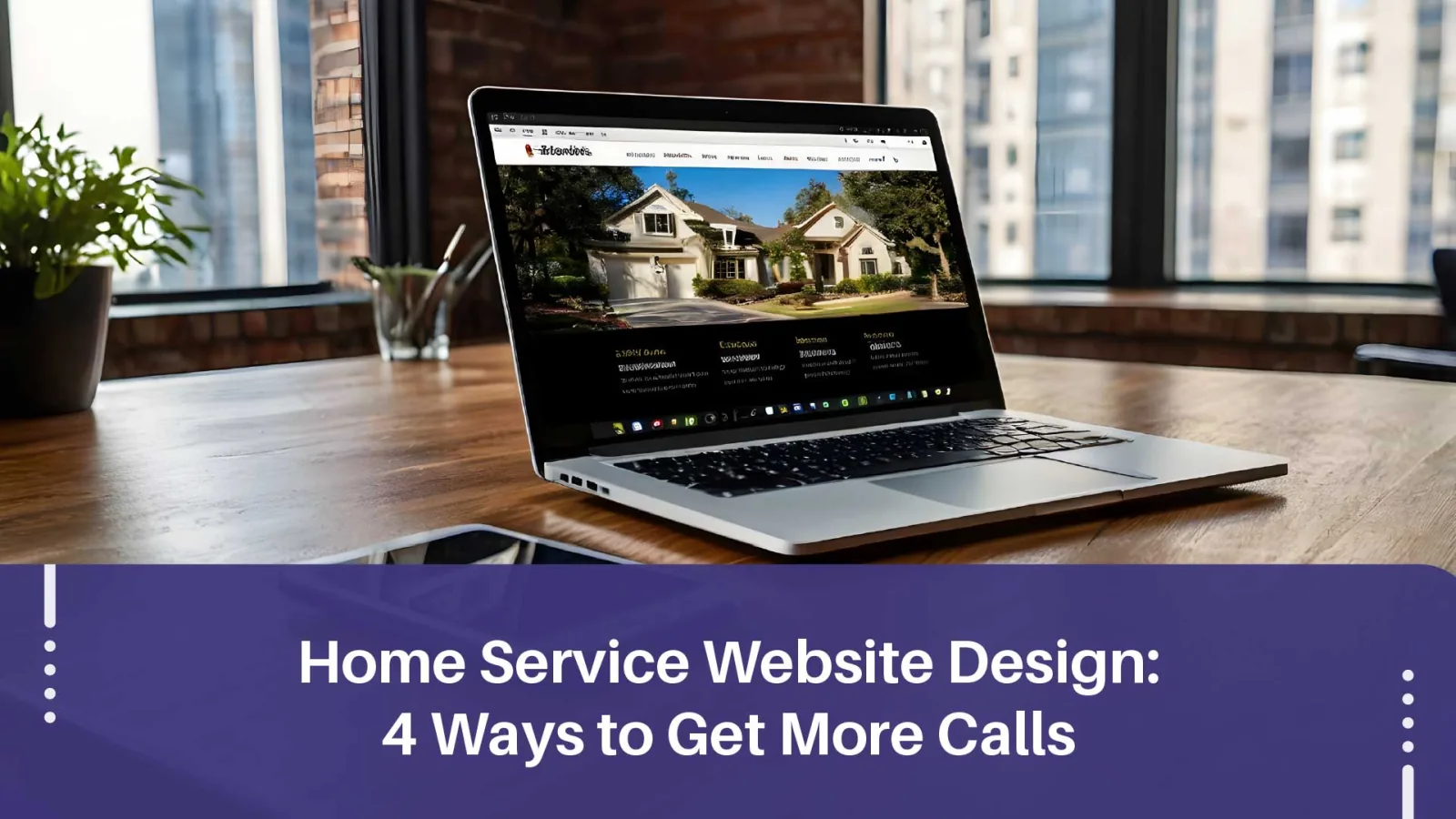
When it comes to home service businesses, your website isn't just a digital brochure. It's a phone call-generating machine.
But let's be honest: while everyone's obsessing over social media strategies and keyword rankings, many home service business owners are overlooking their most powerful conversion tool: their website.
I'm not suggesting you should neglect your local SEO or forget about Google's latest algorithm update. However, your website remains your most reliable lead-generation asset when designed correctly, and you can't afford to ignore it.
Here, we'll talk about straightforward website design tactics specifically for home service businesses that you can implement to boost four key metrics that actually matter for generating phone calls.
Written By: Adam Bennett | September 22, 2025
Adam is the president and founder of Cube Creative Design and specializes in private school marketing. Since starting the business in 2005, he has created individual relationships with clients in Western North Carolina and across the United States. He places great value on the needs, expectations, and goals of the client.
Picture this: You've just wrapped up a stellar week in your pest control business. You've closed three major termite treatment contracts, your technicians completed every job ahead of schedule, and you've even implemented that new routing software everyone's been raving about. Life is good. Then you check your phone and see it—a scathing one-star review complete with ALL CAPS and enough exclamation points to punctuate a manifesto.
Suddenly, your perfect week feels like it's circling the drain.
If this scenario sends a shiver down your spine, you're not alone. For pest control businesses, online reviews are no longer just digital versions of traditional word-of-mouth—they've fundamentally rewired how consumers select professionals for everything from emergency bed bug treatments to preventative quarterly services.
As Scott Cook, co-founder of Intuit, famously said, "Your brand is no longer what you tell the consumer it is—it is what consumers tell each other it is." This perfectly captures this new reality where your online reputation has become your most valuable business asset.
With the Spiegel Research Center finding that 77% of local consumers report that they 'always' or 'regularly' read online reviews when researching a local business" and "93% of all consumers stating that reviews directly impact their purchase decisions, and Harvard Business School research showing that a one-star increase in ratings leads to a 5-9% revenue increase, the stakes have never been higher for pest control operators of all sizes.
But don't worry—this guide will transform review management from a source of anxiety into a powerful growth strategy for your pest control business. Get ready for a brutal truth: there are no shortcuts to review dominance. But with the right approach, you can build an authentic reputation that consistently drives new customers to your door while your competitors wonder what your secret is.
Written By: Adam Bennett | September 19, 2025
Adam is the president and founder of Cube Creative Design and specializes in private school marketing. Since starting the business in 2005, he has created individual relationships with clients in Western North Carolina and across the United States. He places great value on the needs, expectations, and goals of the client.
"My phone should be ringing more." As a home service provider, you've probably thought this while watching competitors with half your experience book jobs you should be getting. Why? Because 88% of consumers who perform a local search on their smartphone visit or call a business within 24 hours.
When a homeowner's basement is flooding at midnight or their AC dies during the summer's worst heatwave, they're not methodically researching who has the most experience—they're calling the first trustworthy service provider they can find online. If that's not you, you're losing thousands in potential revenue every month.
The good news? By fixing just five critical mistakes in your online business listings, home service providers like you typically see a 30-40% increase in qualified leads and a 24% improvement in conversion rates within just 60 days—all without spending an extra dollar on marketing.
Let's dive into these five business listing mistakes that are silently costing you money—and exactly how to fix them today.
Written By: Adam Bennett | September 19, 2025
Adam is the president and founder of Cube Creative Design and specializes in private school marketing. Since starting the business in 2005, he has created individual relationships with clients in Western North Carolina and across the United States. He places great value on the needs, expectations, and goals of the client.
Let's be honest. Running a small private school feels like being the ringmaster of a circus where you're also expected to be the lion tamer, trapeze artist, and ticket seller. And you do it all on a money tightrope that seems to get thinner every year.
When big schools roll out glossy partner programs with Fortune 500 companies, named buildings, and six-figure sponsor deals, it's tempting to file the whole "partnership strategy" idea under "nice for them, impossible for us."
But here's the truth. Small private schools can build strong partnerships, and they're often better placed to do it. You can build real, quick, mission-first deals that deliver serious value without a serious budget. And no, that's not just pep-talk fluff to make you feel better about your tiny marketing budget.
Written By: Adam Bennett | September 19, 2025
Adam is the president and founder of Cube Creative Design and specializes in private school marketing. Since starting the business in 2005, he has created individual relationships with clients in Western North Carolina and across the United States. He places great value on the needs, expectations, and goals of the client.

Ever stood in front of your service van wondering if that shade of blue really says "trusted plumber" or just "another guy with a wrench"? You're not alone. In the crowded world of home services, where every HVAC company, landscaper, and electrician is competing for attention, your potential customers are making snap judgments before you even knock on their door.
Here's the reality that most home service professionals miss: when a homeowner is scrolling through local service options or watching your truck drive by, they've formed 62-90% of their impression about your business based on colors alone—all within the first 90 seconds of seeing your brand, according to research from Management Decision. That split-second color impression could be the difference between getting the call or being scrolled past.
"But it's just color," you might think. "My quality work should speak for itself." The hard truth? In today's visually-driven marketplace, your exceptional service won't matter if your branding doesn't get you through the door first. While your competitors stick with industry-standard blues or throw together whatever colors their nephew thought looked "professional" in a logo maker, you're missing a powerful psychological tool that could be driving real business growth.
This isn't about following design fads or personal preferences—it's about leveraging the science of how color affects the human brain and influences purchasing decisions. Whether you're struggling to stand out in a sea of sameness, wondering why your website gets visitors but not conversions, or simply trying to build more instant trust with potential customers, strategic color psychology provides the competitive edge you've been looking for.
In this comprehensive guide, we'll unpack exactly how successful home service businesses are using evidence-based color strategies to:
- Build immediate trust and credibility in an industry where confidence is everything
- Drive measurable increases in website conversions and call volumes
- Create memorable brand differentiation that helps you charge premium rates
- Design cohesive experiences across every customer touchpoint—from trucks to technician uniforms
Forget vague design advice—we're diving into specific, actionable color strategies tailored for plumbers, HVAC technicians, electricians, landscapers, cleaning services, and every other home service professional ready to transform how customers perceive their business from the very first glance.
Written By: Chad J. Treadway | September 17, 2025
Chad is our Chief Smarketing Officer. He will help you survey your small business needs, educating you on your options before suggesting any solution. Chad is passionate about rural marketing in the United States and North Carolina. He also has several certifications through HubSpot to better assist you with your internet and inbound marketing.