Let's be brutally honest: if you're a home service business owner throwing money at Facebook ads and posting random before-and-after photos hoping something sticks, you're probably bleeding cash right now. And you're not alone. A staggering 75% of performance marketers are watching their social media ROI circle the drain in 2025, despite spending more than ever before, according to a comprehensive study by Taboola and Qualtrics. That's not because social media is dead—it's because the playbook everyone's been using is completely outdated.
Picture this: It's 7 AM, and you're already dealing with a burst pipe emergency while your competitor's Instagram Reel about "5 Signs Your HVAC System Needs Attention" is going viral. Meanwhile, your last Facebook post got three likes (one from your mom), and you're wondering if you should just give up on social media entirely. Trust me, I've been there with my home service and pest control clients. The frustration is real, and the old advice isn't working anymore.
Here's what's actually happening in 2025: We've hit peak social media saturation. With 65.7% of the global population now on social platforms and users bouncing between an average of 6.83 different platforms monthly, everyone is screaming for attention in an increasingly crowded room. (Sources: Global Digital Insights and Backlinko) The algorithms have evolved, consumer behavior has shifted, and the tactics that worked in 2022 are now costing you leads instead of generating them.
The numbers tell the story: industry forecasts predict that global social media ad spend will hit $276.7 billion in 2025, but performance is declining. WordStream LocaliQ's 2025 Facebook Ads Benchmarks revealed that Facebook's average cost per lead surged 21% year-over-year to $27.66, while conversion rates dropped from 8.67% to 7.72%. Meanwhile, Hootsuite's Social Media Consumer 2024 Survey found that 62% of consumers are less likely to engage with or trust content they find on social media if they knew it was generated using AI, yet brands keep pumping out generic, automated posts that feel fake.
But here's the thing—while 93% of marketers are doubling down on more of the same failed strategies, the smart ones are pivoting to what actually works now. They're leveraging the $32.55 billion creator economy, understanding platform-specific ROI (LinkedIn's 113% ROAS for B2B, TikTok's 2.4x for younger homeowners), and positioning themselves for the massive search engine disruption coming in 2026. (Source: Influencer Marketing, Dreamdata, and Gupta Media)
I've spent years helping pest control companies turn their social media from a money pit into a lead-generation machine, and the same principles apply whether you're dealing with roaches or leaky roofs. The businesses thriving right now aren't just posting more—they're posting smarter. They understand that in 2025, authenticity beats automation, micro-influencers crush mega-budgets, and platform-specific strategies matter more than ever.
This isn't another generic "post consistently and use hashtags" guide. This is a reality check on what's actually driving calls, bookings, and revenue for home service businesses in 2025's brutally competitive social landscape. We're going to tear apart the four pillars that separate the businesses making bank from social media from those watching their ad spend evaporate.
Ready to stop wasting money and start generating actual leads? Let's fix your social media strategy before your competitors figure this out.

Written By: Hannah Kilpatrick | October 23, 2025
Hannah Kilpatrick Cube Creative DesignHannah Kilpatrick graduated from Western Carolina University in 2021 with a Bachelor of Science in Communication with a Minor in Marketing and a Concentration in Public Relations. She has been around social media since its creation. (Meaning, she was in the first grade when Facebook became available to the general public.) As our very own professional Gen-Z, Hannah is a whiz when it comes to social media creation and paid advertising.
Ever stood in front of your pest control van wondering if that shade of blue really says "trusted exterminator," or just "another bug guy with a spray tank"? You're not alone. Every exterminator, termite specialist, and rodent removal expert in your town is chasing the same attention. And your next customer is making snap judgments before you ever set foot on the property.
Here's the part most pest control pros miss. A homeowner scrolls through a list of local exterminators, or your truck rolls past their neighbor's house. Either way, they've already formed 62-90% of their view of your business from color alone, and they did it within the first 90 seconds, according to research from Management Decision. That split-second read decides who gets the emergency call and who gets passed over for a rival.
"But it's just color," you might think. "My ability to eliminate pests should speak for itself." The hard truth? Your expertise in the field won't matter if your branding never gets you through the door. Your competitors stick with the same stock blues, or they run whatever colors a marketing friend once called "professional." That leaves a powerful tool on the table, and it's one that helps a pest control company win more work.
This isn't about design fads or personal taste. It's about the science of how color affects the human brain and shapes what people buy. Maybe you blend in with every other truck in your market. Maybe your website gets visitors but not service calls. Maybe you simply want faster trust from a homeowner stuck with a bad pest problem. Color psychology helps with all three.
In this guide, we'll walk through how the best pest control companies use proven color strategies to:
- Build immediate trust and credibility in an industry where confidence and cleanliness perceptions are everything
- Drive measurable increases in website conversions and emergency service call volumes
- Create memorable brand differentiation that helps you charge premium rates for pest management services
- Design cohesive experiences across every customer touchpoint, from service trucks to technician uniforms
Forget vague design advice. We're getting into real color moves for exterminators, termite specialists, rodent control experts, bed bug crews, and every other pest control pro who wants to change how customers see them at first glance. When it comes to pest problems, first impressions really do bug customers the most.

Written By: Chad J. Treadway | October 22, 2025
Chad is our Chief Smarketing Officer. He will help you survey your small business needs, educating you on your options before suggesting any solution. Chad is passionate about rural marketing in the United States and North Carolina. He also has several certifications through HubSpot to better assist you with your internet and inbound marketing.

Let's face it—we've all received those painfully generic fundraising emails that make us feel about as special as a pre-printed address label. You know the ones: "Dear Valued Supporter, your generous contribution of [AMOUNT] has been received." Delete.
If that sounds like your school's donor communication approach, I have news for you: you're leaving serious money on the table.
Here's the cold, hard truth that should make every development director lose sleep: Recent data from Dataro's 2024 Donor Retention Analysis shows that North American nonprofits only retained 46% of donors in 2023, down from approximately 50% in previous years. Kindsight reports that around 23% of donors churn just six months after their first donation, which means almost 70% of donors give only once to an organization.
That's not just a leaky bucket—it's a bucket with no bottom.
But here's the plot twist that changes everything: The 2023 CASE/NAIS data reveals that less than 2.3% of donors are responsible for a staggering 74% of all funds received by independent schools. Read that again. Less than three people out of every hundred donors are funding nearly three-quarters of your school's philanthropic support.
This isn't just a statistic—it's a strategic revelation. It means the difference between a one-time transaction and a lifelong supporter often comes down to what happens in the 48 hours after that first gift. It means a strategic communication plan could transform your annual fund from a desperate end-of-year scramble into a well-oiled machine that delivers predictable results. And it means that whether you're running a prestigious prep school with a multi-million dollar endowment or a small faith-based academy where every dollar counts, the architecture of your donor communication strategy will determine your fundraising ceiling.
The good news? You don't need a massive budget or a team of ten to build a system that works—you just need a smart approach that recognizes the profound inequality in philanthropic giving and builds systems accordingly.

Written By: Adam Bennett | October 22, 2025
Adam is the president and founder of Cube Creative Design and specializes in private school marketing. Since starting the business in 2005, he has created individual relationships with clients in Western North Carolina and across the United States. He places great value on the needs, expectations, and goals of the client.
Let's be honest. You didn't start a pest control business because you love staring at spreadsheets. You got into this industry because you like helping people take back their homes and businesses from unwanted invaders. Maybe you're eliminating carpenter ants. Maybe you're evicting a family of mice. Maybe you're showing termites the door. Either way, you're in the business of solving problems that really bug people.
Here's the uncomfortable truth that might make your skin crawl. The difference between a business that thrives and one that merely survives often comes down to which numbers you're tracking. And no, I'm not talking about counting the cockroaches you've eliminated. Though that would liven up dinner talk.
Your financial statements? They're just the tip of the iceberg. Or the tip of the ant hill, if you prefer. Those monthly profit and loss reports tell you whether you made money, but they won't tell you why one tech's customer satisfaction scores are always higher. They won't explain why your treatment effectiveness changes with the season. And they'll never warn you that you're spending too much to acquire customers who cancel after one treatment, because they didn't see fast results.
The most successful pest control businesses have learned that a handful of key performance indicators (KPIs) work like early warning systems. Think about how termites leave small telltale signs long before the damage shows. These metrics warn you early, guide smarter decisions, and build steady growth. They aren't vanity numbers that just feel good. They're the numbers that change your bottom line and keep you ahead of the competition.
Written By: Chad J. Treadway | October 21, 2025
Chad is our Chief Smarketing Officer. He will help you survey your small business needs, educating you on your options before suggesting any solution. Chad is passionate about rural marketing in the United States and North Carolina. He also has several certifications through HubSpot to better assist you with your internet and inbound marketing.
Let's get something straight: if you're still running PPC campaigns like it's 2019, you're not just behind the curve—you're about to drive straight off it. The digital advertising landscape has fundamentally shifted, and the home service businesses that refuse to acknowledge this reality are watching their competitors eat their lunch while they wonder why their "tried and true" marketing strategies suddenly cost twice as much and deliver half the results.
The numbers don't lie, and they're not particularly forgiving. WordStream reported that Google Search costs per click increased by 13% from 2024 to 2025, while analysis of benchmark data shows Google Search CPCs are up 45% year-over-year. Meanwhile, the smart money isn't panicking—it's adapting. They understand that higher costs don't mean lower profitability; they mean you need to be smarter about where every dollar goes.
Here are eight critical trends that will determine whether your home service business thrives or becomes another casualty of the "we'll figure out digital marketing later" mindset.
Written By: Adam Bennett | October 21, 2025
Adam is the president and founder of Cube Creative Design and specializes in private school marketing. Since starting the business in 2005, he has created individual relationships with clients in Western North Carolina and across the United States. He places great value on the needs, expectations, and goals of the client.
Did you know that according to the National University, "77% of companies are either using or exploring the use of AI" in their businesses, and this trend is rapidly extending to pest control companies? According to McKinsey research, organizations using AI are seeing measurable improvements in productivity, with pest control businesses particularly positioned to benefit from automated scheduling, customer communication, and route optimization.
As someone who's worked with dozens of pest control businesses on their digital strategies, I've seen firsthand how the right AI tools can completely transform operations. From predictive pest outbreak modeling to automated customer education, these technologies are helping exterminators stay one step ahead of the bugs – and that's no small feat!
The pest control industry, valued at over $25.8 billion in North America alone and growing at 5.2% annually, faces unique operational challenges that AI is particularly well-suited to address. Unlike general home services, pest control businesses must manage emergency response requirements, seasonal revenue fluctuations, regulatory compliance complexity (EPA, state licensing, treatment documentation), species identification expertise requirements, and weather-dependent treatment scheduling.
Verified Market Research notes that businesses embracing AI in pest control operations will have a significant competitive advantage over those still relying on manual processes and reactive approaches to pest management.
But here's the thing: many pest control business owners aren't sure where to start with AI or how it applies to their daily operations. If you're wondering how AI fits into a world of sprayers, baits, and crawl spaces, you're not alone. Let's break down how this technology is changing the game for pest control professionals and why it matters for your business in 2025.
Written By: Chad J. Treadway | October 20, 2025
Chad is our Chief Smarketing Officer. He will help you survey your small business needs, educating you on your options before suggesting any solution. Chad is passionate about rural marketing in the United States and North Carolina. He also has several certifications through HubSpot to better assist you with your internet and inbound marketing.
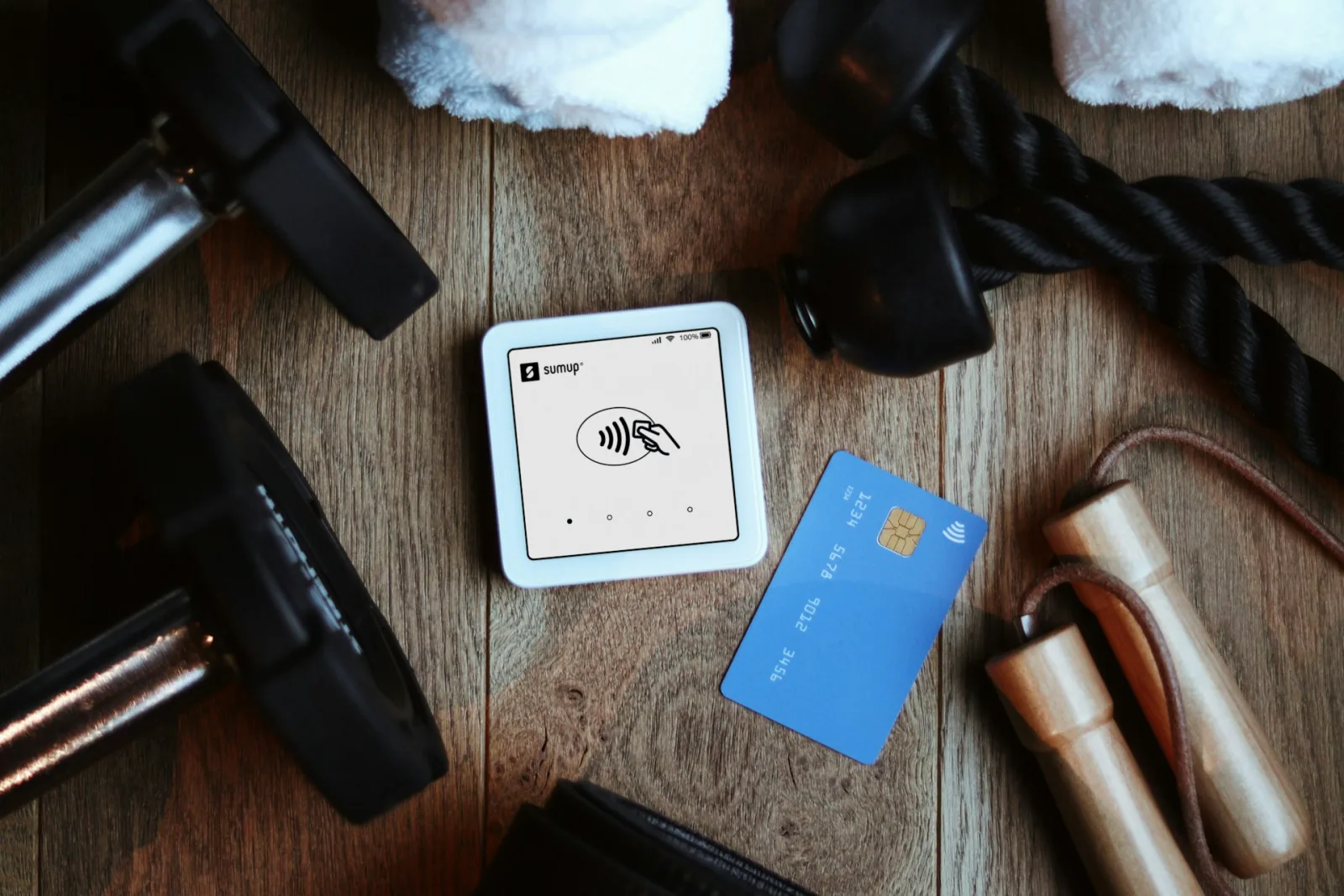
The ninth annual McKinsey Digital Payments Survey reveals a significant rise in the use of digital payments across the US and Europe. Approximately 90% of consumers in both areas have used some form of digital payment over the past year, highlighting the need for more home service businesses to embrace digital payment solutions. (Source: McKinsey)
If you currently don’t offer your customers the option of digital payments but think it might be worth exploring, you’re in the right place. In this post, we look at a few ways embracing digital payment technology could help improve your business and provide tips on getting started.
If you’ve ever searched for a “coffee shop near me” or a “plumber in [your city],” you’ve already experienced the power of local SEO. Google shows a local pack of businesses, complete with maps, reviews, and essential business information like phone numbers and addresses. For small businesses, this is prime real estate.
But here’s the catch: the ranking factors that determine which businesses appear in those coveted spots are constantly evolving. That’s why this article is your complete guide - a definitive guide - to understanding how local search engine optimization works today, and how small business owners can improve your local visibility with the help of professional SEO services
We’ll cover the benefits, explore how search engine optimization ties into local results, highlight key ranking factors, and share practical strategies you can use right now.
Let's talk about the elephant in the room: your call-to-action buttons probably suck.
While you've been wrestling with Google algorithms and chasing five-star reviews, there's a good chance your CTAs are doing the digital equivalent of mumbling "call us maybe" into the void. Effective small business marketing strategies require more than just showing up online.
Small Business Trends found that most small business websites completely lack effective calls to action. That means 7 out of 10 of your competitors are essentially inviting customers over for dinner, then forgetting to mention when or where to show up.
Here's the brutal reality: you can have the most beautiful website, the most compelling content, and the highest search rankings, but if your CTA game is weak, you're watching qualified leads slip away after you've done all the heavy marketing lifting. It's like spending thousands on a gorgeous storefront, then hanging a hand-scrawled "We're Open (Maybe)" sign on the door.
As we gear up for 2025-2026, the businesses that master the psychology and mechanics of conversion will separate themselves from the "learn more" amateurs. The following 10 statistics aren't just numbers – they're your roadmap to turning website visitors into paying customers, backed by data that cuts through the marketing mythology.
Written By: Adam Bennett | October 16, 2025
Adam is the president and founder of Cube Creative Design and specializes in private school marketing. Since starting the business in 2005, he has created individual relationships with clients in Western North Carolina and across the United States. He places great value on the needs, expectations, and goals of the client.
Picture this: You're running your pest control business the same way your grandfather did—by gut instinct, handwritten schedules, and hoping that next month's numbers will somehow be better than this month's. Your trucks are rolling, technicians are treating, and customers are paying. Life is good, right?
Then reality hits harder than a surprised homeowner spotting a palmetto bug.
You're working 70-hour weeks, but profits are flatter than a cockroach after a boot stomp. Your best technician just walked out the door for a competitor who somehow knew exactly what his productivity was worth—while you're still guessing. Meanwhile, you're spending $4,000 a month on marketing, but you couldn't identify which dollar actually brought in a customer if your business survival depended on it. (Spoiler alert: it does.)
If this scenario feels uncomfortably familiar, you're not alone in this predicament. The pest control industry is experiencing explosive growth, with market projections reaching $32.8 billion to $44.3 billion by 2028-2034, according to multiple market research firms. But here's the catch that's trapping many operators:
Written By: Chad J. Treadway | October 16, 2025
Chad is our Chief Smarketing Officer. He will help you survey your small business needs, educating you on your options before suggesting any solution. Chad is passionate about rural marketing in the United States and North Carolina. He also has several certifications through HubSpot to better assist you with your internet and inbound marketing.
Picture this: You're driving through a neighborhood 30 minutes from your main service area, servicing that one isolated customer you picked up months ago. As you navigate the streets, you notice something interesting. No other pest control trucks. Plenty of well-maintained homes. New construction. And when you knock on a few doors to introduce yourself, homeowners light up with interest.
That's what opportunity looks like when it's staring you right in the face.
If you've built a successful pest control business in your current market, you've probably encountered these moments. Maybe you're running two trucks efficiently, handling 200 regular accounts, and wondering about that gap in your route where you drive 20 minutes between stops. Perhaps you've got five technicians working at capacity and customers calling from towns you don't officially serve yet.
The question is: Are you ready to turn those observations into your next phase of growth?
Written By: Chad J. Treadway | October 15, 2025
Chad is our Chief Smarketing Officer. He will help you survey your small business needs, educating you on your options before suggesting any solution. Chad is passionate about rural marketing in the United States and North Carolina. He also has several certifications through HubSpot to better assist you with your internet and inbound marketing.
Let's be honest — if your school's fundraising strategy still revolves around check-writing parents and annual galas with rubber chicken dinners, you're leaving serious money on the table. The philanthropic landscape for K-12 private schools has experienced a seismic shift, and those clinging to purely traditional methods are watching their development results plateau while their digitally savvy competitors thrive.
Here's the uncomfortable truth: your donors are already living digital-first lives. They're ordering groceries on their phones, managing their investments through apps, and streaming their entertainment. Why would you expect them to suddenly revert to 1995 when it comes to supporting your school?
The data confirms this shift is permanent, not temporary. Research by Blackbaud Institute shows that online giving continued to grow with a 2.2% year-over-year increase in 2024, reaching record levels even after the pandemic-era peak. For K-12 schools specifically, this represents a fundamental shift in donor behavior, with Millennial and Gen X parents now comprising the majority of the donor base. A remarkable 84% of Millennials give to charity, and 40% are already enrolled in monthly giving programs. Digital donations now account for over 30% of total fundraising revenue — a figure that continues to climb each year.
But here's what makes this particularly relevant for schools: your donor base is increasingly composed of Millennial and Gen X parents who are digital natives. A remarkable 84% of Millennials give to charity, 40% are enrolled in monthly giving programs, and they expect the same level of personalization and responsiveness from their children's school as they do from any other digital service provider.
This guide will walk you through the essential elements of a modern digital giving campaign that works for schools of all sizes and budget levels. Whether you're a prestigious prep school with a six-figure marketing budget or a small faith-based academy operating on a shoestring, these principles will help you meet your donors where they actually are — online.
Written By: Adam Bennett | October 15, 2025
Adam is the president and founder of Cube Creative Design and specializes in private school marketing. Since starting the business in 2005, he has created individual relationships with clients in Western North Carolina and across the United States. He places great value on the needs, expectations, and goals of the client.