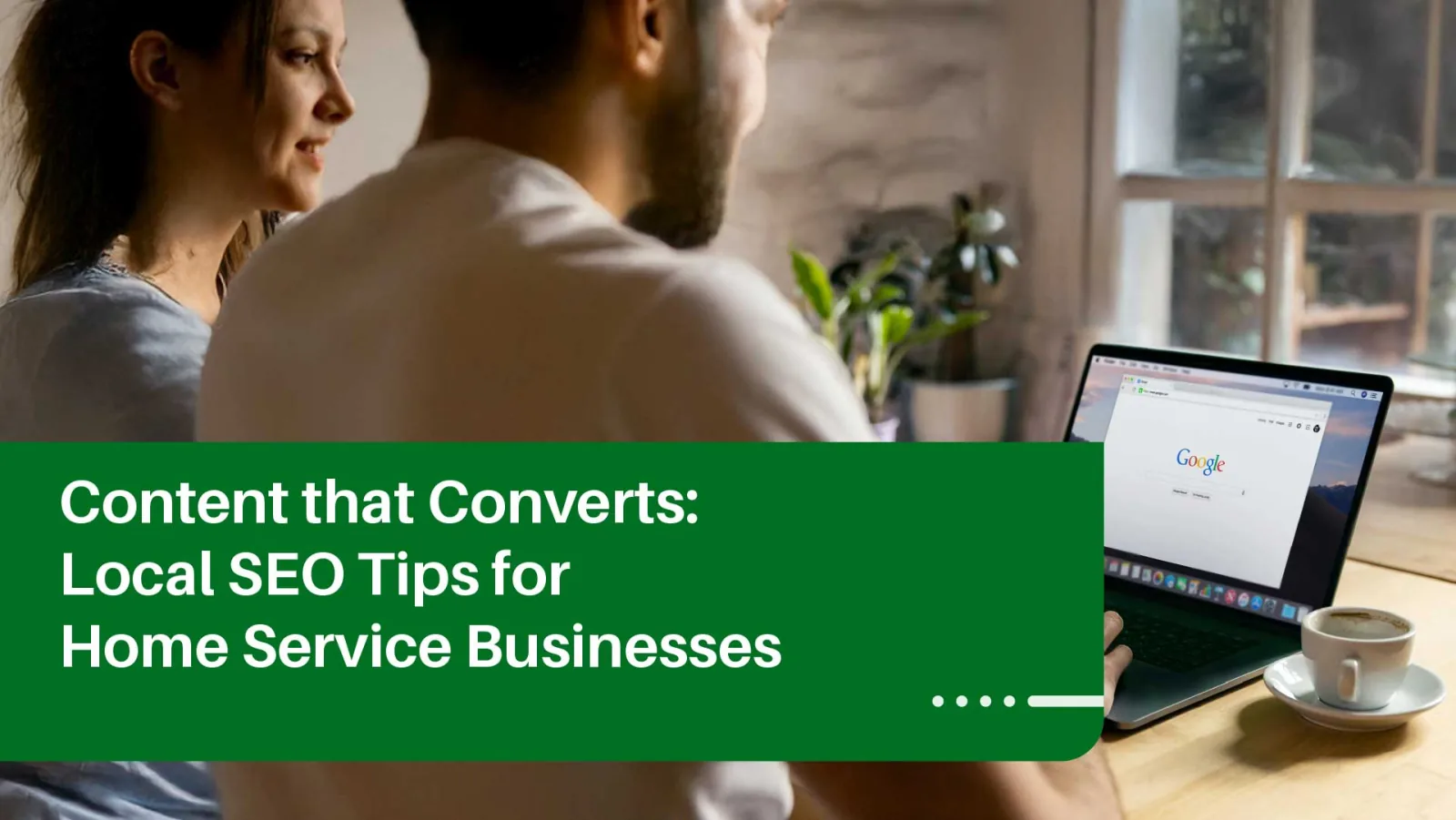
Ever feel like your home service business website is playing an endless game of hide and seek with potential customers—except they never actually find you? You're not alone. While you're out unclogging pipes, fixing furnaces, or patching roofs, your website might be stuck in the dark corners of page 2 (or worse, page 10) of local search results. And we all know what they say about page 2 of Google—it's the best place to hide a dead body!
For home service businesses, being invisible online isn't just annoying—it's downright expensive. Every day, your website doesn't connect with local homeowners in need, you're missing out on service calls, emergency repairs, and those sweet, sweet repeat customers who keep your business flowing (pun absolutely intended for you plumbers out there).
But here's the good news: with the right content strategy and local SEO approach, your service business can rise through the rankings faster than a backed-up sink during a holiday dinner party. In this guide, we'll break down exactly how to craft content that not only ranks well in local searches but actually converts those "help, my toilet is overflowing!" panic-googlers into loyal, paying customers.
So grab your digital toolbox—it's time to fix your website's visibility problem once and for all.

Written By: Chad J. Treadway | May 21, 2025
Chad is our Chief Smarketing Officer. He will help you survey your small business needs, educating you on your options before suggesting any solution. Chad is passionate about rural marketing in the United States and North Carolina. He also has several certifications through HubSpot to better assist you with your internet and inbound marketing.
Are pests the only thing your marketing efforts are exterminating? In a world where every pest control company is frantically competing for the same digital real estate, traditional marketing techniques are crawling back into the spotlight – and for good reason.
The pest control industry is booming, projected to reach a staggering $42.5 billion by 2032 with a steady growth rate of 5.7% annually, according to Allied Market Research. This growth isn't just because pests are becoming more problematic – it's because smart pest control companies are discovering that the most effective marketing strategies don't just live online.
While digital marketing has dominated the conversation for years, many successful pest control operators are finding that offline marketing techniques provide unique advantages that digital simply can't match. From establishing local trust to creating tangible brand experiences, traditional marketing methods are experiencing a renaissance in the pest control industry.
In this article, we'll explore how offline marketing for pest control is making a powerful comeback and why the most successful companies are adopting a hybrid approach that leverages the best of both traditional and digital strategies. We'll uncover proven techniques that help you create meaningful connections with your local community and turn prospects into long-term customers. After all, when it comes to building a thriving pest control business, you don't want to leave any stone (or marketing channel) unturned.

Written By: Adam Bennett | May 21, 2025
Adam is the president and founder of Cube Creative Design and specializes in private school marketing. Since starting the business in 2005, he has created individual relationships with clients in Western North Carolina and across the United States. He places great value on the needs, expectations, and goals of the client.

Let's face it—your alumni are walking, talking advertisements for your school, yet most private institutions treat these golden geese like they're one-hit wonders, good for the occasional donation and not much else. If that sounds painfully familiar, you're not alone.
The achievements and success stories of your alumni are direct reflections of your school's excellence in holistic education. Their names are forever linked with your school's brand and their successes. In today's competitive educational landscape, parents aren't just looking at your fancy new science lab or soccer field—they're looking at outcomes. And your alumni? They are your outcomes..
The statistics paint a sobering picture. According to TeamWorks Media, “100% of the alums we’ve asked view an email, phone call or direct mail piece from their alma mater as an ask for money BEFORE they even open it.” Talk about a relationship killer. It's the educational equivalent of only calling your friend when you need to borrow cash—eventually, they stop picking up.
What if, instead, you built a framework that transformed your graduates from occasional donors into passionate advocates? What if your alumni success stories became your most powerful marketing tool, recruitment strategy, and community-building engine?
That's exactly what we're going to explore.
Written By: Adam Bennett | May 21, 2025
Adam is the president and founder of Cube Creative Design and specializes in private school marketing. Since starting the business in 2005, he has created individual relationships with clients in Western North Carolina and across the United States. He places great value on the needs, expectations, and goals of the client.
Picture this. It's 10 AM on a Friday, and Mrs. Johnson is calling in a panic. She reached for her pie dish, the one she needs for tomorrow's church potluck, and found a battalion of cockroaches holding tactical meetings in her kitchen cabinet. Her voice is trembling. Her patience is thinner than a termite's waistline. What you say in the next 60 seconds decides whether she becomes a loyal customer or your newest one-star Yelp reviewer.
Welcome to the high-stakes world of pest control customer support. You're not just answering phones. You're the frontline defender against fires both literal and imagined. In other industries, an "emergency" means a delayed package or a glitchy software update. In yours, a customer's personal space has been invaded, and that sets off a gut-level reaction of disgust, embarrassment, and panic.
Your communication skills aren't a nice-to-have. They're a weapon in your pest management arsenal. The right phrase at the right moment can transform a horrified homeowner into a relieved, loyal client who refers your company to everyone in the neighborhood watch group.
This guide pulls together 15+ battle-tested phrases built for pest control support calls. These aren't the tired "thank you for your patience" platitudes. Each one solves a real problem you face on the phone. How do you tell a customer those mysterious bites might be bed bugs? How do you explain that a one-time treatment won't banish every ant in a three-mile radius?
Why Do Pest Control Businesses Need Excellent Customer Support?
Let's face it. Nobody calls pest control when they're having a great day. Your phone rings because a living room has been declared an autonomous ant colony, or because something with entirely too many legs just scurried across a child's bedroom floor. These aren't service calls. They're emotional rescue missions.
The Psychological Battlefield of Pest Emergencies
When homeowners find pests, they feel far more than annoyed. Research shows that a household infestation can trigger genuine psychological distress, and it shows up in these forms:
- Fear: "Are these spiders venomous?" "Could my children get sick from these rodents?"
- Disgust: The visceral reaction to creepy-crawlies is hardwired into human psychology
- Embarrassment: Many customers wrongly assume infestations reflect poor housekeeping
- Urgency: Unlike a leaky faucet that can wait until Monday, a wasp nest by the front door needs immediate attention
"Pest infestations can lead to nightmares, flashbacks, hyper-vigilance, insomnia, anxiety, avoidance, trauma, and personal dysfunction," say psychologists who study the toll of household pests.
Science backs this up. A study in BMJ Open looked at people exposed to bed bugs. They were significantly more likely to suffer sleep disturbances, anxiety, and depression than people with no infestation.
Your customer support team isn't just scheduling appointments. They're handing out the first dose of relief in what feels to the customer like a crisis at home.
The Competitive Edge of Exceptional Communication
Most companies in this industry offer much the same technical solution. The rodent doesn't care which brand of trap ends its cheese-stealing career. So the way your team talks becomes your competitive moat.
Research from the Professional Pest Management Alliance (PPMA) found that nearly half (45%) of homeowners rank reputation first when they hire a pest pro. Cost comes next, then honesty.
Translation: you can run the most effective treatment protocols in the state. But if your customer support sounds like it's reading a script written for selling vacuum cleaners, customers will scurry away faster than roaches when the kitchen light flicks on.
The Revenue Impact of Customer Retention
Pest control operates in a rare space. Here, one-time emergency calls can convert into recurring service contracts. The homeowner who calls in a panic about carpenter ants can become a $1,200/year maintenance client. That only happens if her first experience is a good one.
"It's 6-7 times more expensive to acquire a new customer than it is to keep a current one," notes Briostack, a pest control software provider.
Every support call is a fork in the road:
- Path 1: The customer feels understood and valued → Signs up for quarterly service → Refers three neighbors → $4,800+ annual revenue impact
- Path 2: The customer feels dismissed or confused → One-time treatment only → Tries a competitor next season → $250 revenue total
Want more proof? Studies show that if you "resolve a complaint in the customer's favor, they will do business with you again 70% of the time" (Source: Briostack)
What separates those two paths? Usually it's the phrasing, the tone, and the empathy in that first phone call or email.
Essential Phrases for Handling Pest Emergency Calls
The phone rings, and a frantic customer starts describing something with "pinchers" or "thousands of tiny eggs." What you say in the first 30 seconds decides whether they breathe a sigh of relief or hang up and dial your competitor. Here are the phrases that turn panic into patience:
1. "I understand this is an emergency, and we're going to prioritize your situation."
Mrs. Henderson calls because wasps have staged a hostile takeover of her children's swing set. Acknowledge the urgency right away. This phrase does double duty. It tells her the fear is fair, and it promises that help is on the way.
When to use it: Any situation involving stinging insects, spiders that might be venomous, or pests that pose an immediate health risk.
Why it works: Research shows that customers who hear the word "prioritize" report 52% higher satisfaction rates, even when the wait time is identical. Knowing they sit at the top of your list delivers relief immediately.
Pro tip: Resist the urge to explain that the "black widow" they spotted is probably a harmless house spider. In a moment of panic, validation comes first. Education can wait.
2. "While we dispatch a technician, here are three immediate steps you can take."
Nothing defuses anxiety like action. This phrase turns a helpless victim into a partner who's helping to fix the problem.
What to recommend:
- For rodents: "Seal food in airtight containers and place a towel under exterior doors until we arrive."
- For wasps: "Keep everyone at least 20 feet away from the nest and close nearby windows."
- For ants: "Wipe down the trail with vinegar and water to disrupt their pheromone highway."
Why it works: Handing customers steps they can take right now cuts their anxiety by about 60%, according to customer service research. It also shows your expertise and builds trust before your technician arrives.
3. "I'll take full responsibility for resolving this situation for you."
When someone has uninvited guests with six or eight legs, what they crave most is for somebody else to own the problem. This phrase establishes you as their champion instantly.
When to use it: When customers sound very upset, or when they say they tried another company and it didn't work.
Why it works: The words "full responsibility" carry real weight. Customers rarely hear them, because most of us deflect accountability. The phrase lifts the load off their mind immediately ("I don't have to solve this alone"), and it creates a service moment they remember.
4. "Based on your description, this sounds like [pest type], which we have specific protocols to address."
Nothing reassures a panicked customer like the calm confidence of expertise. This phrase communicates, without saying it: "We've seen this before, and we know exactly what to do."
Why it works: A problem with a name feels more manageable than a mystery. Name the pest, put it in a category, and the alarming unknown becomes a standard job with a known fix.
How to Reassure Customers About Pest Treatments
Let's be honest. Your technicians arrive with sprayers, powders, and equipment that looks borrowed from a sci-fi movie set, and customers get nervous. Here's how to turn chemical concerns into customer confidence:
5. "Our treatments are specifically formulated to target pests while being safe for your family and pets."
Safety tops the list of customer anxieties about pest control. This phrase meets that fear head on, and it doesn't hedge.
When to use it: Mention it before customers ask, especially in households with children, pets, or a pregnant family member.
Why it works: The phrase "specifically formulated" hints at science and careful design. It beats "this probably won't kill your cat" by a mile. Your treatment now sounds like a smart tool, not a broad poison.
6. "Here's exactly what will happen during our treatment process..."
Fear of the unknown is what drives customer anxiety. This phrase opens the curtain, and trust follows fast.
When to use it: While you schedule the first service, or when a customer isn't sure what to expect.
Why it works: Studies show that knowing the steps of a process reduces anxiety by up to 74%, even when the procedure itself doesn't change. Walk customers through the treatment visit and you hand them an emotional roadmap. A roadmap makes them feel in control.
7. "We've successfully treated this exact situation over 450 times this year alone."
Nothing builds confidence like a track record. This phrase turns your company from just another bug guy into an experienced specialist.
When to use it: When customers sound especially anxious, or when the infestation is a difficult one like bed bugs or termites.
Why it works: Specific numbers create concrete credibility. "Many times" is vague. "450 times this year" is precise, so it's easier to believe. It also hints that their enormous problem is a routine day for your experts.
8. "After our treatment, here's what you might notice..."
Tell customers what comes next and you prevent panic calls. You also demonstrate the expertise they're paying for.
When to use it: Always, before you finish scheduling the service.
Why it works: Predict what will happen and you position yourself as the expert. Then the prediction comes true ("Just like they said, I saw a few more ants the next day before they completely disappeared"), and their confidence in you jumps.
9. "We stand behind our treatments with our No-Bugs Guarantee."
A guarantee changes how the customer weighs the risk. It shifts the doubt off their shoulders and onto yours.
When to use it: When pricing comes up, or when a customer's skeptical that the treatment will work.
Why it works: A guarantee answers the core fear: "What if I pay all this money and the bugs come back?" Address it first and the primary obstacle to booking disappears.
What's the Best Way to Handle Pricing Questions?
The moment of truth often arrives in four dreaded words: "How much will it cost?" Pest control has no standardized price list. Treating three fire ant mounds and remediating a termite problem in an entire house aren't the same job. It's a paper cut next to open heart surgery. Here's how to handle the pricing conversation with finesse:
10. "Our treatment for [specific pest] typically ranges from $X to $Y, depending on the severity and property size."
A price range sets expectations and leaves you room. A firm quote doesn't.
When to use it: Early in the conversation, when customers are price shopping or trying to determine whether professional treatment fits the budget.
Why it works: A range accomplishes three vital things at once. It prevents sticker shock, it sets the right expectations, and it signals that pest control isn't a one-size-fits-all service. The words "severity and property size" also teach customers what drives the price.
11. "This comprehensive treatment includes our initial service, a 30-day follow-up, and our seasonal guarantee."
Move the conversation from price to value and the customer's whole perception changes.
When to use it: When you deliver a specific number, or when a customer balks at the cost.
Why it works: It reframes the purchase. Customers stop buying "killing bugs" and start buying "ongoing protection." Bundle the benefits together and your offer gets harder to compare against a rival who posts a low first price, then bills for every follow-up.
12. "We offer several treatment options to fit different budgets and needs."
This phrase makes you a partner who's helping customers find the right fit, not a vendor pushing the most expensive plan.
When to use it: When customers hesitate at the price or say that money's tight.
Why it works: Studies on consumer behavior show that a sense of choice lifts purchase satisfaction by up to 70%. Even when customers pick the cheapest option, they feel better because the choice was theirs. Being handed a single option feels forced.
13. "Investing in professional pest control now typically prevents more costly damage down the road."
This phrase turns the expense into a preventative investment. It's no longer a reactive bill you pay after the damage.
When to use it: When you discuss pests that damage property (termites, carpenter ants, rodents), or when a customer sounds ready to try DIY.
Why it works: The word "investing" lands in a different part of the brain than "spending." One hints at a return and good sense. The other hints at loss. The phrase also teaches customers, gently, what waiting really costs.
How to Address Customer Concerns About Treatment Effectiveness
Every pest control company gets the dreaded call: "I still see bugs!" Maybe it's ants marching defiantly across a kitchen counter two days after treatment. Maybe it's a single cockroach under the refrigerator. Either way, handle these follow-up calls with care. What you say decides whether the customer thinks your treatment failed, or grasps that pest control is often a process, not a one-and-done event.
14. "I understand your concern about seeing pests after treatment, and I want to address that immediately."
Acknowledge the concern before you explain it. That shows empathy, and it keeps customers from feeling brushed off.
When to use it: Any time a customer still sees pests after a visit.
Why it works: This phrase does the one thing that matters most. It validates what the customer saw before you explain anything. Skip that step and your technical explanation about residual effects and insect behavior sounds like an excuse rather than education.
15. "What you're experiencing is actually part of the normal treatment process, and here's why..."
It turns what looks like a failure into a teaching moment that backs up your expertise.
When to use it: When what the customer sees matches what pests normally do after a treatment.
Why it works: Frame the sightings as "normal" and "expected," and the anxiety that the treatment failed drains away. It also positions you as the expert who reads insect behavior better than the customer can.
Pest-specific adaptations:
- For ants: "The increased activity you're seeing is actually the treatment working. The ants are attracted to our bait, taking it back to the colony and exposing others before they die. This is exactly what we want to happen."
- For roaches: "Seeing roaches during daytime after treatment is actually a good sign. It means they're being flushed from hiding places as the treatment takes effect. Healthy roaches typically only come out at night."
16. "I can see why that would be frustrating. Let me explain our follow-up process to ensure complete elimination."
This one names the feeling first, then steers the call toward a fix.
When to use it: When customers express disappointment, anger, or frustration that the pests still aren't gone.
Why it works: "I can see why that would be frustrating" defuses the negative emotion, because it shows you understand the customer's perspective. The pivot to the "follow-up process" then tells them two things: 1) you have an established protocol for this, and 2) you remain confident of the outcome.
17. "Based on what you're describing, I recommend adjusting our approach in the following way..."
This phrase shows that you can adapt, and that you're after results, not a rigid checklist.
When to use it: When a customer's feedback suggests the standard treatment needs a tweak, or when the infestation's a stubborn one.
Why it works: It accomplishes a few objectives at once. It proves you're listening to this specific property rather than a script. It demonstrates the technical expertise to change the plan. And it reinforces that you're committed to the result, not to checking a box.
18. "Our guarantee means we'll continue working until your pest problem is resolved completely."
This turns what could've been a complaint into proof that you stand behind the work.
When to use it: When customers doubt you'll ever solve the problem, or when they sound ready to try another company.
Why it works: A guarantee changes how customers assess the risk. With no guarantee, every follow-up raises a fresh question about the cost. With a strong guarantee, they feel secure, because the problem gets solved one way or another.
Building Lasting Customer Relationships in Pest Control
Converting one-time emergency calls into recurring revenue takes finesse. Nobody jumps from "Help, there's a wasp nest by my door!" to "I'd like to schedule my quarterly preventative service" by accident. You get there on purpose, with words that build trust and show value.
Industry data puts it plainly: "acquiring new customers costs up to 5 times more than retaining existing ones."
These phrases help turn a panicked caller into a loyal, long-term client:
19. "I've noted your preferences in our system for all future visits."
This simple phrase tells customers that you plan to be around beyond today's invoice.
When to use it: Right after a customer shares a preference. It might be the technician's gender, the treatment method, entry instructions, a nervous dog, or the hours that work.
Why it works: It accomplishes two powerful things at once. It shows you're listening right now, and it projects the relationship into the future. Customers feel heard, and they feel valued.
20. "As we head into [season], here's what you should watch for..."
Teach customers what's coming and you become the partner who prevents problems, not the service that reacts to them.
When to use it: On follow-up calls, at the end of a seasonal treatment, or in your email newsletter.
Why it works: It shifts the relationship. You stop being the company that fixes problems as they pop up, and start being the advisor who sees them coming. That displays expertise, and it plants seeds for the next service.
21. "I recommend scheduling your next preventative treatment for [specific timeframe] to stay ahead of seasonal pest pressures."
It makes recurring service sound normal, and it hands the customer a clear next step.
When to use it: Right after the first visit, especially for pests that run on a predictable seasonal clock.
Why it works: Studies show that specific recommendations ("schedule for early April") lead to 3.5 times higher conversion rates than a general suggestion ("schedule sometime in spring"). (Source: FieldRoutes)
22. "Many of our customers in [customer's neighborhood] find that quarterly service provides the most consistent protection."
This phrase puts social proof to work. Neighbors make recurring service feel normal.
When to use it: When you discuss future service options, or when customers ask what upkeep you'd recommend.
Why it works: Behavioral science shows that people take their cues from similar others, and in this case that's the neighbors. The phrase also drops a hint that you already have a presence on their street, which builds local credibility.
Seasonal Pest Control Support Phrases
Pest control isn't just a business. It's a biological battleground that shifts with the seasons. Ants march through kitchens in spring. Mosquitoes torment the backyard barbecue in summer. Rodents hunt for shelter in fall. Overwintering pests move in to wait out the cold. Each one requires a different approach.
23. "Based on current weather patterns in our area, we're seeing increased activity of [specific pests]."
This phrase shows that you've got a finger on the pulse of local pest trends.
When to use it: As the seasons turn, or after odd weather stirs up the bugs.
Why it works: A read on this week's weather shows that you watch more than the job in front of you. You're not just reacting to problems. You're calling the next wave before it hits.
24. "While we're treating for [current pest], I'd also recommend preventative steps for [upcoming seasonal pest]."
This one looks ahead, and it shows value beyond today's visit.
When to use it: During service calls and follow-ups, especially when there's a new season coming.
Why it works: It does several jobs at once. You become the advisor who prevents problems instead of the crew that reacts to them. You show off what you know about the seasons. And you open the door to more work without a hard sell.
25. "For your specific location near [geographic feature], here's what we typically recommend this time of year..."
This hyper-local read shows that you understand how pests behave on one small patch of ground.
When to use it: When you schedule service for a property whose geographic features drive extra pest pressure.
Why it works: Generic pest control feels like a commodity. Advice tied to their address feels custom, and worth more. The phrase signals that you get what makes their property hard, so you're not handing out the same plan for every home.
TL;DR: Critical Takeaways for Pest Control Customer Support
If you're racing from an emergency termite inspection to an angry wasp nest call, you don't have time to memorize 25 phrases. Here are the five essential communication strategies that matter most:
- Acknowledge emotions before explaining solutions. Customers calling about pests are often experiencing genuine distress. Validate those feelings before launching into technical explanations.
- Frame treatments as processes, not events. Set proper expectations by explaining the biological reality that most pest elimination requires a systematic approach rather than an instantaneous fix.
- Position your company as a preventative partner, not just an emergency responder. Use every interaction as an opportunity to educate customers about the value of ongoing protection.
- Speak with calm expertise about treatment safety. Customers are inviting you to apply products in their most personal spaces. Their confidence in your safety protocols is non-negotiable.
- Use geographic and seasonal specificity to demonstrate sophisticated expertise. Generic pest control feels commoditized; location and season-specific recommendations signal true professional insight.
Conclusion: Your Words Are Your Most Powerful Pest Control Tool
Your technicians rely on sprayers, dusters, and specialized products. Your customer support team relies on language, and it's the sharpest tool in the shop. The right phrase turns an anxious call into a loyal customer, a one-time service into recurring revenue, and a complaint into a service recovery.
This industry hands you a rare set of communication challenges. Your customers are in genuine distress about an invasion of their personal space. You have to explain complex biological processes to people who just want the bugs gone yesterday. And you have to justify calling a pro at all on a problem that plenty of customers think a can of store-bought spray should fix.
"The top 2 reasons for customer loss are: 1) Customers feel poorly treated, and 2) Failure to solve a problem in a timely manner," according to industry research. (Source: Briostack)
Learning the phrases in this guide won't just make your job easier. It transforms your customer's experience, and that shows up in your bottom line. The difference between a pest control company with 22% customer retention and one with 67% usually comes down to communication quality, not treatment efficacy.
Remember, in pest control your words don't just describe the service. They are the service. The right phrase at the right moment delivers psychological relief long before your treatment delivers biological results.
Need more help with your pest control company's marketing and customer experience strategy? Contact me for consulting built around the real challenges of a pest management business. And check out our complete guide to modern pest control marketing for more ways to build your business.
Written By: Adam Bennett | May 19, 2025
Adam is the president and founder of Cube Creative Design and specializes in private school marketing. Since starting the business in 2005, he has created individual relationships with clients in Western North Carolina and across the United States. He places great value on the needs, expectations, and goals of the client.

Let's face it—your alumni are quite possibly your school's most valuable untapped resource. These former students have experienced your educational offerings firsthand, potentially have children who need education, and may possess both the means and motivation to support your institution. Yet many private schools treat alumni relations as an afterthought, relegating it to occasional newsletters and annual fund solicitations.
This approach is about as effective as trying to fill a swimming pool with a coffee mug. Today's competitive educational landscape demands a sophisticated, strategic approach to alumni engagement that recognizes graduates not merely as potential donors but as lifelong community members with diverse ways to contribute to your school's ongoing success.
In this guide, we'll explore comprehensive strategies for building a robust alumni relations program that delivers tangible benefits to both your institution and your graduates. From database management fundamentals to cutting-edge digital engagement tactics and meaningful program development, you'll discover actionable approaches that can transform occasional participants into passionate school advocates.
Written By: Adam Bennett | May 19, 2025
Adam is the president and founder of Cube Creative Design and specializes in private school marketing. Since starting the business in 2005, he has created individual relationships with clients in Western North Carolina and across the United States. He places great value on the needs, expectations, and goals of the client.
To manage a home service team effectively in today's rapidly evolving market, you need to ensure they operate like a well-oiled machine. This means keeping technicians and service staff up to date with the latest industry trends, utilizing advanced technology, and providing them with the right tools to help them work efficiently.
Here are ways your home service business can strengthen its team by implementing training and management strategies aligned with the key trends of 2025.
Written By: Adam Bennett | May 19, 2025
Adam is the president and founder of Cube Creative Design and specializes in private school marketing. Since starting the business in 2005, he has created individual relationships with clients in Western North Carolina and across the United States. He places great value on the needs, expectations, and goals of the client.

Ever notice how people don't call a plumber because they're having a great day? Your customers reach out when they're feeling stressed, worried, or even panicked about that burst pipe flooding their basement. When homeowners visit your website, they bring these emotions with them. Your web design needs to transform those negative feelings into positive ones – like relief, trust, and confidence.
Let's face it: In the home service industry, you're not just fixing pipes, installing HVAC systems, or repairing roofs – you're providing peace of mind. When your website connects emotionally with visitors, they're more likely to pick up the phone and schedule that service call.
The right emotional design doesn't just look pretty – it drives business results. When homeowners feel good about your brand, they convert from browsers to callers, from one-time customers to loyal clients who recommend you to everyone on their block.
Ready to turn your website into an emotion-generating machine? Let's dive into the toolbox of emotional web design techniques that will have customers clicking "Contact Us" faster than you can say "scheduled maintenance."
Written By: Chad J. Treadway | May 14, 2025
Chad is our Chief Smarketing Officer. He will help you survey your small business needs, educating you on your options before suggesting any solution. Chad is passionate about rural marketing in the United States and North Carolina. He also has several certifications through HubSpot to better assist you with your internet and inbound marketing.
Let's face it—when customers find creepy crawlies in their homes, they're not exactly in a calm state of mind. They want help FAST from someone they can trust. In today's digital world, that trust often starts with your online reviews.
According to NiceJob, a whopping 97% of people say customer reviews impact their buying decisions. That's right—nearly ALL your potential customers are checking out what others say about you before they pick up the phone. If you're not actively managing your reviews, you're letting other people control your reputation—and that's about as wise as trying to catch wasps with your bare hands. Learn more about how reviews drive growth and build trust for your pest control business.
In the pest control industry, where customers are often dealing with stressful situations, positive reviews can be the deciding factor between choosing your company or your competitor. Modern customers simply don't trust companies that have a low star rating or no reviews at all. But don't worry—this guide will give you all the tools you need to build and manage a five-star reputation that attracts customers faster than ants at a picnic.
Written By: Chad J. Treadway | May 14, 2025
Chad is our Chief Smarketing Officer. He will help you survey your small business needs, educating you on your options before suggesting any solution. Chad is passionate about rural marketing in the United States and North Carolina. He also has several certifications through HubSpot to better assist you with your internet and inbound marketing.
Let's face it – running a private school is like orchestrating a symphony where everyone thinks they should be the conductor. Parents write the tuition checks that keep the lights on, entrust you with their most precious assets (their children), and expect nothing short of educational nirvana in return. The least we can do is ask them what they think.
But here's the thing: Parent feedback isn't just about appeasing your customer base – it's about building a thriving educational ecosystem. According to a recent study by the Centre for Education Statistics and Evaluation, schools implementing comprehensive feedback systems through "Tell Them from Me" surveys showed demonstrably better alignment between teaching methods and student well-being. This transformative approach has led many schools to evolve from mere "homework repositories" into flourishing community hubs.
And the impact goes beyond just warm fuzzy feelings. Research indicates that when parents receive timely communications about student attendance and academic progress, outcomes improve significantly. When parents are engaged, students succeed – it's that simple. As John Hattie, a renowned education researcher, notes, "When teachers seek or at least are open to what learners know, what they understand, where they make errors, when they have misconceptions, when they are not engaged—then teaching and learning can be synchronized and powerful." (Source: Victoria Dept. of Education) The same principle applies when schools seek parent insights.
Still skeptical? Consider the evidence: private schools with comprehensive feedback systems generally report higher parent satisfaction rates than competitor institutions. Perhaps more importantly, these schools see measurable improvements in what truly matters – student achievement. Research consistently shows that parent engagement through structured feedback systems positively impacts student performance across all academic areas.
The writing on the whiteboard is clear: in today's competitive private education landscape, robust parent feedback systems aren't a nice-to-have – they're a strategic imperative. Schools that master this art gain more than just satisfied parents; they build the reputation, enrollment stability, and academic excellence that define industry leaders.
System Design: Building Your Feedback Foundation
Collection Methods: Casting a Wide Net
The cornerstone of any effective parent feedback system lies in your collection methods. One-size-fits-all approaches fail spectacularly here, as parents have diverse communication preferences, availability constraints, and comfort levels with different feedback channels.
Successful schools employ multiple collection avenues:
- Digital Surveys: The backbone of modern feedback collection, digital surveys offer efficiency and data organization benefits. Choose platforms that balance depth with completion time—remember, parents are busy people who don't want to spend their evening filling out your 50-question survey. Effective surveys should take no more than 10-15 minutes to complete, mixing multiple-choice, rating scale, and open-ended questions.
- Focus Groups: Nothing beats face-to-face conversation for depth and nuance. Small group discussions (6-8 parents) facilitated by a neutral party can unearth insights that would never surface in a survey. The key? Structure with flexibility—have a framework but allow organic conversation.
- One-on-One Meetings: Reserve these for deep dives or addressing specific concerns. They're resource-intensive but invaluable for building relationships with parent stakeholders and addressing complex issues.
- Digital Platforms: Parent portals, mobile apps, and messaging systems have transformed feedback collection. The immediacy of these platforms allows for "in-the-moment" feedback rather than relying on retrospective assessments.
- Anonymous Options: Some feedback will only emerge when parents feel protected. Anonymous submission options are particularly crucial for sensitive topics or when exploring potential issues with specific teachers or programs.
Response Mechanisms: Closing the Loop
Here's where most schools drop the ball. Collecting feedback without responding to it is like installing a suggestion box that empties directly into the incinerator – technically present but functionally useless.
Effective response mechanisms include:
- Acknowledgment Protocols: At minimum, parents should receive confirmation that their feedback was received and is being reviewed. This simple step dramatically improves the perception of your feedback system.
- Categorization Systems: Not all feedback requires the same response pathway. Implement systems that route feedback to appropriate decision-makers based on content, urgency, and complexity.
- Transparency Timelines: Establish and communicate clear timelines for when parents can expect responses. Managing expectations prevents frustration and builds trust in your process.
- Escalation Pathways: Some feedback warrants immediate action or higher-level attention. Clear escalation protocols ensure critical issues don't languish in administrative limbo.
Analysis Tools: Making Sense of the Data
Raw feedback is just noise without proper analysis. Modern schools employ sophisticated tools to transform parent input into actionable intelligence:
- Sentiment Analysis: Advanced software can categorize feedback as positive, negative, or neutral, helping identify broader patterns that might be missed in manual review.
- Trend Identification: Look beyond individual comments to identify recurring themes across multiple feedback sources. These patterns often reveal systemic issues or opportunities.
- Comparative Analysis: Benchmark current feedback against historical data to track progress on specific initiatives or compare different demographic segments.
- Priority Mapping: Not all feedback carries equal weight. Matrix tools plotting impact against implementation difficulty help schools prioritize their response efforts.
Action Planning: From Insight to Implementation
This is where rubber meets road. The most sophisticated collection and analysis systems are worthless without conversion to action. Effective feedback should aim to produce improvement and redirect the learner's actions to achieve a goal by aligning effort and activity with an outcome.
Effective action planning includes:
- SMART Objectives: Translate feedback insights into Specific, Measurable, Achievable, Relevant, and Time-bound goals.
- Responsibility Assignment: Clearly designate who owns each action item, with accountability measures built in.
- Resource Allocation: Ensure necessary resources (time, budget, personnel) are committed to implementing changes.
- Implementation Timeline: Establish realistic timeframes for rollout, with milestone checkpoints.
- Success Metrics: Define how you'll measure whether implemented changes achieved desired outcomes.
Follow-up Protocols: Completing the Circle
The feedback cycle isn't complete until you've verified that the implemented changes actually addressed the original feedback. Comprehensive follow-up includes:
- Targeted Re-assessment: Circle back with original feedback providers to gauge satisfaction with your response.
- Impact Measurement: Gather data on whether implemented changes achieved desired outcomes.
- Adjustment Mechanisms: Be prepared to refine your implementation based on follow-up feedback.
- Communication Loops: Share results with your broader parent community, highlighting how feedback translated to school improvements.
Written By: Adam Bennett | May 14, 2025
Adam is the president and founder of Cube Creative Design and specializes in private school marketing. Since starting the business in 2005, he has created individual relationships with clients in Western North Carolina and across the United States. He places great value on the needs, expectations, and goals of the client.

In the world of elite education, there's a saying: "It doesn't matter how exceptional your curriculum is if no one can find your campus." Okay, I just made that up, but you know it's true. In today's educational landscape, 6 out of 10 parents consider switching schools for their children, and their journey almost always begins with a local search query. These potential families use Google search (about 1 in 4), word of mouth (about 1 in 4), and school search platforms (about 1 in 5) as their top means of discovering schools to consider. Niche's K-12 Parent Survey clearly shows how critical these digital touchpoints have become. With such a significant portion of your enrollment pipeline beginning online, any major shifts in the search ecosystem merit your attention—particularly the potential divestiture of Chrome from Google.
Written By: Adam Bennett | May 12, 2025
Adam is the president and founder of Cube Creative Design and specializes in private school marketing. Since starting the business in 2005, he has created individual relationships with clients in Western North Carolina and across the United States. He places great value on the needs, expectations, and goals of the client.
If there's one thing that separates thriving private schools from the ones that merely survive, it's effective communication. In an era where parents expect instant updates, staff need clear direction, and students require consistent guidance, your communication strategy isn't just important—it's absolutely critical.
Let's face it: nobody has ever complained about receiving too much relevant information at the right time. But they'll certainly remember when they didn't get the message about the rescheduled parent-teacher conference or the sudden early dismissal due to weather. Those communication failures don't just cause minor inconveniences—they erode trust and diminish your school's hard-earned reputation.
Recent studies show just how crucial this is: even as social media has become more prevalent in daily life, one survey from the Center for American Progress (CAP) found that many parents don't even know about existing school social media channels, with only 24% of parents listing social media as a system their school used, compared to 46% of teachers and 38% of school leaders. This disconnect highlights the importance of a carefully considered, platform-specific social media approach for private schools.
In this guide, we'll explore the essential elements of a comprehensive communication strategy for private schools that will keep your stakeholders informed, engaged, and—perhaps most importantly—singing your praises to prospective families.

Every high-performing digital campaign shares one thing in common: a strong foundation. Creative content and targeted ads can spark attention, but without the right systems behind them, that momentum falls apart fast.
Smart infrastructure keeps everything working in sync. It delivers speed, reliability, and scale—quietly powering every interaction. From smooth load times to accurate data tracking, these behind-the-scenes elements turn a good campaign into a great one. Ignore them, and even the most brilliant strategy can collapse under pressure.