Let's face it, when a homeowner's pipes burst at 2 AM or their AC dies during a heatwave, they're not just looking for any service business. They're frantically searching for someone they can trust with their home and hard-earned money. For small business service providers, building this trust online is essential for converting website visitors into customers.
Trust isn't just a warm, fuzzy feeling for local service businesses—it's your pipeline to profitability. According to PwC's Trust in US Business Survey, 71% of business leaders say that building trust with customers is a high or top priority, while 74% connect trust directly to their company's financial performance. When your potential customers trust you before they even pick up the phone, you've already unclogged half the sales pipeline.
Everyone knows the basics of trust-building website design—showing reviews and creating galleries of your work. But if you want to truly stand out in the crowded field of local service providers, you need to take your website's trust signals to the next level. It's time to roll up those sleeves and dig into design strategies that will make potential customers feel as comfortable calling you as they would their own family members (maybe more comfortable, depending on the family).
Let's explore how your plumbing, HVAC, roofing, or other service business can use strategic website design to build maximum credibility and turn anxious homeowners into loyal, lifetime customers.

Written By: Chad J. Treadway | August 06, 2025
Chad is our Chief Smarketing Officer. He will help you survey your small business needs, educating you on your options before suggesting any solution. Chad is passionate about rural marketing in the United States and North Carolina. He also has several certifications through HubSpot to better assist you with your internet and inbound marketing.

Simplifying PDF annotations is crucial to maintaining efficiency and clarity in collaborative environments. Using powerful tools like Lumin, an online PDF editor, can transform how you annotate, collaborate, and edit PDFs. This article explores the features that make Lumin an easy-to-use online PDF editor, its real-time collaboration capabilities, and tips for maximizing efficiency. We’ll also talk about the best practices for simplifying PDF annotations with Lumin and how these practices can streamline your editorial processes.
Summer's over for most people, but the work isn't. Your customers are packing away the pool floats and lining up the pumpkin spice lattes. Meanwhile, pests are just getting started on their fall home invasion plans. If you think autumn means a slower season for your pest control business, think again.
Here's the reality check most small pest control operators need to hear. Fall is one of the most important seasons in this business, because pests are actively hunting warmth and shelter as temperatures drop. Research from Vantage Market Research shows the global pest control market reached $26.9 billion in 2024. It's projected to hit $44.3 billion by 2035, expanding at 6.4% annually, and much of that comes from seasonal transitions. Companies that understand the seasonal shift and plan for it don't just survive the move from summer peak to autumn. They do well in it.
Maybe you're running a small operation with a few technicians. Maybe you're managing a coastal pest control business with its own environmental headaches. Either way, this guide hands you the roadmap for successful fall planning. We'll start with fall pest behavior, then build the profitable service packages. The goal is a full schedule and protected customers.
Written By: Chad J. Treadway | August 04, 2025
Chad is our Chief Smarketing Officer. He will help you survey your small business needs, educating you on your options before suggesting any solution. Chad is passionate about rural marketing in the United States and North Carolina. He also has several certifications through HubSpot to better assist you with your internet and inbound marketing.

Think pest control marketing hibernates when the weather turns? You're missing the best season on the calendar. Your competitors are bundling up and waiting on spring. Smart owners are out there taking market share and booking work all fall and winter.
Here are the numbers. The pest control industry is worth $26.7 billion in 2025. Allied Market Research reports strong growth around the world. North America still holds the largest share. Meanwhile, 44% of pest management pros call fall their busiest season for rodent work. Another 22% pick winter. (Source: PCT Magazine) So no, winter pest control marketing isn't optional. It's how you keep the whole year steady.
Nearly 1 in 2 rodent infestations happen in fall and winter. Rats and mice head indoors for warmth. That's a huge opening for any company set up to catch it. The National Pest Management Association found that when the weather turns, rodents take shelter in an estimated 21 million U.S. homes each winter. That's millions of people looking for help right now.
Verified Market Research sees the same climb. It projects the global pest control market will reach $46.2 billion by 2032. That works out to a compound annual growth rate of 5.9%. Research and Markets backs that up. More people know the health risks pests bring, and that drives demand. Master winter marketing and you take a bigger slice of it.
This guide covers fall and winter pest control marketing end to end. You will see how to shift from summer services to cold-weather work. You will learn how to build service packages people actually buy. And you will get campaigns that pull in leads all through the so-called slow season.
Written By: Chad J. Treadway | August 04, 2025
Chad is our Chief Smarketing Officer. He will help you survey your small business needs, educating you on your options before suggesting any solution. Chad is passionate about rural marketing in the United States and North Carolina. He also has several certifications through HubSpot to better assist you with your internet and inbound marketing.

Picture this: You've just wrapped up a stellar week in your home service business. You've closed three major contracts, your technicians completed every job ahead of schedule, and you've even implemented that new scheduling software everyone's been raving about. Life is good. Then you check your phone and see it—a scathing one-star review complete with ALL CAPS and enough exclamation points to punctuate a manifesto.
Suddenly, your perfect week feels like it's circling the drain.
If this scenario sends a shiver down your spine, you're not alone. For home service businesses, online reviews can make or break your reputation, affect your search rankings, and ultimately determine whether potential customers call you or your competitor. With the Northwestern University Spiegel Research Center finding that 95% of consumers read online reviews before making purchasing decisions, and Valve+Meter research showing that businesses with 4+ star ratings earn 32% more revenue, the stakes have never been higher.
But don't worry—this guide will help you transform review management from a source of anxiety into a powerful growth strategy.

Written By: Adam Bennett | August 04, 2025
Adam is the president and founder of Cube Creative Design and specializes in private school marketing. Since starting the business in 2005, he has created individual relationships with clients in Western North Carolina and across the United States. He places great value on the needs, expectations, and goals of the client.
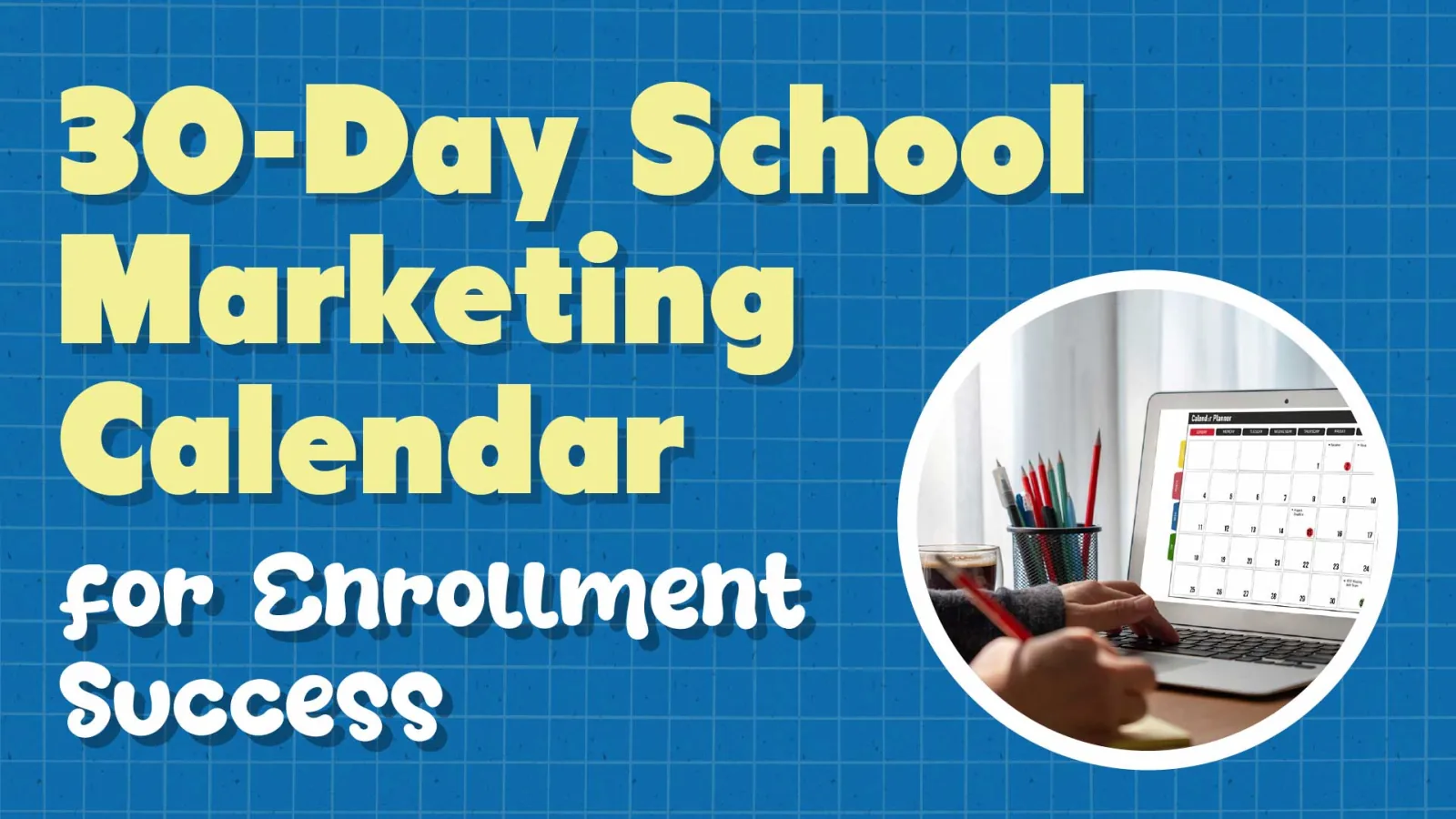
Let's be honest—August marketing for private schools is like trying to catch parents' attention while they're simultaneously calculating tuition payments, organizing carpools, and questioning their life choices. Yet here's the thing that most marketing directors miss: this chaos creates the perfect opportunity for strategic schools to shine.
While you're watching public schools scramble with bus routes and cafeteria logistics, private schools have a golden window to focus on what matters: relationship-building, community engagement, and strategic enrollment positioning. In 2025, private school marketing will play a crucial role in helping institutions stand out in an increasingly competitive education sector. With a projected market size of $98.9 billion, private schools face the unique challenge of attracting students in a market that relies heavily on tuition fees rather than government funding." (Source: Byter) The schools that win this season aren't necessarily the ones with the biggest budgets—they're the ones with the smartest systems.
Here's what separates the enrollment leaders from the summer stragglers: a strategic content calendar that transforms the overwhelming back-to-school period into a systematic, measurable marketing machine.
This isn't about posting random "first day of school" photos or sending generic welcome emails. This is about creating a 30-day content strategy that builds anticipation, demonstrates value, and converts interested families into enrolled students. The schools that get this right don't just survive the back-to-school rush—they dominate it.
Ready to stop letting August happen to you and start making it work for you? Let's dive into the strategic framework that transforms marketing directors from reactive post-schedulers into enrollment-driving strategists.
Written By: Adam Bennett | August 04, 2025
Adam is the president and founder of Cube Creative Design and specializes in private school marketing. Since starting the business in 2005, he has created individual relationships with clients in Western North Carolina and across the United States. He places great value on the needs, expectations, and goals of the client.

Picture this: It's 9:43 PM on a Tuesday. Parents across your district are slouched on their couches, thumbs frantically scrolling through their smartphones while Netflix drones in the background. What are they doing? According to Pew Research Center, "The share of Americans who own a smartphone is now 97%, up from just 35% in the first smartphone ownership survey in 2011." They're researching private school options for their children.
Yet here's the uncomfortable truth most private schools don't want to confront: while you're investing thousands in curriculum enhancements and campus beautification, your website probably delivers all the mobile charm of a Windows 95 desktop experience.
"But we have a mobile-friendly (responsive) website!" I can hear you protesting from behind your admissions desk. Unfortunately, "responsive" in 2025 is like claiming your school has electricity—it's expected, not exceptional.
Today's parents aren't just comparing your mobile experience to other schools—they're comparing it to DoorDash, Amazon, and Netflix. Every frustrating tap, every slow-loading page, every tiny unclickable button isn't just an annoyance—it's actively sending prospective families to your competitors' virtual open houses. "85% of adults now think that a company's mobile website should be as good or better than their desktop website." (Source: UXCam)
The stakes couldn't be higher. When it comes to credibility, the Stanford Web Credibility Project said, "46.1% of consumers assess website credibility based on the overall visual design and aesthetics of a site, including layout, typography, and color schemes." In education specifically, first impressions matter tremendously.
For schools, this translates directly to enrollment figures: institutions with mobile-optimized sites see significantly higher engagement. Cloudflare said, "For every 1-second delay in mobile page load time, conversions can fall by up to 20%." This impact is especially pronounced in the education sector.
In the next few minutes, I'll walk you through exactly what parents expect from your mobile presence in 2025, where most schools are falling embarrassingly short, and—most importantly—how to fix these issues before your next enrollment cycle, even with your chronically underfunded marketing budget.
Written By: Adam Bennett | August 01, 2025
Adam is the president and founder of Cube Creative Design and specializes in private school marketing. Since starting the business in 2005, he has created individual relationships with clients in Western North Carolina and across the United States. He places great value on the needs, expectations, and goals of the client.
Picture this: It's 6:30 AM, and you need to announce an unexpected school closure. Your administrative team scrambles to update the website and craft an email while parents are already en route. Meanwhile, another school simply sends a text message that's read instantly by 98% of parents.
The difference? One school relies on communication channels parents might check "eventually," while the other reaches them directly on the devices they check 96 times daily.
According to Emitrr, with SMS messages boasting a 98% open rate (versus email's 20%) and average response times of 3 minutes (versus email's 90 minutes), text messaging offers unmatched effectiveness for time-sensitive school communications. According to SMS Comparison, 45% of text messages receive a response, which is eight times higher than email's 6% response rate.
In this guide, we'll walk you through implementing SMS marketing for your school:
- Why and when to use text messaging strategically
- How to stay compliant with regulations
- Setting up SMS through HubSpot
- Measuring success and calculating ROI
It's time to stop relying on flyers that mysteriously never make it out of backpacks and start communicating where parents actually pay attention.
Written By: Adam Bennett | July 31, 2025
Adam is the president and founder of Cube Creative Design and specializes in private school marketing. Since starting the business in 2005, he has created individual relationships with clients in Western North Carolina and across the United States. He places great value on the needs, expectations, and goals of the client.

Written By: Adam Bennett | July 30, 2025
Adam is the president and founder of Cube Creative Design and specializes in private school marketing. Since starting the business in 2005, he has created individual relationships with clients in Western North Carolina and across the United States. He places great value on the needs, expectations, and goals of the client.

AI isn't just changing how people search online—it's completely reshaping how your potential customers find pest control services. While you're busy handling termite inspections and rodent exclusions, the world has already changed faster than mosquitoes can reproduce in that forgotten kiddie pool behind the homeowner's neighbor's shed.
Here's what's happening: When homeowners ask, "How do I get rid of carpenter ants?" they're increasingly turning to AI assistants instead of traditional Google searches. In fact, 13 million Americans already use generative AI as their primary search tool, and that number will explode to over 90 million by 2027. "A survey of U.S. adults conducted by Statista revealed that 13 million people used generative AI as their primary tool for online searches in 2023." (Source: Semrush)
This shift matters to your pest control business because AI doesn't just display links—it provides complete answers and specific recommendations. Even more striking, Marketing AI Institute found that "84% of search queries on Google are impacted by SGE [Search Generative Experience]."
For pest control companies in places like Hickory and beyond, this creates both risk and opportunity. The businesses that adapt quickly will capture more leads while spending less on advertising. Those who ignore this trend will find themselves spending more to reach fewer customers.
Consider this: When a homeowner asks an AI assistant about a mouse infestation, will your business be the one it recommends? The answer depends on the actions you take today.
Let's explore how pest control businesses like yours can thrive in this new AI-first search world, without needing a computer science degree to make it happen.
Written By: Chad J. Treadway | July 30, 2025
Chad is our Chief Smarketing Officer. He will help you survey your small business needs, educating you on your options before suggesting any solution. Chad is passionate about rural marketing in the United States and North Carolina. He also has several certifications through HubSpot to better assist you with your internet and inbound marketing.

Let's face it—the last thing on your mind after unclogging a backed-up toilet or installing crown molding is asking for a Google review. You're covered in dust, sweat, or worse, and your client just wants you out of their hair so they can enjoy their newly functional home.
But here's the uncomfortable truth: those awkward review requests might be the difference between your business thriving or merely surviving in today's digital marketplace.
According to recent data, a staggering 88% of consumers read Google reviews to evaluate local businesses before making contact—and for home service providers, that number climbs even higher. Wiser Notify found that businesses with positive Google reviews can experience up to an 18% boost in revenue from search results alone. That's real money you're leaving on the table if your review strategy consists of "hope they remember to say something nice."
In this guide, we'll explore how to ethically and effectively generate powerful Google reviews for your home service business without resorting to sketchy tactics that could land you in hot water with Google—or worse, the Federal Trade Commission. No fake reviews, no bribes, no begging—just proven strategies that work.
Written By: Adam Bennett | July 30, 2025
Adam is the president and founder of Cube Creative Design and specializes in private school marketing. Since starting the business in 2005, he has created individual relationships with clients in Western North Carolina and across the United States. He places great value on the needs, expectations, and goals of the client.

Most blogs don’t generate leads because they’re built to publish, not to perform. People write, post, share, and hope something sticks. That’s not a strategy but a backlog of nice content collecting dust.
Meanwhile, the data is clear: Companies with active blogs pull in 67% more leads than those without. Not because they write more, but because they write with purpose.
If you want your blog to work, it needs to do more than show up in search results. It needs to meet people where they are and move them toward something useful, such as a conversation, a signup, or a hand-raise. That doesn’t happen by accident.
To do so, you need a clear process that connects the content you publish with the people you want to reach.
In this article, we’ll break down how to do exactly that, without making it weird or complicated.