 use Joomla\CMS\Uri\Uri;
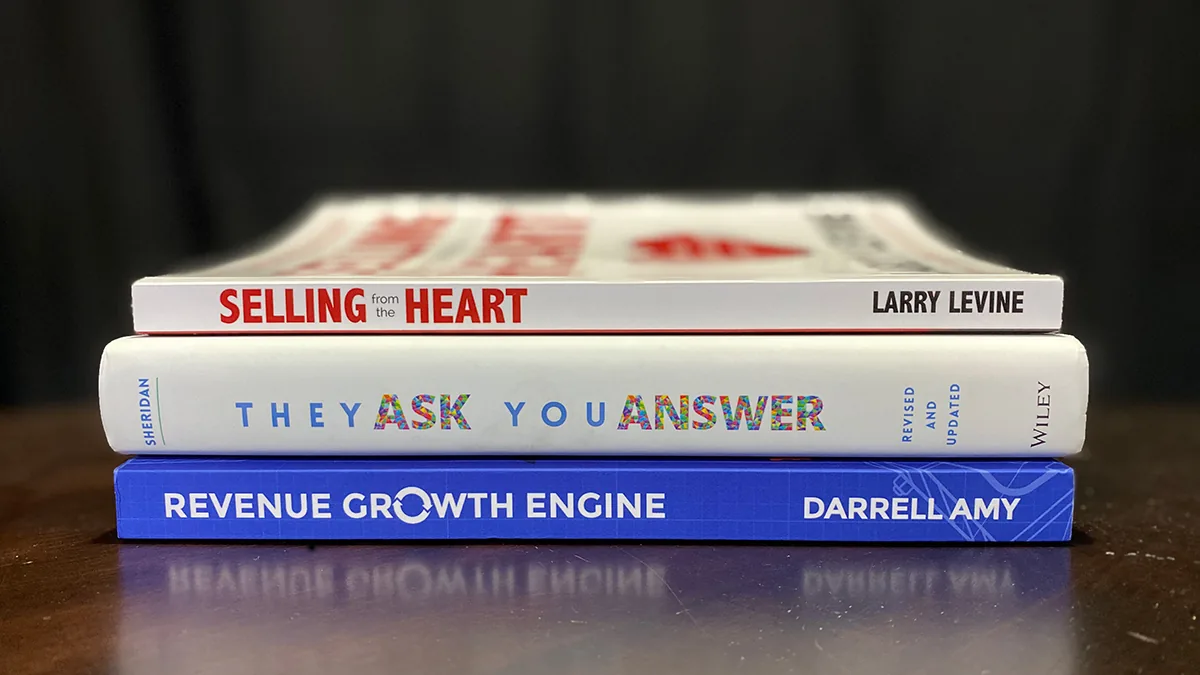
I have a couple of confessions to make; I used to hate reading! I would often read the Cliff Notes versions if one was available. In college, I would do my best to skim what I had to read and fake my way through the discussion. In hindsight, not the best decision, but I passed, right? However, as I have gotten older, I have forced myself to read more. My thoughts are I already have a master’s degree, reading sales and marketing books is cheaper than an MBA, less time-consuming, and I don’t have to do accounting classes! I am happy to report as of writing this, I have read 14 books just this year.
Some have been short, some have been longer. Some I struggled to get through, a few I could take or leave, while others really spoke to me. Of all that I have read in the past few years, there are three maybe four that I think every entrepreneur and small business owner needs to read. I call it the sales and marketing trifecta. Without further ado, here is the order I think you should read them.
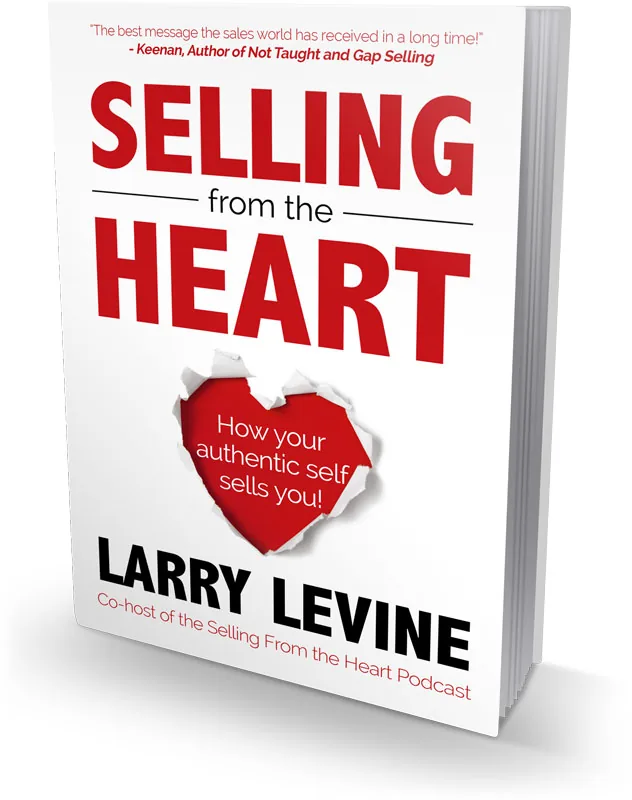
1. Selling From The Heart by Larry Levine
If you are unfamiliar with Larry, he was a copier salesman in LA and really built strong relationships with his clients. I first learned about him through a couple of podcasts and started following him on LinkedIn. When he started up his podcast, I started listening to it, and I still listen to it weekly. When I heard the “Selling From The Heart: How Your Authentic Self Sells You!” came out, I ordered a copy and put it in the reading queue.
Larry exudes what a good salesperson should be. He often says, don’t be “an empty suit.” What that means is you need to be authentic and genuine, don’t walk in with the sole purpose of making a sale, or as he says, “having commission breath.” Ultimately you want to come to a place where you want to help clients, or in other words, “sell from the heart.” To do this, you have to build relationships with clients, be it in person, over video, or on social. Larry says you have to build relationships before you can sell someone. Your clients need to make sure that they know who you are, and you know who they are.
You don’t want to be the person who walks through the door once a year at renewal or just at the holidays who is dropping off the tin of cookies. Even worst, they think that you are there just there to sell them something.
What I took away and what I try to do with my clients is that I want to know you by name. I want to know about your family. If you see me in the grocery store, I want you to come up and speak to me, and I want to feel like I can do the same thing. Not like, "Oh God, there's that Chad guy. He's going to try to sell me something here in the middle of Walmart."
2. They Ask, You Answer by Marcus Sheridan
“They Ask, You Answer: A Revolutionary Approach to Inbound Sales, Content Marketing, and Today's Digital Consumer” (TAYA) has to be one of the books that changed my thought process and outlook on what I do. If you have been around me longer than 10 minutes and the subject of content marketing or what I do, you will probably hear me reference it.
To me, the book is one of the best marketing books out! If you do any kind of research or a poll on social, you might see Seth Godin’s “Purple Cow” pop up as a must-read. I have read both TAYA and “Purple Cow.” However, having read TAYA, I would read a passage and be like, ok, this is the TAYA concept. I am thankful that I had checked the book out from the local library while it was on order. Needless to say, I shipped the book back because I didn’t care for it. Now I don’t mean to discount “Purple Cow.” What Seth Godin says may resonate with you. However, I have deep blue-collar roots. While Marcus has risen to be an influential figure in the sales and marketing world, he is still a pool guy, so he says!
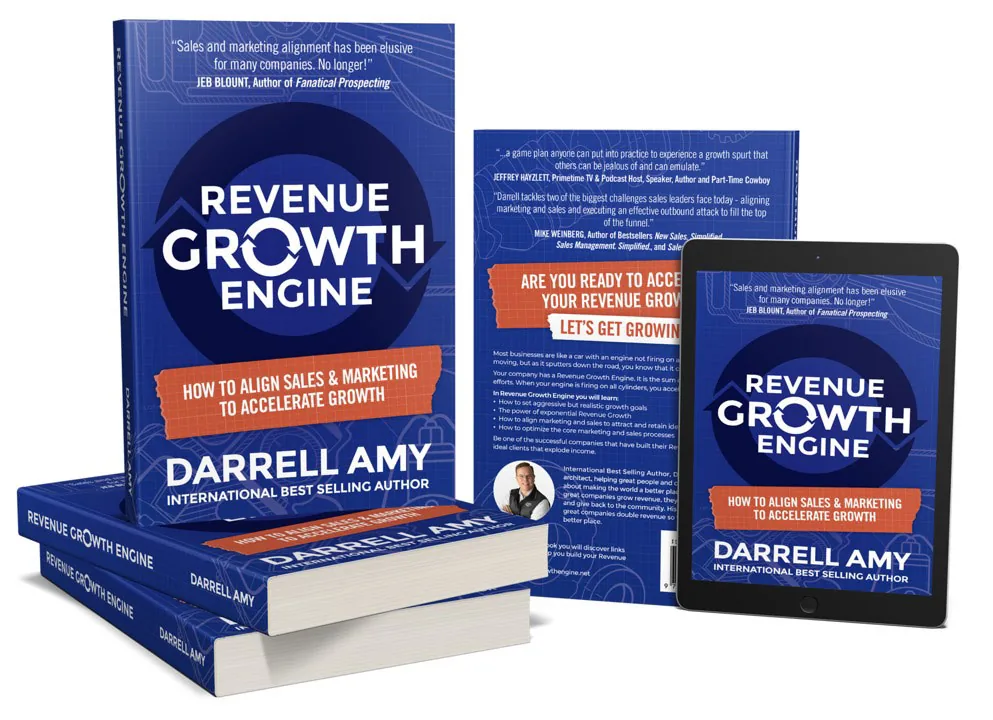
3. Revenue Growth Engine by Darrell Amy
The third book in my trifecta is “Revenue Growth Engine: How To Align Sales & Marketing To Accelerate Growth.” Darrell co-hosts with Larry on the Selling From The Heart Podcast. I like Darrell’s book because it is a culmination of the two previous books I mentioned.
The bottom line is that “Revenue Growth Engine” gives you a good summary and consolidation of “Selling From The Heart,” and “They Ask, You Answer” with a healthy dose of how to bring it all together to really get a good return on your investment which will help a business grow.
Bonus: Start With Why by Simon Sinek
“Start with Why: How Great Leaders Inspire Everyone to Take Action” by Simon Sinek has completely changed my mindset on how I approach a prospect. I have always felt like I had a “givers gain” or pay it forward mindset because I don't want to just sell anybody my services. The book helped me clarify my mission and it has helped Cube Creative solidify the company as a whole. I can proudly now say that I help small businesses grow by helping them to build and manage their online presence. I even start conversations with prospects by asking if they want to grow their business, why they exist, and why they do what they do.
Essentially if you're starting a business or thinking about starting a business, you need to read “Start With Why” so so that you can ultimately decern and know why you want to do what you do. If you're struggling in your career or in a company where you feel like you're struggling, you should also give it a read.
Final Thoughts
Depending on your role or background I would recommend starting with “Selling From The Heart,” then “They Ask, You Answer.” If you are short on time, then you should read “Revenue Growth Engine.” However, I think you will get more out of it by reading it last as it will help tie in the key aspects and topics that you may not realize when you read the others.

Written By: Chad J. Treadway | September 22, 2020
Chad is our Chief Smarketing Officer. He will help you survey your small business needs, educating you on your options before suggesting any solution. Chad is passionate about rural marketing in the United States and North Carolina. He also has several certifications through HubSpot to better assist you with your internet and inbound marketing.

On the surface, Google My Business (GMB) is a FREE tool from Google that helps businesses manage their online presence on the search engine results page and maps. It is the vessel that allows the local search to be more accurate. The only stipulation is that you must meet people in person. In other words, you can’t operate 100% online.
For example, if you chartered Nautilus trips, you could have a Google My Business listing, however, if you just sell seashells online, it's a no go.
Before we dive too much into GMB, let's look at how people search.
Written By: Chad J. Treadway | July 28, 2020
Chad is our Chief Smarketing Officer. He will help you survey your small business needs, educating you on your options before suggesting any solution. Chad is passionate about rural marketing in the United States and North Carolina. He also has several certifications through HubSpot to better assist you with your internet and inbound marketing.
It’s a competitive market for today’s small business owners. You aren’t only competing against other small business owners but depending on your area you might also be competing with larger companies and franchise operations. But there is good news, much like a David and Goliath, being smaller and also help make you more nimble allowing you to act quicker. If you know how and what information to monitor, your business can be as successful as any.
Here are seven tips for helping your small business save time and money and making your business more profitable.
1. To sell right, you have to buy right
One way small businesses can compete is by being competitive with your prices of physical products. The best way to do that is to buy competitively. Try to buy factory direct where possible, attend wholesale auctions, and consider establishing a buying co-op with other small but noncompeting businesses.
2. Cost: It’s everyone's concern
Make every attempt to help motivate your staff to be mindful of costs and the net profit. The goal being they are as concerned with controlling costs as with generating sales. One way you could encourage participation would be to implement a bonus program based on a percentage of costs saved.
3. Treat your customers right and they'll keep coming back.
Ben Franklin is credited with saying that “The bitterness of poor quality remains long after the sweetness of low price is forgotten.” This goes along with your customer service. While watching the cost is a factor, you don’t want to sacrifice your quality or customer service to do it.
4. Build a network and be mentored
Finding a good mentor be it someone local, regional, or thousands of miles away, will help you navigate the journey of business ownership. Build out a network of professionals in your industry you will find out what others are doing to manage problems with inventory, receivables, personnel, fixed assets, technology, marketing, etc.
5. Change isn’t a bad thing
Legend has it that Henry Ford said, “If I had asked people what they wanted, they would have said faster horses.” Think about that, if it had not been for creative ideas and innovation we wouldn’t have the mobility we do today. See change isn’t a bad thing! Just because its the way its always been down doesn’t mean there isn’t a better way.
6. Ask your employees and your customer service reps
Businesses shouldn’t be afraid to ask the staff and customer service reps for suggestions. These are the folks that are directly involved with both your product and your customers. They are in the perfect position to suggest improvements and give you an insight into what is working and what’s not working.
7. Examine your current marketing strategy
For smaller companies a yearly marketing plan may be efficient, for larger ones, it may be better to look at doing something quarterly or monthly. If you are focusing on content and digital marketing its much easier to pivot and make changes.
Conclusion
Hopefully, these seven tips will help you set up your small business for success! If you are interested in a free review of your current website or would like a consultation on what we can do to help you with your website, content marketing, and digital marketing needs, please be sure to reach out!
Written By: Chad J. Treadway | July 07, 2020
Chad is our Chief Smarketing Officer. He will help you survey your small business needs, educating you on your options before suggesting any solution. Chad is passionate about rural marketing in the United States and North Carolina. He also has several certifications through HubSpot to better assist you with your internet and inbound marketing.
I hate to break it you, but your social media page isn’t your website. It’s a common misconception by many small businesses since they are so accessible and popular. However, I have said it before and will continue to say, social media platforms are rented spaces. While they can be used as part of a greater content marketing strategy, you still have to have a website for it all to live. Here are seven quick reasons why a website is non-negotiable!
1. Social media is great but it's NOT your website
We see this a lot and I have even addressed it in a previous post. While most of your potential customers may have access to social media, such as Facebook, Twitter, or Instagram, there are others who shocking don’t have a profile! When they try to load your page, they are forced to log in or create a profile. All this does is creates frustration for the searcher and they move on to the next link. Also at any point, the parent company of the social media channel could decide to charge for its services.
By having a business website (separate from social media). you are providing your customers with one location where they know where to find you! It would be amiss if I also didn’t mention that your website is one of the places that search engines and mapping software go to ensure your name, address, and phone number.
2. 5 W’s your website has that
Today we search for everything. Searching is easy and the ability to do it is as close as the nearest voice-enabled device, phone, tablet, or computer. All these devices use some sort of search engine to find information. As part of a greater content strategy you will want the correct information scattered around the web, your website should be the main source and should provide the answers to user’s questions and what they need to know about your business.
- Hours of operation? Check.
- Services offered? Check.
- Phone number? Check.
- Email address? Check.
- How much does it cost? Maybe?
Consider the alternative of only having a social media page. If any of these items are not clearly displayed on the page, the customer would be required to contact you to get the answers. And let us be honest how often are you going to call a business to find out their hours if you can’t Google it.
Also, think about this, by talking about the cost of your product or services is one of the biggest questions that searchers need answers to. We have a post that talks about it here.
3. Simply put, a website establishes credibility
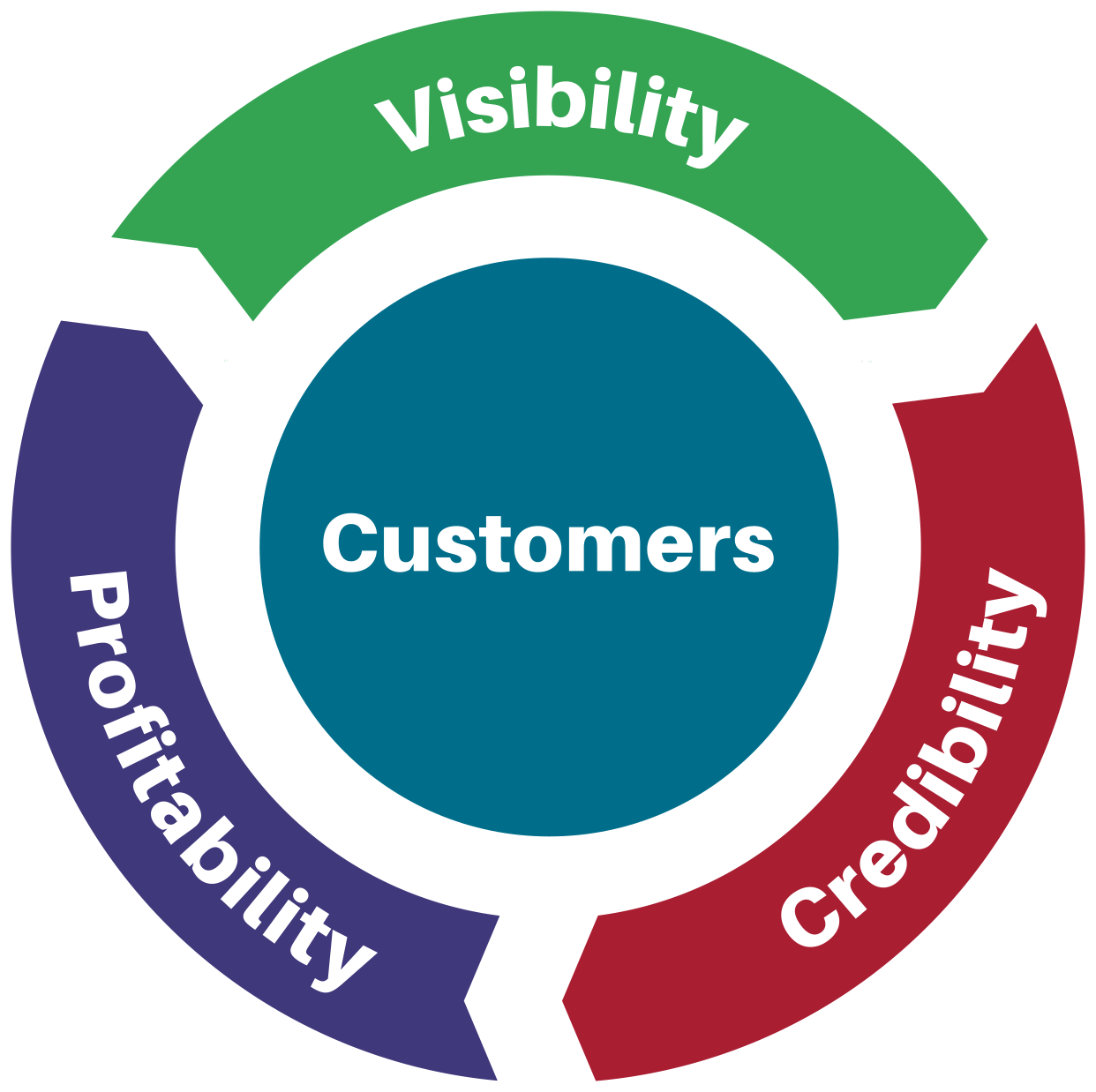 Having a professional website immediately begins building trust and credibility with your customers. Think about a time you Googled a business and the only link that came up was a social media page or just a Google My Business listing. Did you click the link or continue searching for an actual website? Chances are searchers are going to go on, unless you are in an industry that has very little competition and relies on referrals and word of mouth.
4. Your website must look professional.
Often, your website is the first impression customers get of your business. They’re introduced to your brand, your values, and your services. A website that is challenging to navigate or unattractive can quickly have potential customers hitting the back button!
Again, think back to a time you clicked on a website and couldn't quickly find the information you were searching for. You DO NOT want your potential customers to have that same experience when they click on your website.
5. Your website can be an EXPERIENCE for your customers.
When they come to your website, you have the opportunity to guide them where you need them to go. It may be your history and story, your mission, or your vision. Ultimately you want them to convert and either buy something or contact you.
6. Enhances the “know-like-trust” relationship with your customer.
It has often been said, “People Do Business With People They Know, Like and Trust”. While there is debate on the origin, the meaning behind it isn’t debatable. If you can build your credibility and earn my trust, then you have a solid chance to earn my business. Each time someone sees your or your brand, the more they start to trust you and your business. It is more recognizable, and you are more likely to be on their mind when they need your service or product.
7. A website is worth the investment
Your website is your single best marketing tool. Spending a little time, and investing in it will pay dividends.
While there are the DIY options available, my question is always this, what is your core business? Is it building a website and creating a marketing machine? If it takes you 8 hours to build a website, how much did you lose in actual work time from your core business? Hiring a professional agency to design, program, and develop a website with and implement a content strategy will ensure that your users will have the most effective user-experience.
Final Thoughts
Hopefully, these seven tips help you understand that social media isn’t all that you need. At the very least my hope is that you have some food for thought and something to ponder over the coming weeks or months. I encourage you to reach out sooner than later if you have any questions. Cube Creative is here to help you with your website, content marketing, and digital marketing needs!
Written By: Chad J. Treadway | June 11, 2020
Chad is our Chief Smarketing Officer. He will help you survey your small business needs, educating you on your options before suggesting any solution. Chad is passionate about rural marketing in the United States and North Carolina. He also has several certifications through HubSpot to better assist you with your internet and inbound marketing.

Jump back in your time machine to the year 1986. Think about what was popular and how different the world we are living in now is versus 34 years ago. 34 years ago computers were barely a thing, there was no such thing as the internet as we know it today or smartphones. Why is that small business still think they can market the same way as they did in the past?
I have often said and will continue to say until someone can prove to me that traditional marketing for small businesses is dying. Traditional marketing is in your face, says look at me and don’t you forget about me! This is all in hopes that you remember them when and if you need them.
Learning to market in this new digital age can be tricky at best. While most people are out there doing their sales and marketing at level 10. What I want to help you do and show you what to do is, give you that little extra push over the cliff, and turn up your sales and marketing to 11!
Written By: Chad J. Treadway | June 02, 2020
Chad is our Chief Smarketing Officer. He will help you survey your small business needs, educating you on your options before suggesting any solution. Chad is passionate about rural marketing in the United States and North Carolina. He also has several certifications through HubSpot to better assist you with your internet and inbound marketing.
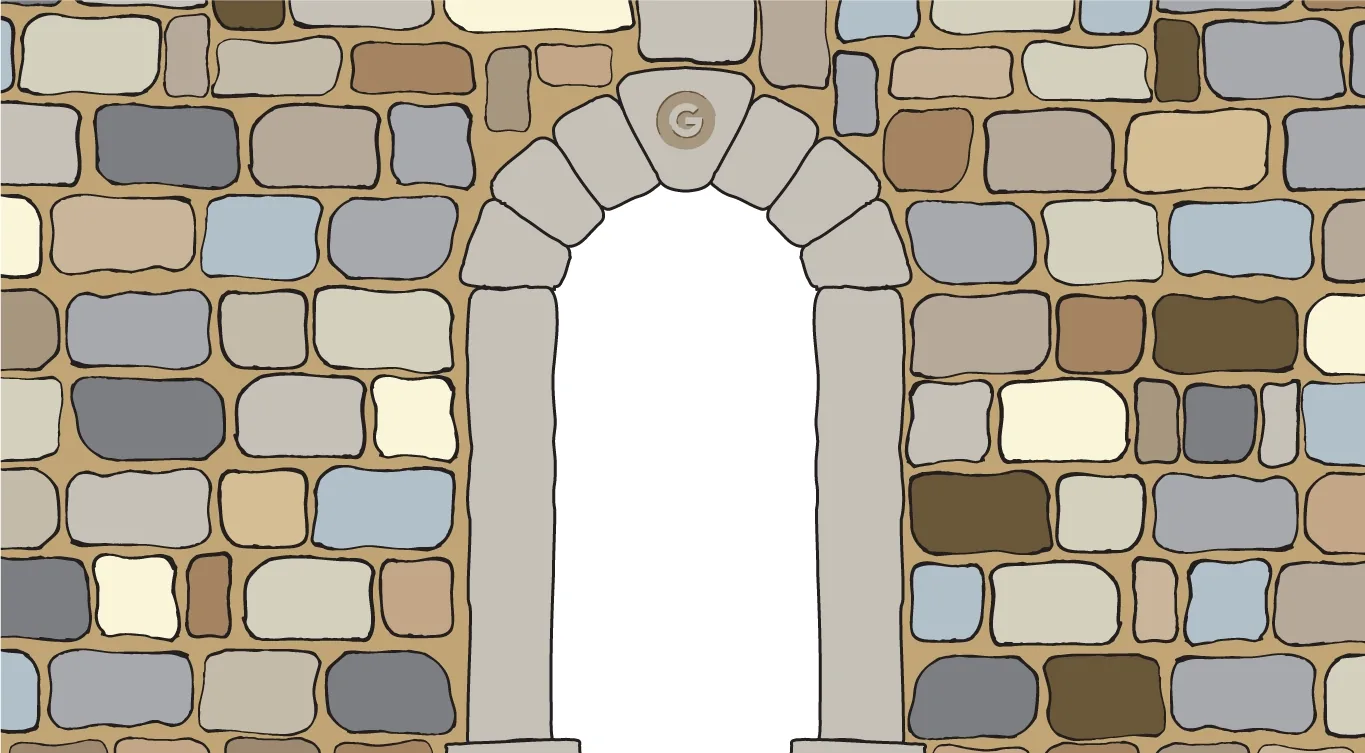
In this final post of the Building The Arch Series, think of the archway opening we have built through the wall. All the noise and distractions that have prevented people from finding your business.
We are to the point we can add one of the most critical pieces in an arch, which is the keystone. The keystone is the wedge at the top, upon which all the other components lean. It is the essential component of the arch system, and it is always the last piece set in place. Essentially, it locks all other components into position. For our purposes, Google My Business is that keystone.
Written By: Chad J. Treadway | May 29, 2020
Chad is our Chief Smarketing Officer. He will help you survey your small business needs, educating you on your options before suggesting any solution. Chad is passionate about rural marketing in the United States and North Carolina. He also has several certifications through HubSpot to better assist you with your internet and inbound marketing.

In my previous posts, I have covered a lot of ground, from pillar pages and blogs to landing pages and social media. In this post, I want to summarize paid ads, primarily on display, search, social ads and pay-per-click.
I will be 100 percent honest with you, I am not a fan of paid ads or paid media. I run an ad blocker on most of my devices. Regardless of my personal experience or feelings on them, I will agree they have their place when it comes to overall marketing strategy. When clients ask me about paid ads or paid media, I will often equate them to a drug or a quick fix. They can help you get a quick boost in traffic and quickly fill the pipeline.
Written By: Chad J. Treadway | May 19, 2020
Chad is our Chief Smarketing Officer. He will help you survey your small business needs, educating you on your options before suggesting any solution. Chad is passionate about rural marketing in the United States and North Carolina. He also has several certifications through HubSpot to better assist you with your internet and inbound marketing.

In a couple of previous posts, I have talked about blogging, the three types of landing pages, and email marketing. In this post, I wanted to talk about social media and how it is another stone in the same archway.
I am sure we can all admit that part of the wall of distractions we have in this modern world is social media. While it has its benefits, it has its drawbacks as well. While I will not dive into those for this post, I do want to help you leverage the power of social to grow your business.
Written By: Chad J. Treadway | May 14, 2020
Chad is our Chief Smarketing Officer. He will help you survey your small business needs, educating you on your options before suggesting any solution. Chad is passionate about rural marketing in the United States and North Carolina. He also has several certifications through HubSpot to better assist you with your internet and inbound marketing.

Think about our archway and the wall we are trying to get through. With all the noise and distractions, what is another way we can break on through and get to the right people? Email marketing!
Written By: Chad J. Treadway | May 08, 2020
Chad is our Chief Smarketing Officer. He will help you survey your small business needs, educating you on your options before suggesting any solution. Chad is passionate about rural marketing in the United States and North Carolina. He also has several certifications through HubSpot to better assist you with your internet and inbound marketing.
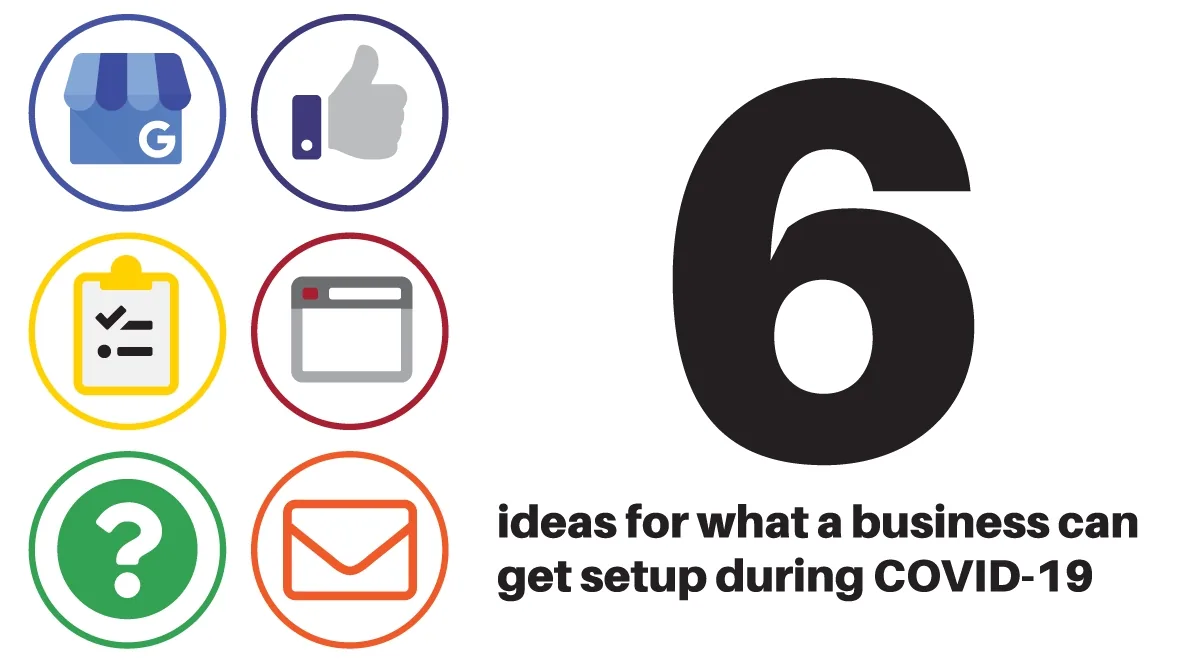
Let's face it the COVID-19 pandemic has taken many businesses by surprise. Many businesses are temporarily closed, or employees are working from home.
While many things may be out of your control, there are six things that businesses can get set up and do right now!
If you need help with any of the items on this list, except for the honey-do-list (we are maintaining social distancing), reach out and let us help you. We are here and able to guide you and provide additional information on how to help you survive and even grow your business.

1. Own Google Business
First, Google your business. On the side, you should see your information. If your business doesn't show up on the right side, go to Google My Business and set it up.
Be sure to also make sure all the information is up-to-date.
2. Set Up Website
This should be clean, professional, and the most current information. Your website should cover the 5 W's (who, what, when, where, why, and how) about your business.
3. Social Media
There are tons of social media platforms out there. We are not saying to be active on all of them, but pick one that you feel will help you get your message out to the world.
You should have the basic information from Google and your website listed.
4. Know Your Logo
We know that you know your name, but your logo is what makes you different from another business across the world with your same name. A reliable logo maker can help you create a distinctive design that truly represents your brand. You should have versions in PDF and JPG at a minimum.
5. Think About Projects You Haven't Had Time To Do
We all have that honey-do list that we just can not find time to get done. Now is the perfect time to get that painting project or shelves hung.
When customers come back into your business or store, it will be a pleasant surprise for them.
6. Consider An Email List
Email is one of the easiest ways to get information out to a lot of people at once. This is an excellent way to share with the community about sales, new merchandise, and events coming up for your business.

Written By: Adam Bennett | May 04, 2020
Adam is the president and founder of Cube Creative Design and specializes in private school marketing. Since starting the business in 2005, he has created individual relationships with clients in Western North Carolina and across the United States. He places great value on the needs, expectations, and goals of the client.

In a couple of previous posts, I have talked about pillar pages, blogging, and backlinks. In this post, I plan to discuss the three main types of landing pages, and how they are yet another stone in the archway, we are ultimately building. The three types are marketing landing pages, search engine optimized landing pages, and geographic landing pages.
Marketing Landing Pages vs. SEO Landing Pages vs. Geographic Landing Pages
Similarities between the three
All the types of landing pages are simply pages on your websites. Like any other page on your website, landing pages are there to provide value and information to a searcher or user. According to Seth Godin, a landing page is optimized specifically to encourage 1 of 5 actions:
- Get a visitor to click (to go to another page, on your site or someone else's)
- Get a visitor to buy
- Get a visitor to give permission for you to follow up (by email, phone, etc.). This includes registration of course.
- Get a visitor to tell a friend
- Get a visitor to learn something, which could even include posting a comment or giving you some sort of feedback
Frequently, a landing page may or may not have a menu or navigation; it will be super clean and focus on one topic or one keyword phrase.
Differences between the three
Marketing Landing Page
A marketing landing page is going to be used in conjunction with some type of campaign. These will usually be an internet marketing campaign such as email, social and/or pay per click ads, or display ads. The page exists to help track and capture the traffic from these sources and get the user to do one of the five actions above.
Search Engine Optimized (SEO) Landing Pages
SEO landing pages, as then name implies, are highly optimized for search engines and user intent. Google strives to serve the most relevant content to what a searcher is searching for, and an SEO landing page can help with that.
Geographic Landing Pages
A geographic landing page, geo targeted landing page or local landing page as they are sometimes called are all a variation of an SEO landing page. Where an SEO landing page will focus on one keyword or keyword phrase, the geographical as the name implies will include a geographical location. They are designed for local search or when a user is searching for the keyword or keyword phrase in combination with the "near me," "city," or zip code determined by Google.
What’s the desired outcome?
According to Search Metrics, user intent, or search intent is the "goal or intention an internet user has when entering a search term into a search engine." Unofficially, because Google keeps the algorithm a closely guarded secret, much like that of the recipe of Coca-Cola, WD-40, or KFC 11 herbs and spices. Those in the industry do feel like it is a ranking factor and maybe even more so than individual keywords.
Here are a few tips and tricks to help you optimize your landing pages
1. Focus on content
You want to focus on one keyword or keyword phrase and the topic around it. Google is smart; it can tell the difference between cars as in automobiles, cars the movie, or the band the Cars, based on the context of the page and the website. This will also allow you to put more keywords into headings and links.
A big word of caution, do not keyword stuff trying to get a higher ranking. Google says it is “the practice of loading a webpage with keywords or numbers in an attempt to manipulate a site's ranking in Google search results. Often these keywords appear in a list or group, or out of context (not as natural prose).”
Some examples are:
- Listing all the cities, communities in your state, or the states you service and want to rank for.
- Repeating the same words or phrases so often that it sounds unnatural, for example: We sell custom kitchen cabinets. Our custom kitchen cabinets are handmade. If you're thinking of buying a custom kitchen, please contact our custom kitchen craftsmen.
In other words, you want to have good, well-written content that actually brings value to the user and content the user can understand. Google has gotten really smart, and with its latest major update (BERT), can understand words and phrases much like a toddler does.
2. Links
In every community, there is that one neighborhood where all the streets look the same, the roads twist and turn, and it is easy to get lost in them. In my neck of the woods that is subdivision is Lynnwood. Just like it is easy to get lost there, Google wants to get lost in your website as well. It wants to see links to relevant pages within your site.
As much as Google wants to get lost in your site, you also need to provide a way out by linking to content on other websites. For a moment, let's look back at how Google was started. It was started by Larry Page and Sergey Brin, both in graduate school. Think back to the days when you had to write a research paper or term paper. You had to have a bibliography to show that you had done your research and not just copied it word for word. Google had the same mentality when they stated as your teacher or professor in that they like to see those citations and links so they can go check out those pages.
The links help you, and it helps them. In the academic world, nothing is better than getting cited in someone else's work. Thus the dawn of the backlink, I plan to cover backlinks in a future post because they are that important!
3. Page Headings and Subheadings
One of the most significant advantages of landing pages is that you can make your internal linking strategy utilize the same keywords in your anchor text, page headings, and subheadings.
I may have keywords in my headings, such as red shut off valves, blue shutoff valves, and yellow shutoff valves. In the body text, I may have links to water shutoff valves and gas shutoff valves. What this means is I can capture on keyword search phrases and longtail keyword phrases such as red water shutoff valves, blue water shutoff valves, and yellow gas shutoff valves.
4. Tracking
While tracking your visitors can be done through Google Analytics and its good for a high level and basic approach. If you want more information on how your users are interacting with the information on your website and when they are coming back, by installing a tracking script such as one from HubSpot will help you gain more insight into your visitors and their journey.
For smaller sites, this may not be as important, but as your site grows or if you are doing some type of off-site marketing, PPC, email, or social, then this is a must! If you would like more information feel free to reach out. We would be happy to help you!
5. Page length: Short enough to keep it interesting but long enough to cover the subject
There is considerable debate on how long a piece of content on a website should be. One study says it should be 2000 words or more. While others say, it should be shorter, between 600 - 800 words. While the debate rages on, I like to take a cue from my senior English teacher, Mrs. Nichols, "It should be like a woman's skirt, long enough to cover the subject but short enough to keep it interesting."
While that may sound a bit crude, it is the honest truth, and you can use it in your own writing. In the digital age we live in, we skim more than we read word for word. We scan for the keywords, and we are looking for the answers to our question(s). Use headlines and bullet points to make it easier and don't ramble on and on just trying to hit a certain number of words. It doesn't do you any favors in both the eyes of the user or that of Google.
6. Keep the pages fast
We live in a fast-paced world, long gone are the days of dial-up where we had to wait minutes to get online, and we would wait patiently for a page to load. According to a statistic put out by Kissmetrics, 47% of people expect pages to load in less than two seconds, and 40% will abandon it after three seconds.
7. Share your pages on social
While social media may or may not be a direct ranking factor, there is evidence that traffic to your site isn’t going to hurt. Be sure to build sharing your pages into your social media strategy.
Conclusion
As we continue to build our archway, you can use marketing landing pages, search engine optimized landing pages, and geographic landing pages to really bolster your the power of your website.
If you find yourself being overwhelmed and in need of help, feel free to contact us and we will be glad to help you better understand your content strategy and how landing pages can be incorporated.
Written By: Chad J. Treadway | April 28, 2020
Chad is our Chief Smarketing Officer. He will help you survey your small business needs, educating you on your options before suggesting any solution. Chad is passionate about rural marketing in the United States and North Carolina. He also has several certifications through HubSpot to better assist you with your internet and inbound marketing.
We have all been there, the Manic Monday! While we can"t help you get to work on time, we wanted to share six positive and notable facts about Monday and 88 famous quotes to help you get through the day.
Written By: Chad J. Treadway | April 27, 2020
Chad is our Chief Smarketing Officer. He will help you survey your small business needs, educating you on your options before suggesting any solution. Chad is passionate about rural marketing in the United States and North Carolina. He also has several certifications through HubSpot to better assist you with your internet and inbound marketing.