Are you tired of watching your pest control business struggle to attract new customers despite your best efforts? Do you feel like you're constantly playing catch-up with your competitors, who seem to have cracked the code on effective marketing? If these challenges sound all too familiar, don't worry – you're not alone in this "infest-ation." Many pest control business owners and marketers find themselves in the same boat, wondering how they can stand out in an increasingly crowded market and win more business.
But here's the good news: With the right strategies and tactics, you can turn the tide and start attracting more customers than ever before. In this blog post, we'll explore five proven pest control marketing strategies that will help you boost your online presence, leverage the power of offline marketing, focus on customer retention, optimize your website for search engines, and embrace social media marketing.
By the end of this post, you'll have a clear roadmap for taking your pest control marketing to the next level and driving sustainable growth for your business. So, let's dive in and discover how you can start implementing these strategies today!

Written By: Chad J. Treadway | November 18, 2024
Chad is our Chief Smarketing Officer. He will help you survey your small business needs, educating you on your options before suggesting any solution. Chad is passionate about rural marketing in the United States and North Carolina. He also has several certifications through HubSpot to better assist you with your internet and inbound marketing.

As a school administrator, are you feeling stuck in a rut with your school admission marketing ideas? You know your school offers an exceptional education, but getting that message to resonate with prospective families feels like an uphill battle. Perhaps you've poured countless hours into crafting the perfect brochure, only to see it tossed aside. Or maybe you've invested in digital ads that seem to disappear into the vast ocean of online content. The pressure to maintain enrollment numbers looms large while the competition for students grows fiercer by the year.

Written By: Adam Bennett | November 18, 2024
Adam is the president and founder of Cube Creative Design and specializes in private school marketing. Since starting the business in 2005, he has created individual relationships with clients in Western North Carolina and across the United States. He places great value on the needs, expectations, and goals of the client.
Are you a home service business owner feeling overwhelmed by the constant pressure to market your services effectively? You're not alone. In today's fast-paced digital world, it can feel like you're shouting into a void, struggling to make your voice heard above the noise of countless competitors. You know your skills are in demand, but connecting with the right customers at the right time seems like an elusive goal. The endless parade of marketing buzzwords and ever-changing social media algorithms only adds to your frustration.
But what if there was a way to cut through the clutter and truly showcase your expertise to those who need it most? Imagine a world where your phone rings with qualified leads, your calendar fills with bookings, and satisfied customers eagerly spread the word about your outstanding service. This isn't just a pipe dream – it's entirely possible with the right marketing strategies tailored specifically for home service businesses like yours.
In this guide, I'll walk you through proven, actionable techniques to elevate your marketing game and grow your business. Whether you're a seasoned pro looking to stay ahead of the curve or a newcomer trying to establish your brand, you'll find valuable insights to help you connect with your ideal customers, stand out from the competition, and build a thriving home service business. Get ready to transform your marketing efforts and watch your business soar to new heights!
Written By: Chad J. Treadway | November 18, 2024
Chad is our Chief Smarketing Officer. He will help you survey your small business needs, educating you on your options before suggesting any solution. Chad is passionate about rural marketing in the United States and North Carolina. He also has several certifications through HubSpot to better assist you with your internet and inbound marketing.
You've mastered the art of pest control, turning chaos into calm for countless businesses and homeowners. But now you're facing a different kind of infestation: the entrepreneurial bug. As you consider trading your technician's toolkit for an owner's playbook, you might be falling into what Michael E. Gerber calls the "E-Myth" trap – assuming that technical skills alone are enough to run a successful business.
The hard truth is that being a great pest control technician doesn't automatically make you a great pest control business owner. It's a common misconception that leads many skilled professionals to struggle when they strike out on their own. But don't worry – I’m here to bridge that gap. Many aspiring business owners find it helpful to take a short online course in entrepreneurship to build foundational knowledge and avoid common pitfalls.
In this guide, we'll help you navigate the transition from working "in" your business to working "on" it. We'll show you how to create a pest control business plan that goes beyond extermination techniques to cover the critical aspects of entrepreneurship.
Ready to build a pest control empire that's bigger than just you? Let's dive in and create a business plan that will have both pests and competitors running for cover.
Written By: Chad J. Treadway | November 13, 2024
Chad is our Chief Smarketing Officer. He will help you survey your small business needs, educating you on your options before suggesting any solution. Chad is passionate about rural marketing in the United States and North Carolina. He also has several certifications through HubSpot to better assist you with your internet and inbound marketing.
As a service area business owner in a rural market, you know firsthand the unique challenges that come with promoting your services and attracting new customers. In a tight-knit community where everyone seems to know each other, it can be tough to stand out and make a lasting impression. You may have tried traditional advertising methods or even dabbled in online marketing, but somehow, you're still struggling to get the word out and bring in a steady stream of clients.
Written By: Chad J. Treadway | November 13, 2024
Chad is our Chief Smarketing Officer. He will help you survey your small business needs, educating you on your options before suggesting any solution. Chad is passionate about rural marketing in the United States and North Carolina. He also has several certifications through HubSpot to better assist you with your internet and inbound marketing.

Marketing campaigns for schools aren’t just about attracting students anymore. This goes beyond simply getting people through the door. It’s about building a brand, developing relationships with prospective students, and showcasing your school's value. Whether you're a small private school or a large public institution, you need a school marketing strategy to help you thrive. In a world saturated with digital information, capturing the attention of parents and students requires thoughtful and engaging marketing campaigns for schools. This means embracing innovative approaches and staying ahead of the curve.
Written By: Adam Bennett | November 13, 2024
Adam is the president and founder of Cube Creative Design and specializes in private school marketing. Since starting the business in 2005, he has created individual relationships with clients in Western North Carolina and across the United States. He places great value on the needs, expectations, and goals of the client.
As a dedicated pest control professional armed with your trusty sprayer and a wealth of knowledge about creepy crawlies. You've successfully battled everything from armies of ants to colonies of cockroaches. But there's one pesky problem you just can't seem to squash – how to effectively market your business in the digital age.
If you're feeling overwhelmed by this challenge, you're not alone. Many pest control business owners find themselves struggling with the complexities of modern marketing strategies. You might be asking yourself, "How can I improve my marketing efforts and attract more customers?"
Well, it's time to crawl out from under that rock and embrace the power of social media marketing! Just like how a single ant can lift 50 times its own body weight, social media can give your pest control business a strength you never thought possible.

Written By: Hannah Kilpatrick | November 13, 2024
Hannah Kilpatrick Cube Creative DesignHannah Kilpatrick graduated from Western Carolina University in 2021 with a Bachelor of Science in Communication with a Minor in Marketing and a Concentration in Public Relations. She has been around social media since its creation. (Meaning, she was in the first grade when Facebook became available to the general public.) As our very own professional Gen-Z, Hannah is a whiz when it comes to social media creation and paid advertising.
In the world of pest control marketing, SEO can feel like a maze filled with misleading information and outdated strategies. It’s easy to fall into traps that promise quick results but lead to penalties or wasted resources. For pest control companies, where local visibility and lead generation are essential, knowing what works—and what doesn’t—is critical.
In this comprehensive guide, we’re here to bust 20 common SEO myths that might be holding your pest control company back from maximizing its online presence. From keyword stuffing to local SEO, we’ll explain what really matters and how you can improve your website’s rankings.
So, let’s dive in and exterminate these SEO myths once and for all!
Written By: Chad J. Treadway | November 11, 2024
Chad is our Chief Smarketing Officer. He will help you survey your small business needs, educating you on your options before suggesting any solution. Chad is passionate about rural marketing in the United States and North Carolina. He also has several certifications through HubSpot to better assist you with your internet and inbound marketing.
Are you struggling to attract new customers for your home services business? Imagine if you could tap into a steady stream of qualified leads who are ready to hire your services and help you build a thriving business. That's where effective lead generation comes in.
Lead generation is crucial for the growth and success of small home services businesses, such as plumbing, roofing, landscaping, and HVAC companies. In today's competitive market, attracting new customers, increasing revenue, and building brand awareness are essential for staying ahead of the competition. However, I understand that tight budgets and limited resources can make lead generation feel overwhelming. Don't worry—we're here to guide you through effective strategies that won't break the bank.
Written By: Adam Bennett | November 11, 2024
Adam is the president and founder of Cube Creative Design and specializes in private school marketing. Since starting the business in 2005, he has created individual relationships with clients in Western North Carolina and across the United States. He places great value on the needs, expectations, and goals of the client.

Imagine for a moment that you're sitting in your office, staring at the enrollment numbers for your school, and feeling that all too familiar knot form in your stomach. The figures aren't where you'd hoped they'd be, and you can't help but wonder, "What am I missing?" You've tried open houses, social media campaigns, and even spruced up your school website, but it feels like you're constantly chasing a moving target. Sound familiar?
If you're nodding your head, you're not alone. In today's ever-changing educational landscape, boosting student enrollment can feel like trying to solve a Rubik's cube blindfolded. Whether you're dealing with declining numbers in your private school, fierce competition from nearby districts, or simply aiming to reach new heights, the pressure to fill those classroom seats is real and relentless.
Written By: Adam Bennett | November 11, 2024
Adam is the president and founder of Cube Creative Design and specializes in private school marketing. Since starting the business in 2005, he has created individual relationships with clients in Western North Carolina and across the United States. He places great value on the needs, expectations, and goals of the client.

Marketing today is fast-paced and super-competitive, with businesses trying to one-up each other to claim the largest share of customers.
But while flashy campaigns may grab attention momentarily, consistency in marketing is the foundation of long-term success.
Thinking outside the box and organizing innovative marketing campaigns may be necessary to make your brand stand out from the crowd. However, keeping the same threads running through all your marketing platforms will give you an added boost.
Brands prioritizing consistent messaging, visuals, and value build stronger customer relationships, establish trust, and achieve lasting results. Here, we’ll unpack why consistency is the secret sauce in the marketing mix and how it impacts everything from customer loyalty to brand recognition.
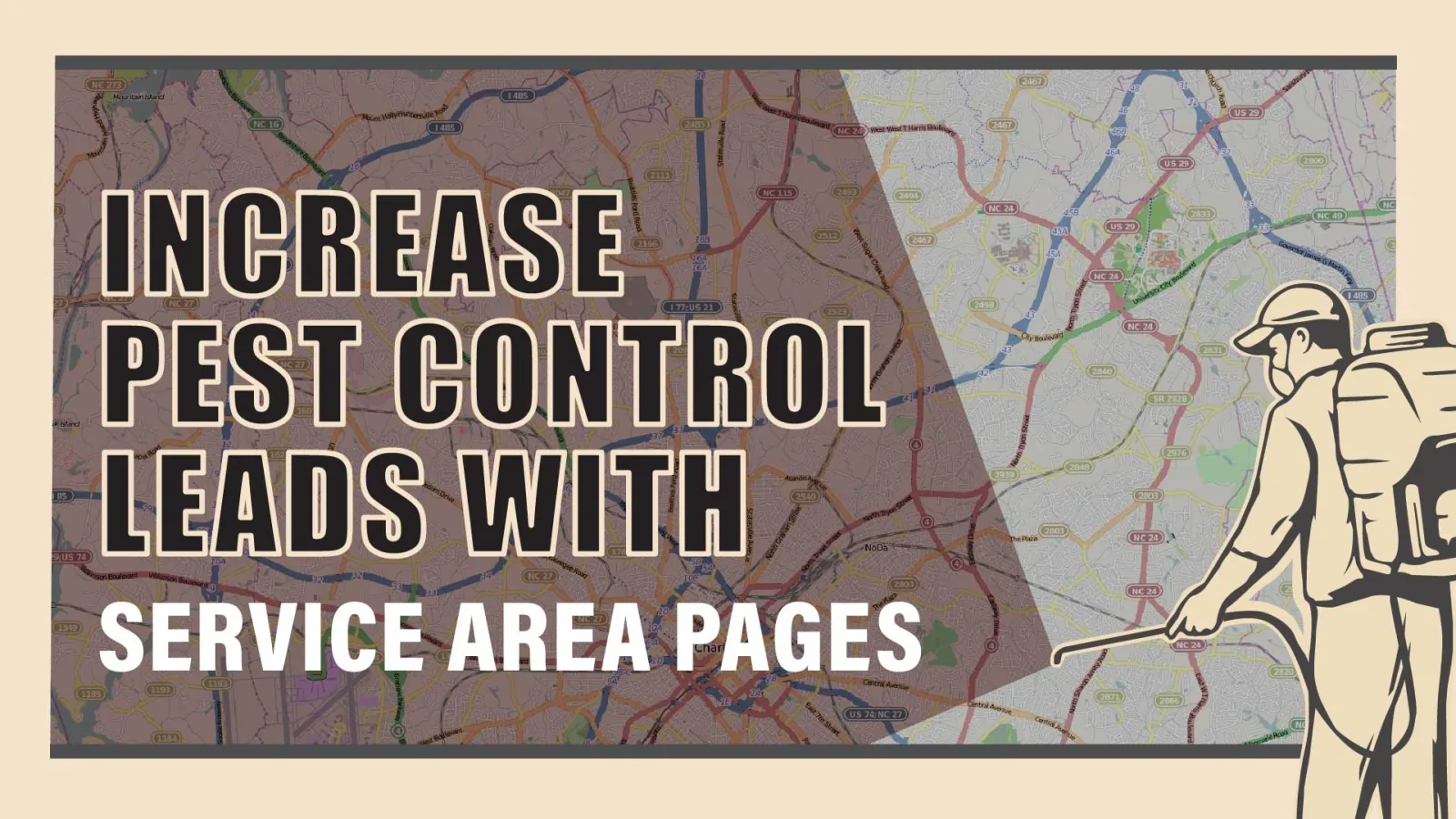
Are you tired of seeing your pest control company's website languish on the second page of Google search results? Do you feel like you're missing out on valuable leads and revenue because your competitors are outranking you? You're not alone. Many small pest control professionals struggle with improving their local SEO and attracting more customers from within their service areas.
One tactic that has gained traction in recent years is the use of service area pages with similar or “duplicate content.” These pages, also known as geographical landing pages, target specific locations within a company's service area and often contain very similar information with only slight variations in the city or region name.
In this blog post, we'll delve into the heated discussion surrounding this strategy and examine its potential benefits and drawbacks for pest control companies. We'll also share real-world case studies, expert opinions, and actionable advice to help you decide if this approach is right for your business. So, let's get started and uncover the truth behind this local SEO grey area!
The Duplicate Content Debate
The use of service area pages with similar or duplicate content has been a contentious topic in the local SEO community for years. On one side, some argue that this tactic is spammy and violates Google's guidelines. On the other side, many businesses and marketers have found success with this approach, claiming it helps them reach more customers in their target locations.
Google's Stance on Duplicate Content
Google's official position on duplicate content is nuanced. According to Google Search Central:
Duplicate content on a site is not grounds for action on that site unless it appears that the intent of the duplicate content is to be deceptive and manipulate search engine results.
However, Google also acknowledges that excessive duplicate content can dilute a website's overall quality and relevance, potentially harming its search performance. The key is ensuring that any duplicate content isn't intended to deceive or manipulate rankings.
Pros of Using Service Area Pages with Similar Content
So, why do some pest control companies choose to use this controversial tactic? Here are a few potential benefits:
- Increased Visibility: By creating dedicated pages for each service area, businesses can improve their chances of appearing in local search results for those specific locations. This can help them reach more potential customers who are searching for pest control services in their area.
- More Traffic: With increased visibility comes more website traffic. Service area pages can attract local users who are more likely to be interested in the company's services, resulting in higher engagement and lower bounce rates.
- More Leads: Ultimately, the goal of any pest control marketing strategy is to generate more leads and conversions. By targeting specific locations and providing relevant information, service area pages can help businesses capture more qualified leads and grow their customer base.
Regional Pest Control Service Group
150 Phone Calls Per Week!
Study Timeframe: 4 Years
This company covers multiple states. First we fixed the Google Business Profile, combining multiple local listings into one single profile. We wrote 4 blogs and 4 geographic landing pages each month to target each local service area and neighborhood, along with all the pests and issues the company specializes in. Once the content started making an impact with the search engines, the traffic and ranking keywords grew consistently each month, along with the phone calls.
Natural Keyword Ranking
Before Cube SEO: 74 Ranking Keywords (9 top 3)
1 Year into SEO Campaign: 1,178 Keywords (47 top 3)
2 Years into SEO Campaign: 14,058 Keywords (64 top 3)
4 Years into SEO Campaign: 7,581 Keywords (107 top 3)


Web Site Organic Traffic
Before Cube SEO: 436 Monthly visitors
1 Year into SEO Campaign: 1,916 Monthly visitors
2 Years into SEO Campaign: 2,927 Monthly visitors
4 Years into SEO Campaign: 2,859 Monthly visitors


From 2022-2024 referral traffic to their website has exploded, with a 154% increase in users and a 143% surge in sessions year-over-year, solidifying digital marketing as a key driver of their online presence.
This case study demonstrates how a strategic approach to service area pages can significantly boost visibility, traffic, and leads for a pest control company.
Cons of Using Service Area Pages with Similar Content
While there are benefits, it's essential to consider potential drawbacks:
- Not Always Effective in Competitive Markets: In highly competitive areas with many established pest control companies, simply creating service area pages may not be enough to outrank rivals. Businesses may need to invest in additional SEO efforts and content optimization to see significant results.
- Potential Risks or Drawbacks: Overusing duplicate content could raise red flags with search engines, leading to lower rankings or manual reviews. Additionally, if not implemented carefully, service area pages may dilute the overall quality and user experience of a website.
Staying Updated with Google's Algorithm
Google frequently updates its algorithms to improve search results. Recent updates emphasize content quality, user experience, and relevance. Tactics that once worked may not be as effective today. It's crucial to stay informed about these changes to ensure your SEO strategies align with current best practices.
Expert Opinions from the Local Search Forum
The Local Search Forum is a popular online community where SEO professionals and business owners discuss various topics related to local search. The issue of duplicate content and service area pages has been extensively debated on this platform, with experts sharing their insights and experiences.
I don’t think using similar content on different locations is a big deal at all if you’re not targeting the same geographic areas. After all, there is only so much you can do to get “unique” content about dental implants for all the thousands of dentists that exist in the country.
These diverse perspectives highlight the complexities and uncertainties surrounding the use of service area pages in local SEO.
Actionable Advice for Pest Control Marketers
If you're considering implementing service area pages for your pest control company, here are some actionable tips and best practices:
1. Conduct Thorough Keyword Research
- Identify relevant and valuable keywords for each service area, focusing on local search terms and user intent.
- Use tools like Google Keyword Planner, SEMrush, or Ahrefs to discover keywords with high search volume and low competition.
2. Provide Unique, Location-Specific Content
- Local Insights: Include information about common pests in each area, local regulations, community events, and/or geographic information and landmarks.
- Customer Testimonials: Feature reviews from customers in each service area to build trust.
- Customized Solutions: Highlight how your services address specific issues prevalent in each location.
3. Optimize for User Experience
- Mobile-Friendly Design: Ensure your website is responsive and loads quickly on all devices.
- Easy Navigation: Make it simple for users to find information and contact you.
- Clear Calls-to-Action: Encourage users to request a quote, schedule an inspection, or call for services.
4. Implement Technical SEO Best Practices
- Canonical Tags: Use canonical tags to indicate the preferred version of duplicate pages.
- Structured Data: Implement schema markup to enhance your search listings with rich snippets.
- XML Sitemaps: Keep your sitemap updated to help search engines crawl and index your pages efficiently.
5. Build Local Backlinks
- Community Involvement: Partner with local organizations, sponsor events, or participate in community activities to earn backlinks.
- Local Directories: Ensure your business is listed accurately on local directories and review sites.
- Guest Blogging: Contribute articles to local blogs or industry publications.
6. Monitor and Measure Results
- Analytics Tools: Use Google Analytics and Search Console to track organic traffic, user behavior, and conversions.
- Rank Tracking: Monitor your keyword rankings over time to assess the effectiveness of your strategies.
- Adjust and Adapt: Use data insights to refine your approach, focusing on what works best for your audience.
The Final Buzz on Service Area Pages
Throughout this post, we've explored the controversial world of using service area pages with similar or duplicate content for local SEO. We've seen that while Google doesn't explicitly penalize this tactic, it's crucial to approach it thoughtfully and strategically.
Key Takeaways:
- Balance is Essential: Strive to make each service area page as unique and valuable as possible while recognizing practical limitations.
- Stay Informed: Keep up with the latest SEO best practices and Google algorithm updates to ensure your strategies remain effective.
- Focus on User Value: Prioritize providing genuine value to your target audience over solely optimizing for search engines.
For pest control companies looking to expand their online presence and attract more customers from their service areas, geographical landing pages can be a powerful tool. By increasing visibility, driving targeted traffic, and generating more leads, these pages have the potential to significantly boost your local search performance.
However, remember that in highly competitive markets, a holistic SEO strategy is necessary. This includes high-quality content, technical optimization, user experience enhancements, and ongoing analysis.
Ready to Dominate Your Service Areas?
Navigating the complexities of local SEO can be challenging, but you don't have to do it alone. With the right strategy and expert guidance, you can outrank competitors, attract more customers, and grow your business.
Let's Work Together to Boost Your Local SEO and Outrank Competitors!
Contact me today to schedule a consultation. Together, we'll craft a customized SEO strategy that drives results and helps your pest control company thrive in every service area you cover.
Written By: Chad J. Treadway | November 06, 2024
Chad is our Chief Smarketing Officer. He will help you survey your small business needs, educating you on your options before suggesting any solution. Chad is passionate about rural marketing in the United States and North Carolina. He also has several certifications through HubSpot to better assist you with your internet and inbound marketing.