use Joomla\CMS\Uri\Uri;

Let's be honest – you didn't start a home service business because you love staring at spreadsheets. You're passionate about your craft, whether it's fixing leaky pipes, installing gorgeous hardscapes, or making homes more comfortable with HVAC solutions. But here's the uncomfortable truth: the difference between thriving and merely surviving in the home service industry often comes down to which numbers you're tracking.
Your financial statements? They're just the tip of the iceberg. Those monthly profit and loss reports might tell you if you made money, but they won't reveal why one technician consistently outperforms another or why your customer retention is slipping. They certainly won't warn you that you're spending too much acquiring customers who only book once and disappear.
The most successful home service businesses have discovered that certain key performance indicators (KPIs) act as vital signs – metrics that provide early warnings, guide smart decisions, and ultimately drive sustainable growth. These aren't vanity metrics that make you feel good; they're the numbers that actually move the needle on your bottom line.

Written By: Adam Bennett | September 03, 2025
Adam is the president and founder of Cube Creative Design and specializes in private school marketing. Since starting the business in 2005, he has created individual relationships with clients in Western North Carolina and across the United States. He places great value on the needs, expectations, and goals of the client.

Listen up, home service pros! If you think social media is just for posting before-and-after photos of your latest bathroom remodel or HVAC installation, you're missing half the conversation.
The real magic happens when you stop talking and start listening.
Social media has revolutionized how home service businesses connect with customers. According to recent data, Hootsuite reports that "76% of small businesses say they use social media to attract new customers and increase brand awareness." But while most businesses focus on pushing content out, the smartest contractors are pulling valuable insights in through social listening.
The social listening market is booming, valued at USD 2.93 billion in 2023 and expected to reach USD 9.04 billion by 2030, reflecting its growing importance across industries. According to Mordor Intelligence, this substantial growth (CAGR of 17.48%) demonstrates the increasing value businesses place on monitoring social conversations.
In this post, I'll break down exactly what social listening means for plumbers, HVAC technicians, roofers, and other home service pros and show you how to transform random social chatter into actionable business insights that will help you book more jobs and build lasting customer relationships.

Written By: Hannah Kilpatrick | September 03, 2025
Hannah Kilpatrick Cube Creative DesignHannah Kilpatrick graduated from Western Carolina University in 2021 with a Bachelor of Science in Communication with a Minor in Marketing and a Concentration in Public Relations. She has been around social media since its creation. (Meaning, she was in the first grade when Facebook became available to the general public.) As our very own professional Gen-Z, Hannah is a whiz when it comes to social media creation and paid advertising.
If you're running a home service business and wondering why your phone isn't ringing despite having a website, you're not alone. The local search environment has become more complex than a tangled mess of Christmas lights, but the good news is? Once you understand the game, you can absolutely win it.
Local search isn't just important for home service businesses—it's everything. When someone's water heater decides to take an unexpected vacation at 2 AM, they're not browsing through the Yellow Pages. They're grabbing their phone and searching "emergency plumber near me." If you're not showing up in those crucial moments, you're missing out on high-value jobs that could make or break your month.
Here's what the data tells us:
- 46% of all Google searches have local intent (Source: BrightLocal)
- 80% of people who search for local services on their phone actually call or visit a business within 24 hours (Source: BrightLocal)
- Around one-in-five Google searches in March 2025 produced an AI summary (Source: Pew Research Center)
- Emergency home services see conversion rates reach 88% (Source: Wiremo )
- Google users are less likely to click on links when an AI summary appears in the search results compared to searches without AI summaries (Source: Pew Research Center)
That's not just statistics—that's your livelihood walking out the door to your competitors who understand effective small business marketing strategies.

Written By: Chad J. Treadway | September 01, 2025
Chad is our Chief Smarketing Officer. He will help you survey your small business needs, educating you on your options before suggesting any solution. Chad is passionate about rural marketing in the United States and North Carolina. He also has several certifications through HubSpot to better assist you with your internet and inbound marketing.
Your home service business needs a website; that's a given in today's always-connected world. But the real question keeping you up at night is whether to build it yourself or hire a professional. Let's face it: your website is often the first impression potential customers have of your business. It's like showing up to a client's home in either a polished, branded truck or a beat-up van with a missing hubcap.
You could certainly take the DIY route with website builders like Wix or Squarespace. You might even know someone's nephew who "does websites" for the price of a pizza and some energy drinks. But before you decide, let's explore what this decision really means for your home service business, whether you're handling renovations, cleaning services, property maintenance, or any other home-related service.
Written By: Chad J. Treadway | September 01, 2025
Chad is our Chief Smarketing Officer. He will help you survey your small business needs, educating you on your options before suggesting any solution. Chad is passionate about rural marketing in the United States and North Carolina. He also has several certifications through HubSpot to better assist you with your internet and inbound marketing.

In today's hyper-connected world, information travels as fast as light. One small negative social media comment on your brand can lead to a huge PR disaster.
This is why consistently managing your reputation is more important than ever. Consumers will always prefer a brand that is seen as credible, high-quality, and has an all-around positive image. You don’t want to fade into obscurity due to one negative comment or a negative experience.
Thankfully, there are various PR tactics that you can employ to help build and maintain that stellar brand reputation. We’ll explore these tactics below, so keep reading on.
Written By: Adam Bennett | August 27, 2025
Adam is the president and founder of Cube Creative Design and specializes in private school marketing. Since starting the business in 2005, he has created individual relationships with clients in Western North Carolina and across the United States. He places great value on the needs, expectations, and goals of the client.
The days of treating your website like a digital brochure are over. In today's market, your website should be working harder than your most ambitious employee—generating leads 24/7, pre-qualifying prospects, and conveying your unique value proposition without you having to lift a finger.
Think of it this way: if your website were an employee, would you keep them around based on their performance? Or would you have fired them long ago for not bringing in enough business?
For home service businesses, where emergency calls and immediate needs drive customer behavior, your website isn't just a brochure—it's potentially your most powerful sales tool. When a homeowner's basement is flooding at 2 AM or their AC dies during a heatwave, they're making split-second decisions about who to call. Is your website making that decision easy for them?
In this guide, you'll discover the five essential call-to-action (CTA) best practices that transform casual visitors into booked appointments and emergency calls. We'll explore real-world examples from successful home service businesses and provide actionable templates you can implement immediately.
Written By: Adam Bennett | August 20, 2025
Adam is the president and founder of Cube Creative Design and specializes in private school marketing. Since starting the business in 2005, he has created individual relationships with clients in Western North Carolina and across the United States. He places great value on the needs, expectations, and goals of the client.

Is your service business website generating the leads you need, or is your conversion rate as dry as a forgotten houseplant? If you're not seeing the traffic flow you expected, your homepage might be missing some crucial elements.
You've probably invested good money in getting your service business website up and running. Maybe you've made it look nice, ensured it loads quickly, and even added some pictures of your team and vehicles. That's a solid foundation—but in today's competitive market, the bare minimum just won't cut it anymore. According to a review of web credibility research, nearly 75% of users judge a company's credibility by how its website presents itself.
To truly stand out from the other service providers in your area, your homepage needs strategic design elements that address customer concerns, build trust, and ultimately convert visitors into callers. Research from HubSpot shows that nearly 38% of people will stop engaging with a website if the content or layout is unattractive. Think of these elements as the essential tools in your digital toolbox—without them, your online performance will never reach its full potential.
So before your website performance drops to emergency levels, let's examine the six elements your service business homepage absolutely can't be without. These aren't just nice-to-haves; they're the powerful engines that drive your online success. After all, as the BrightLocal Local Consumer Review Survey found, 83% of consumers use Google to find local business reviews, making your online presence more critical than ever.
Written By: Chad J. Treadway | August 13, 2025
Chad is our Chief Smarketing Officer. He will help you survey your small business needs, educating you on your options before suggesting any solution. Chad is passionate about rural marketing in the United States and North Carolina. He also has several certifications through HubSpot to better assist you with your internet and inbound marketing.
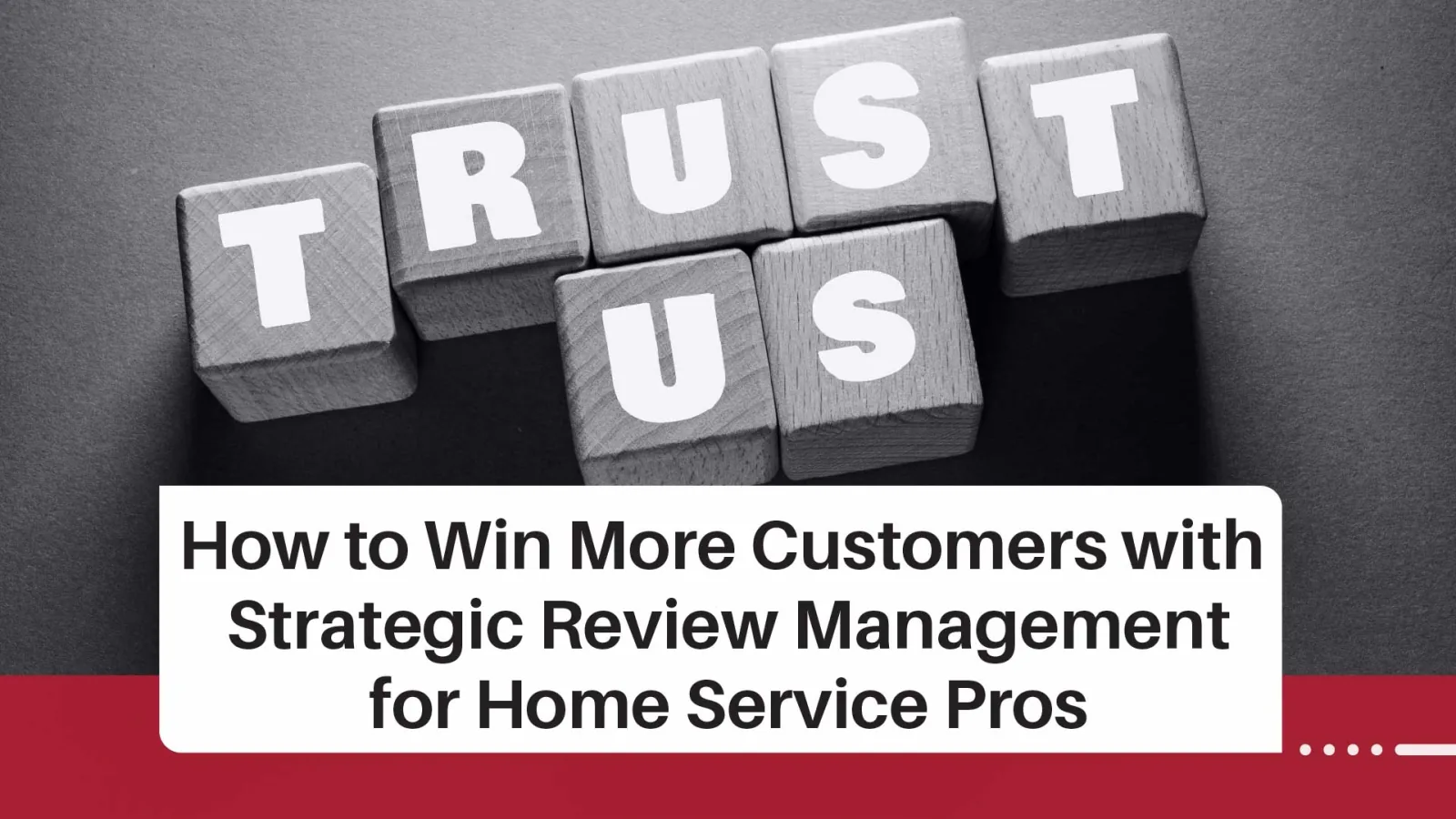
Let's face it, when a homeowner's pipes burst at 2 AM or their AC dies during a heatwave, they're not just looking for any service business. They're frantically searching for someone they can trust with their home and hard-earned money. For small business service providers, building this trust online is essential for converting website visitors into customers.
Trust isn't just a warm, fuzzy feeling for local service businesses—it's your pipeline to profitability. According to PwC's Trust in US Business Survey, 71% of business leaders say that building trust with customers is a high or top priority, while 74% connect trust directly to their company's financial performance. When your potential customers trust you before they even pick up the phone, you've already unclogged half the sales pipeline.
Everyone knows the basics of trust-building website design—showing reviews and creating galleries of your work. But if you want to truly stand out in the crowded field of local service providers, you need to take your website's trust signals to the next level. It's time to roll up those sleeves and dig into design strategies that will make potential customers feel as comfortable calling you as they would their own family members (maybe more comfortable, depending on the family).
Let's explore how your plumbing, HVAC, roofing, or other service business can use strategic website design to build maximum credibility and turn anxious homeowners into loyal, lifetime customers.
Written By: Chad J. Treadway | August 06, 2025
Chad is our Chief Smarketing Officer. He will help you survey your small business needs, educating you on your options before suggesting any solution. Chad is passionate about rural marketing in the United States and North Carolina. He also has several certifications through HubSpot to better assist you with your internet and inbound marketing.

Picture this: You've just wrapped up a stellar week in your home service business. You've closed three major contracts, your technicians completed every job ahead of schedule, and you've even implemented that new scheduling software everyone's been raving about. Life is good. Then you check your phone and see it—a scathing one-star review complete with ALL CAPS and enough exclamation points to punctuate a manifesto.
Suddenly, your perfect week feels like it's circling the drain.
If this scenario sends a shiver down your spine, you're not alone. For home service businesses, online reviews can make or break your reputation, affect your search rankings, and ultimately determine whether potential customers call you or your competitor. With the Northwestern University Spiegel Research Center finding that 95% of consumers read online reviews before making purchasing decisions, and Valve+Meter research showing that businesses with 4+ star ratings earn 32% more revenue, the stakes have never been higher.
But don't worry—this guide will help you transform review management from a source of anxiety into a powerful growth strategy.
Written By: Adam Bennett | August 04, 2025
Adam is the president and founder of Cube Creative Design and specializes in private school marketing. Since starting the business in 2005, he has created individual relationships with clients in Western North Carolina and across the United States. He places great value on the needs, expectations, and goals of the client.

Let's face it—the last thing on your mind after unclogging a backed-up toilet or installing crown molding is asking for a Google review. You're covered in dust, sweat, or worse, and your client just wants you out of their hair so they can enjoy their newly functional home.
But here's the uncomfortable truth: those awkward review requests might be the difference between your business thriving or merely surviving in today's digital marketplace.
According to recent data, a staggering 88% of consumers read Google reviews to evaluate local businesses before making contact—and for home service providers, that number climbs even higher. Wiser Notify found that businesses with positive Google reviews can experience up to an 18% boost in revenue from search results alone. That's real money you're leaving on the table if your review strategy consists of "hope they remember to say something nice."
In this guide, we'll explore how to ethically and effectively generate powerful Google reviews for your home service business without resorting to sketchy tactics that could land you in hot water with Google—or worse, the Federal Trade Commission. No fake reviews, no bribes, no begging—just proven strategies that work.
Written By: Adam Bennett | July 30, 2025
Adam is the president and founder of Cube Creative Design and specializes in private school marketing. Since starting the business in 2005, he has created individual relationships with clients in Western North Carolina and across the United States. He places great value on the needs, expectations, and goals of the client.

Let's face facts: homeowners aren't flipping through the Yellow Pages when their basement floods at 2 AM. They're frantically grabbing their phones and typing "emergency plumber near me" while standing ankle-deep in water. If your home service business doesn't appear in those critical search results, you might as well be invisible.
The brutal reality is that your Google Business Profile (GBP)—formerly known as Google My Business—has become the digital storefront that makes or breaks local home service businesses. While you're busy fixing leaky faucets, installing HVAC systems, or remodeling kitchens, your potential customers are making split-second decisions based on what Google shows them.
The difference between a mediocre and masterful Google Business Profile isn't just about showing up in search results—it's about converting those searches into actual phone calls, appointments, and paying customers. This isn't theoretical marketing fluff; this is about capturing those high-intent moments when property owners need exactly what you offer.
So why are so many home service businesses still treating their Google Business Profile like an afterthought? Perhaps it's the misguided belief that quality work speaks for itself. Spoiler alert: Your exceptional craftsmanship means absolutely nothing if potential customers can't find you in the first place.
Written By: Adam Bennett | July 28, 2025
Adam is the president and founder of Cube Creative Design and specializes in private school marketing. Since starting the business in 2005, he has created individual relationships with clients in Western North Carolina and across the United States. He places great value on the needs, expectations, and goals of the client.
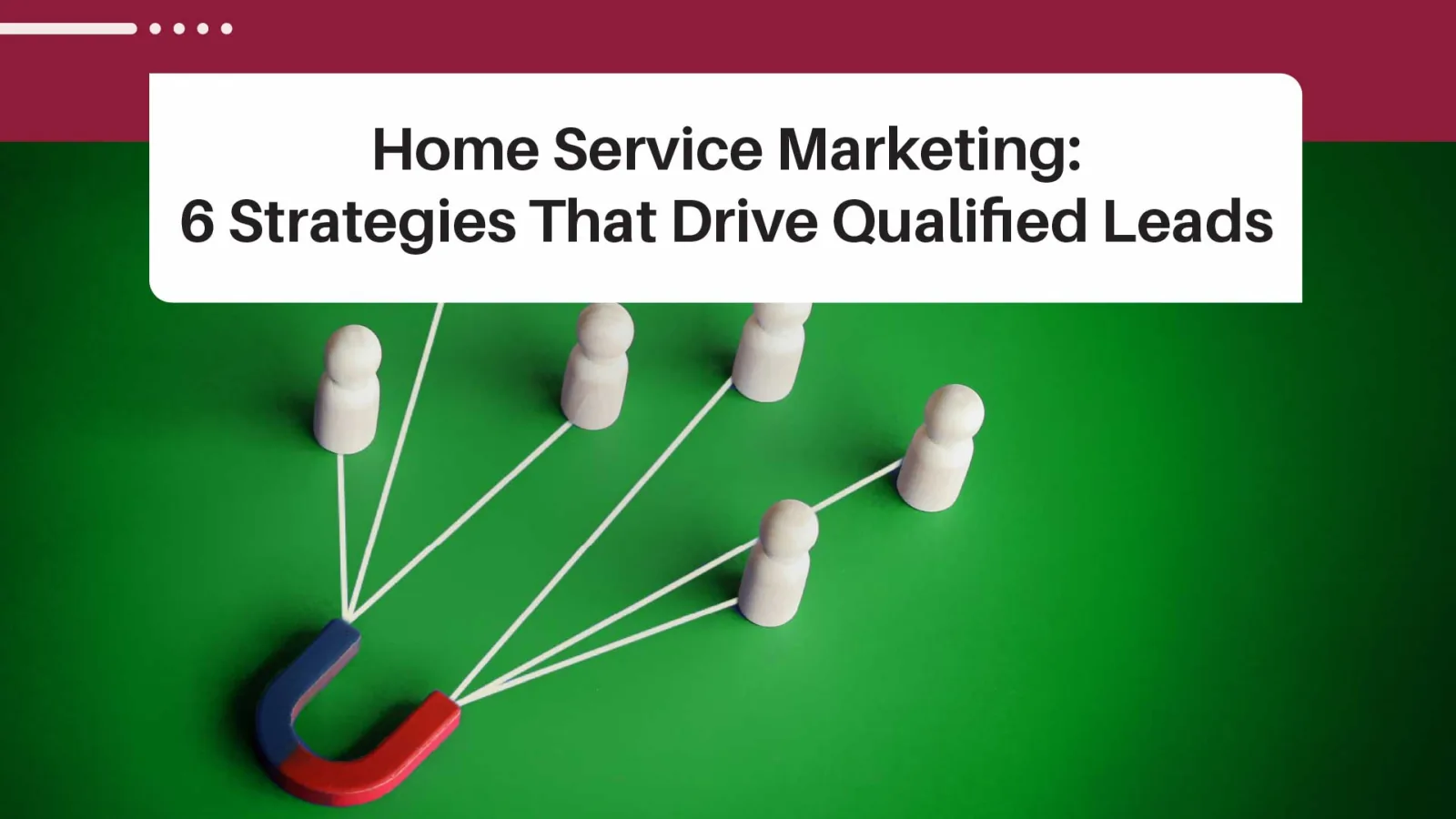
If you own a home service business, you know the struggle is real. You're fantastic at what you do—whether that's remodeling kitchens, fixing leaky pipes, or transforming cluttered spaces into organized havens—but getting your phone to ring with qualified leads? That's a whole different toolbox.
The home services industry is more competitive than ever, with local markets saturated and customers increasingly turning to digital channels to find, vet, and choose service providers. Your excellent craftsmanship alone isn't enough to stand out anymore. The hard truth? If you're not visible online, you might as well be invisible to potential customers.
The numbers don't lie. Research by BrightEdge Research found that "Most online experiences begin with a search engine," and organic search drives more than half of all website traffic across industries. For home service providers, this digital shift represents both a challenge and an opportunity. Those who adapt thrive, while those who resist get left behind with empty schedules and wondering where all the customers went.
But here's some good news: digital marketing doesn't have to be overwhelming, expensive, or confusing. With the right approach, even small home service businesses can compete effectively against larger companies with bigger budgets. SEO Tribunal, "97% of people learn more about a local company online than anywhere else." This guide breaks down six essential digital marketing strategies that actually work for home service businesses—no tech degree required, just practical advice you can implement starting today.
Written By: Chad J. Treadway | July 23, 2025
Chad is our Chief Smarketing Officer. He will help you survey your small business needs, educating you on your options before suggesting any solution. Chad is passionate about rural marketing in the United States and North Carolina. He also has several certifications through HubSpot to better assist you with your internet and inbound marketing.