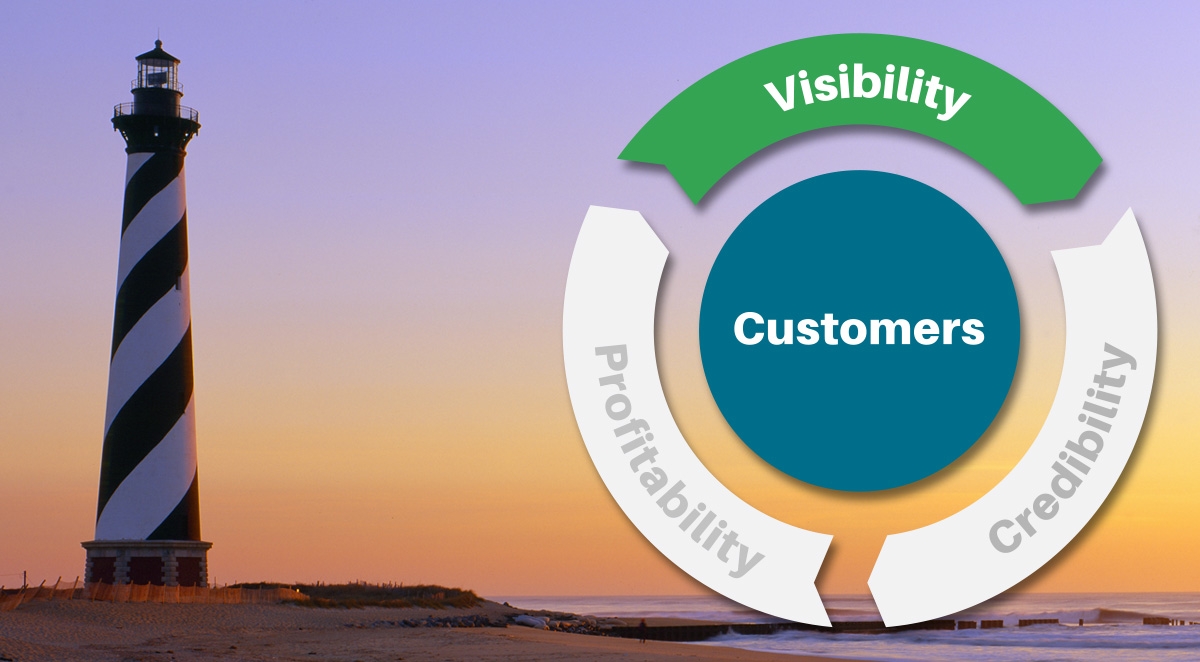
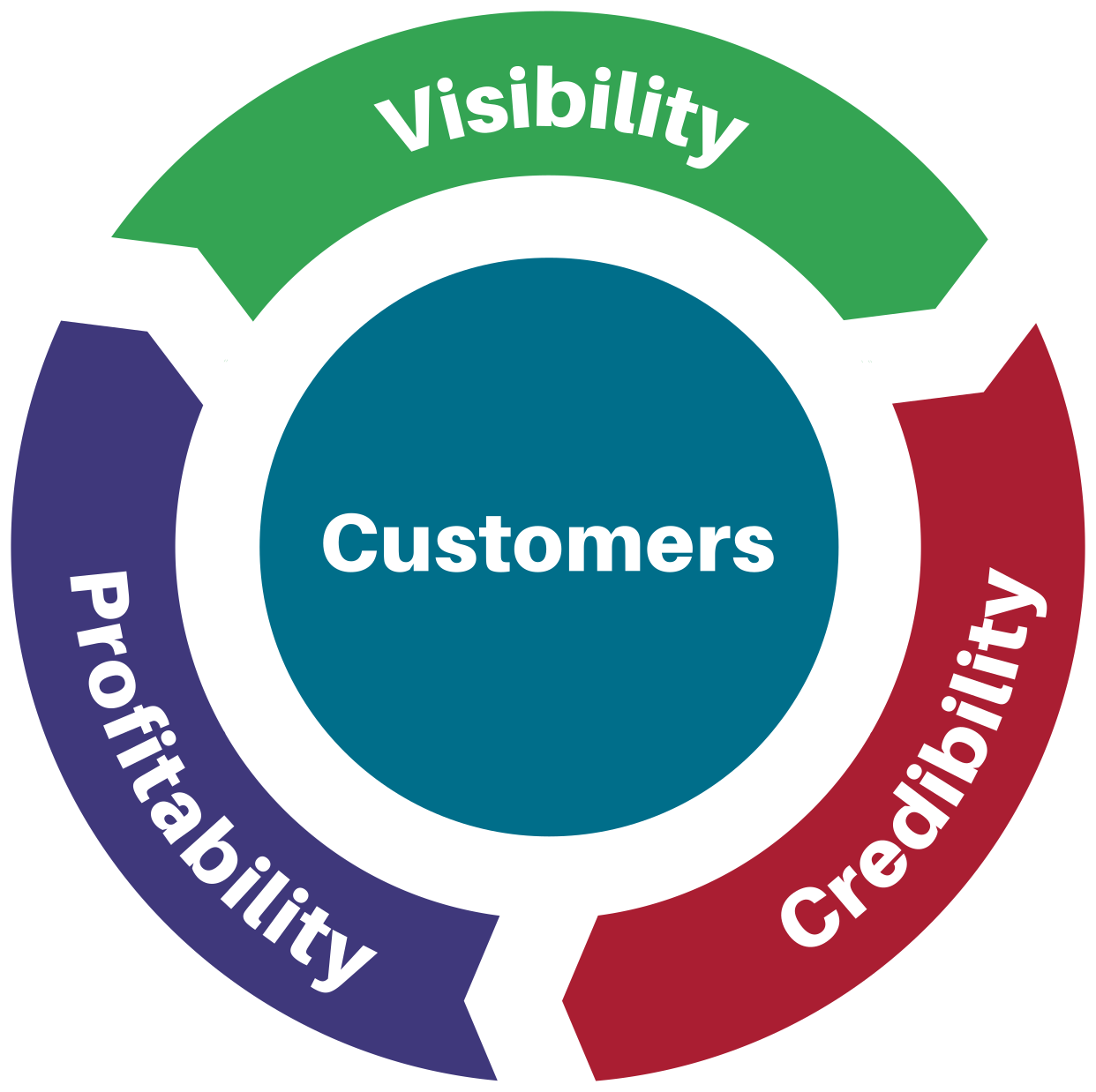
This is part one of a multi-part series on how to increase the visibility, credibility, and profitability of your business. As the new kid on the block, you will try anything to help get your name out in your community. See if this list rings any bells:
- Logo on your truck, car, or van (including your phone number and website address)
- Yard signs
- Ads in the phone book
- Billboards
- Radio ads
- TV ads
- Newspaper ads
- Business card on every bulletin board you can find
- Posts on social media
How many of those are actually working? Sure you may be getting some visibility, but is it the right kind? Are these bringing in the right kinds of customers? How do you know what is working and what isn’t? The answer is for the most part you don’t! Sure you can be told we have X number of readers, or it goes to X number of households, but what are the chances that that person is looking for you when your ad is running.
One of the hardest things when you first start out is getting your name out there – actually, it doesn’t matter how long you have been in business staying top of mind is hard. You may have been in business for two months or 20 years and if you aren’t visible then, the leads dry up like water in the desert.
I have found there are several ways to increase your visibility, those being:
- Networking in person
- Content Marketing
- Social Media
In-Person Networking
I am a firm believer that in-person networking will help a business grow. I have seen it happen locally with Cube Creative. Here are my thoughts on it:
- How important is it? It is really important!
- What can networking do for your relationships? It is going to help you build them!
- What can it do for your sales? It will help you make them!
- What about your success? It can help you make the right contacts and connections!
Personally I have forged some of the strongest relationships that have to lead to more business and more qualified leads than any form of advertising could buy.
Given, I try to be at every event I can. I understand it’s a balancing act, but if you want to be visible, you have to show up!
I have spoken with people at various events and in meetings, when the topic of networking comes up they either do it or have an excuse for why they don’t, some of which may be:
- “It takes to much time” or “I don’t have time”
- “They don’t pay me enough”
- “I tried joining X organization but I never got anything out of it”
If you plan to stay in business, you’ll have to learn to network. Jeffery Gitomer says it best, “Networking is life skills and social skills combined with sales skills.”
Showing up online by using content marketing
When I am at a networking event or I am casually asked by someone what I do, I typically say I help businesses get found on Google. If they inquire deeper I always explain that Google is the keystone to everything. They own 93% of the search market between all their own properties. Google is a business home page, like it or not.
I also go on to explain that in addition to helping a client configure and maintain their Google My Business (GMB) listing, we also write content for our clients that helps to answer searchers questions when they search for things online.
If your website has the answers a searcher is looking for your visibility naturally goes up.
Social Media
I often have a conversation with prospects similar to this:
Prospect: I want more of a social presence.
Me: Ok, that’s great! I can help you with that. But are you willing to do posts and interact with people?
Prospect: No I don’t have time to do that I just want you to make the posts.
Me: Well, the nature of social media is just that - social. People expect to be able to interact with you, and if you want to “be on <insert social platform>,” you have to be willing to interact with them.
Social media is a great way to communicate your message and communicate with people. But if you treat social like a bee looking for a flower versus being a flower that attracts and engages with the bee then you are wasting time and money.
Importance of Visibility
Visibility is important for all types of businesses offline, online and via social as it creates recognition and awareness. At Cube Creative we help businesses of all sizes increase their visibility online. If you are looking to grow your business then reach out and see how we can help you.
This Free Resource May Also Interest You!

Written By: Chad J. Treadway | January 21, 2020
Chad is a Partner and our Chief Smarketing Officer. He will help you survey your small business needs, educating you on your options before suggesting any solution. Chad is passionate about rural marketing in the United States and North Carolina. He also has several certifications through HubSpot to better assist you with your internet and inbound marketing.

If you're like most general contractors, HVAC, electricians, or plumbers, you probably rely reasonably heavily on word of mouth marketing to generate new leads. Why shouldn't you? You put in years honing your skills, and hopefully you have a good reputation! The problem is that those leads may start to dry up as people look online to find information and companies.
Also gone are the days of having ads in the phonebook and billboards to gain traction and win business. Having an online presence and using content marketing techniques is key to being found these days. In fact, a recent study by Pew Research Center reports that 77% of Americans are online daily!
Content marketing uses online channels to attract customers during various stages of the purchase funnel. With content marketing, customers start the conversation, and you can create targeted content that makes it easier for people to find you online.
Written By: Chad J. Treadway | January 20, 2020
Chad is a Partner and our Chief Smarketing Officer. He will help you survey your small business needs, educating you on your options before suggesting any solution. Chad is passionate about rural marketing in the United States and North Carolina. He also has several certifications through HubSpot to better assist you with your internet and inbound marketing.

In the third quarter of 2019, we surveyed 100 respondents from various walks of life regarding their purchasing habits and how they determine from whom they will buy the products they need. What we learned is traditional marketing is dying, and the phone book is dead. Businesses using the television, newspaper, radio, billboards, and the phone book to advertise are often throwing their marketing money away. We also found that companies can make the most of their budgets by turning the majority of their resources to digital marketing.
In this article, we are going to share some of the key findings of our survey and how your business can benefit from the proven ROI of inbound marketing strategies and quality search engine optimization.
Who We Surveyed
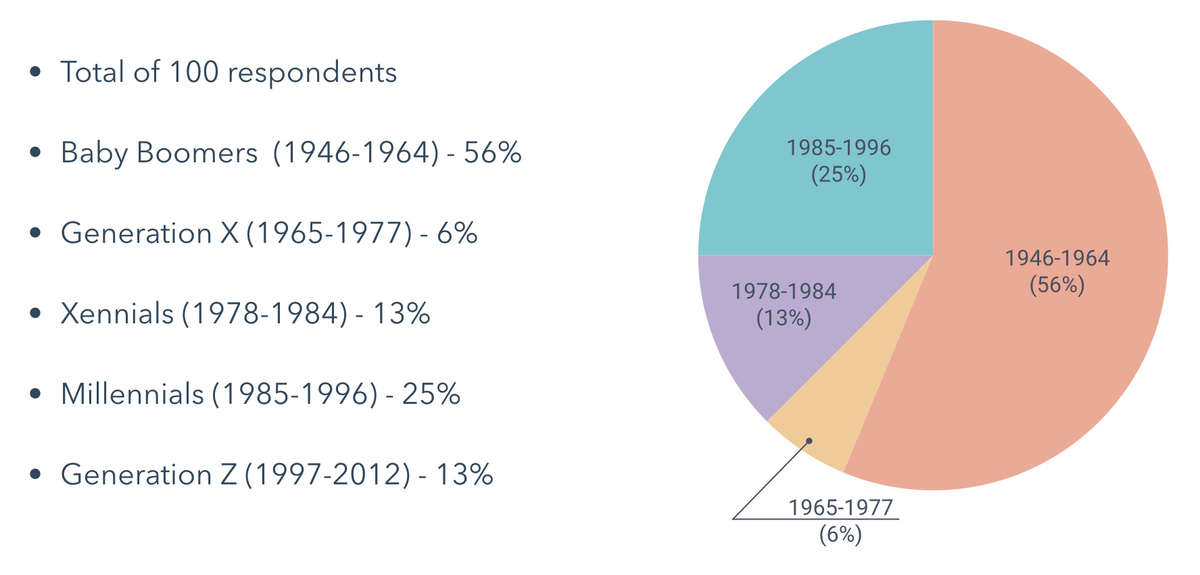
We surveyed 100 people of varying ages and situations. Our respondents represented five generations:
- Baby Boomers (1946-1964) | 56% of respondents: Boomers may have grown up writing letters and making phone calls; however, they are typically now fluent in technology and use cell phones and tablets.
- Generation X (1965-1977) | 6% of respondents: Generation Xers are well-educated, and technology has a prominent place in their lives.
- Xennials (1978-1984) | 13% of respondents: Xennials do not quite fit in with Generation X or Millennials, though they share characteristics with both. Sometimes called the Oregon Trail Generation, Xennials were generally first to grow up with computers in their homes, but often did not get their first cell phones till they were in their 20s.
- Millennials (1985-1996) | 25% of respondents: Millennials were very young when the internet first entered their homes. They may not remember a time without it; however, they do remember the slower dial-up versions. Millennials are immune to most traditional marketing, trusting referrals from friends over brand-loyalty.
- Generation Z (1997-2012) | 13% of respondents: Generation Z does not remember a time without the internet, often without high-speed internet. They not only use the internet for productivity, but they also use it for connection and relationships.
What They Said
With a healthy diversity of ages and life-stages, we learned a lot about how people interact with traditional and modern marketing strategies. Some of the key data include:
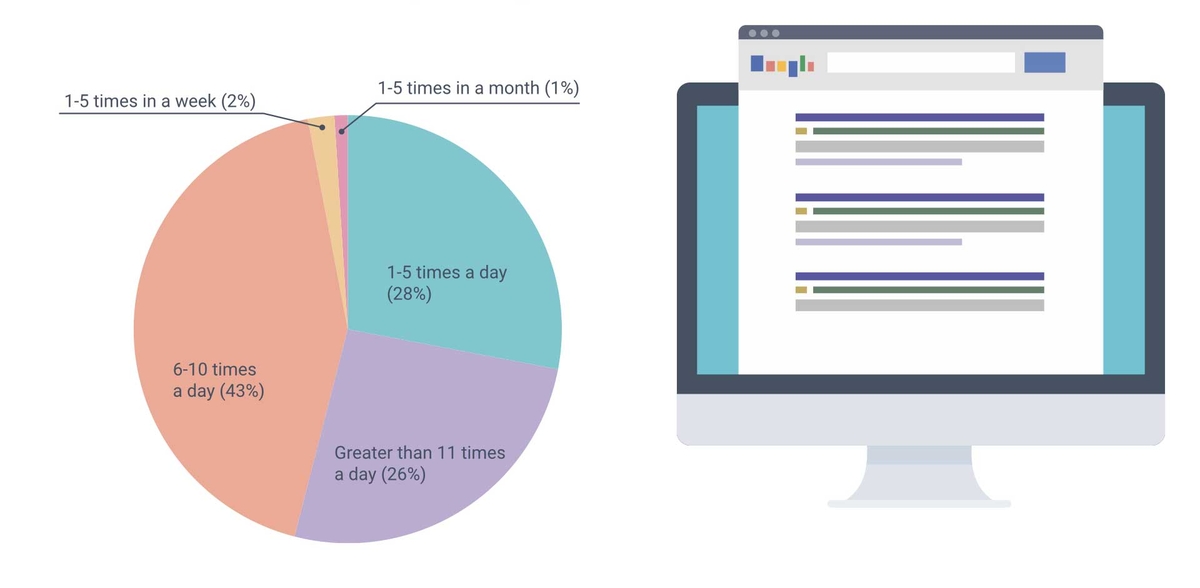
- 69% of all respondents perform internet searches more than 6 times per day, with 96% of those searches utilizing Google.
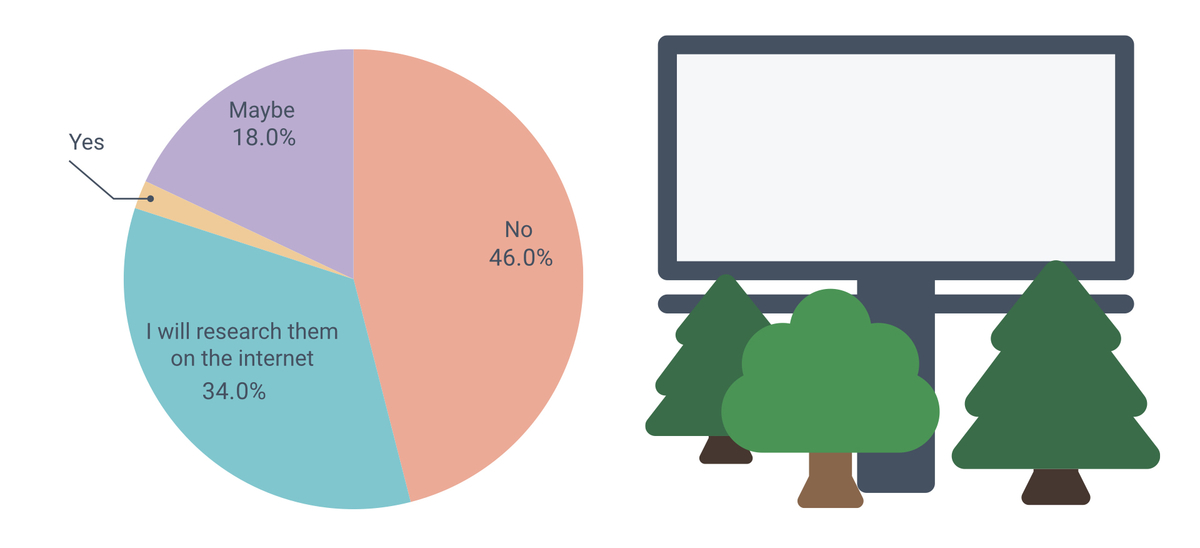
- Only 18% of respondents said they might contact a company based solely on a billboard advertisement.
- 46% said they would not contact them at all.
- 34% said they might research the company after seeing their billboard
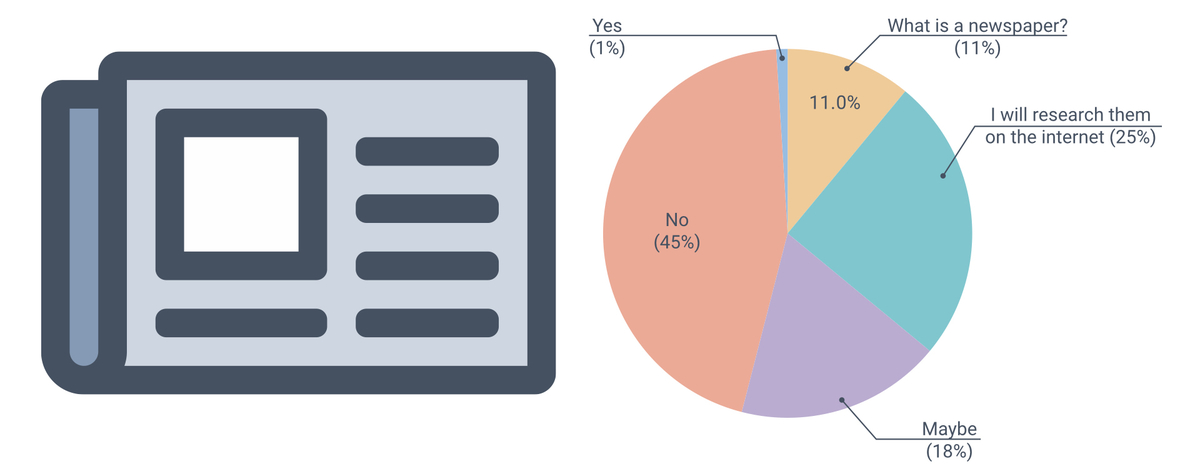
- Almost half of all respondents said they would not contact a company based on a newspaper advertisement. 25% said they might research that company.
- 11% of all respondents do not even see television ads because they are not using cable and television services.
- 57% of respondents would either research or just avoid a company based on a television commercial.
- Internet advertisements performed better than any others. 56% of respondents said that they might respond to an internet ad, while 29% said they would go on to research the company.
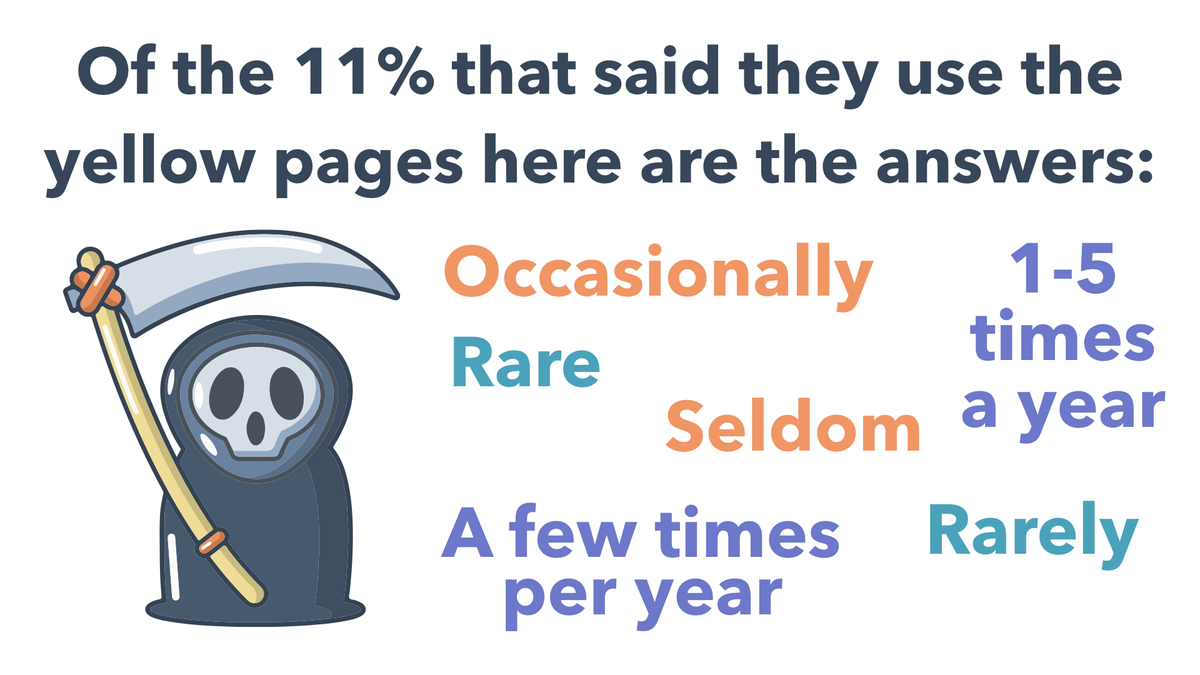
- 89% of respondents said they would not use the Yellow Pages at all.
- Of the 11% that would use the phone book, most would only use it a few times each year.
- 70% of all buying decisions are made before customers even contact a company.
What We Learned
We have learned that the best use of a company’s advertising dollars is providing the tools for consumers to research their products. If they are not going to call you based on your television, radio, or phone book ads, they need to be able to find you on Google. Here’s the short of what that means you need:
- A well-designed and developed website
- Search engine optimized content (content that Google can recognize and match with its users)
- Clean, honest, and compelling information positioning you as the subject matter expert in your industry
- Help telling your story from digital marketing experts
In addition to designing and developing websites, we help businesses optimize their websites for Google searches so that your potential clients and customers can find you when they do their research. Contact us to learn more about how we can help your business grow in the digital age.
Written By: Chad J. Treadway | December 06, 2019
Chad is a Partner and our Chief Smarketing Officer. He will help you survey your small business needs, educating you on your options before suggesting any solution. Chad is passionate about rural marketing in the United States and North Carolina. He also has several certifications through HubSpot to better assist you with your internet and inbound marketing.

Recession. That is not a word you want to hear around your office. Though it is part of the economic cycle, that makes it no less scary for business owners. It has been a little over a decade since The Great Recession, but many parts of the country are still feeling the effects. From rural towns and in North Carolina to metropolitan centers like Detroit, some businesses never and communities still have not recovered.
Are we approaching another recession? Economists believe there is a good chance the next one will come as soon as 2020, after the presidential election. One of the best practices to protect your business from an economic downturn or recession is effective content marketing. In this article, we will discuss four steps toward recession-proof content marketing:
1) Determine Your Target Audience
When people hear the word marketing, it often conjures thoughts of loud radio and television commercials. By “loud” commercials, we mean ads on television have at times been so much louder than regular programming, the congress enacted The CALM Act to regulate their volume. Proponents of this type of marketing believe that name recognition is the most important thing. That’s why companies shell out millions of dollars for ad space during events like the Super Bowl.
Name recognition is valuable for any business; however, television commercials, radio spots, and print ads do not take your target audience into mind. When you use these marketing strategies, you are paying a lot of money in hopes the right people will happen to be listening at the right time to give you a call. With more Google users than humans, your marketing dollars are more effective when they take your target audience in mind.
If you know potential clients, you can tailor content for them on your website and social media platforms for a fraction of the cost of blasting your message out to whoever happens to be listening. That mindset can be a recession-lifesaver during a recession when people are cutting costs like cable and radio subscriptions.
2) Position Yourself as the Subject Matter Expert
You probably spend a lot of time answering phone calls from people who just need advice in your field, even if those same callers do not become customers. If you are an electrician, it may feel like a waste of time to walk someone through the process of flipping a breaker, but for the caller, you are the subject matter expert. Next time they need a house rewired; they are going to call you.
Effective content marketing establishes you as a subject matter expert. Through blogging and other digital content outlets, you can help people with basic issues in your field, providing the kind of answers you would on the phone. A plumber might write a blog walking a homeowner through the steps of flushing a water heater. A builder might write a blog about necessary elements for homebuyers to include in their home design. If this feels like giving away the farm, here’s how it helps:
- This content helps your website show up when people search for these questions on Google
- Your answers help establish you as an expert
- Your content meets people where they are when they are asking questions; rather, than hoping they will remember your number from a commercial they heard months or years earlier
- Your content exists as long as the internet. Those daily phone call questions make great content, but unlike a phone call, your digital content lasts forever.
- Getting your content on your digital platforms now will give it time to start showing up for Google searches before a recession occurs. While others in your industry are scrambling, you will be ahead of the curve.
3) Provide Potential Clients Value Now
Content marketing hinges on your company’s commitment to providing valuable information for potential clients in your target audiences. As a recession sets in, consumers will be searching for the most value for their dollars. If you have established yourself as the most helpful expert in your field, you become more valuable. During a recession, people are not gravitating toward the loud commercial begging them to buy a client, they are going to protect their dollars for the company providing the most value.
4) Content Marketing Costs a Fraction of Traditional Advertising
With lower entry costs and higher returns, content marketing makes the most sense for the majority of your advertising budget today and during a recession. It can take a little time to get the ball rolling, but once you start building momentum, digital marketing is unparalleled in effectiveness during good economic times and recessions.
Furthermore, content marketing is evergreen, meaning it never goes away. Radio and television ads stop airing when the contract ends, while blogging and other digital marketing last forever and can often get more attention as it ages. So, while others in your industry are scrambling to get noticed while their audiences are spending less money, effective content marketing today will help cement your name in the minds of your potential clients.
The key is to prepare today for tomorrow’s recession. Cube Creative Design has been helping clients establish their digital marketing footprint since well before the 2008 Great Recession. We survived the last recession and we can help you plan and implement strategies to survive the next. Contact us for more information about content marketing.