Here's what keeps most admissions directors awake at night: your school isn't struggling to get inquiries. You've got plenty of those. What you're struggling with is having enough time to work on the ones that matter.
Your team is buried. Writing one-off follow-ups after initial conversations. Sending generic check-ins to families who visited your website once six months ago. Manually tracking who engaged with what. Spending hours educating families who won't decide for another year. Meanwhile, the family who's actually ready to schedule a tour and move forward sits in your inbox because you haven't had time to circle back yet.
This is the hidden cost of manual nurturing. It steals your team's attention from the high-value conversations that close enrollments.
This is where private school marketing changes. Automated nurturing doesn't replace your team; it amplifies them. It handles the repetitive, timing-sensitive work of early-stage follow-up and education so your admissions director can do what only humans can do: build trust, answer nuanced questions, and guide families through enrollment decisions.
When paired with intelligent engagement tracking, automation becomes even more powerful. Instead of generic "check in" emails, you're delivering targeted messages based on what families actually do on your site. Instead of chasing cold leads, you're activating families who show real interest. Instead of spending 40 hours a week on administrative work, your team spends that time closing enrollments.

Written By: Adam Bennett | June 26, 2026
Adam is the president and founder of Cube Creative Design and specializes in private school marketing. Since starting the business in 2005, he has created individual relationships with clients in Western North Carolina and across the United States. He places great value on the needs, expectations, and goals of the client.
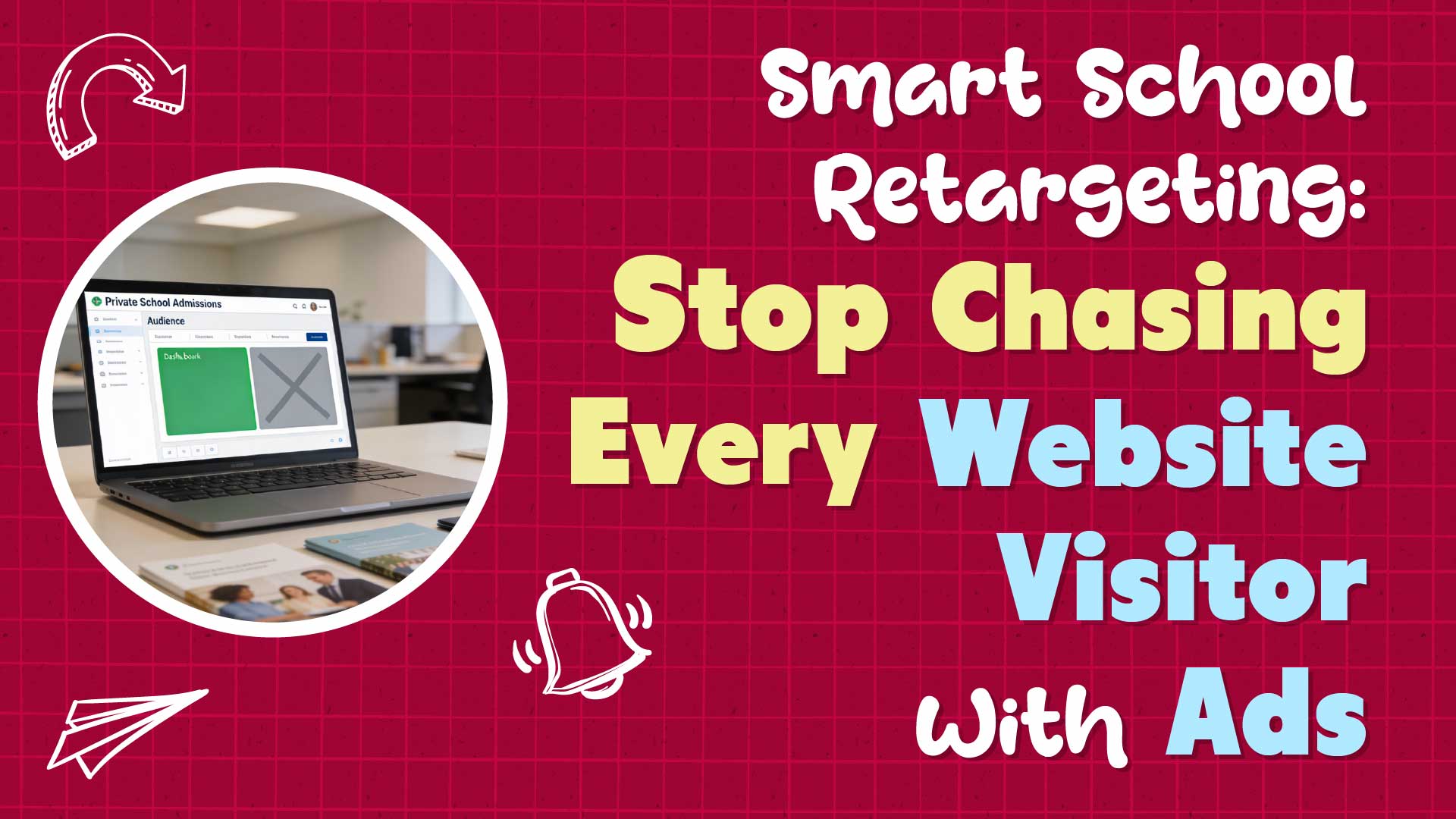
Your school's marketing director has probably heard the pitch: "Retarget everyone who visited your site, and watch the conversions roll in."
Here's the problem. Everyone includes the parent who accidentally clicked a Google Ad, spent three seconds on your admissions page, and never came back. It includes the curious high schooler shopping around for their younger sibling. It includes the tire-kicker who bookmarks every school within 50 miles and never intends to apply.
Pixel-only retargeting shows ads to all of them equally. And that costs money you don't have.
Retargeting itself is smart. But the traditional approach (dropping a cookie on anyone who lands on your site, then chasing them across the internet with the same message) is inefficient for private schools running lean marketing budgets. Research shows that retargeting typically wastes 20 to 30% of the budget on recent website visitors who will never convert, while another large chunk lands on the wrong message at the wrong time.
The fix isn't to stop retargeting. It's to retarget smarter by layering in identity and behavior. When you know who's actually visiting your site and what they're doing there, you build smaller, sharper audiences of families worth targeting. You stop chasing everyone and start investing in the people who matter.
Written By: Adam Bennett | June 25, 2026
Adam is the president and founder of Cube Creative Design and specializes in private school marketing. Since starting the business in 2005, he has created individual relationships with clients in Western North Carolina and across the United States. He places great value on the needs, expectations, and goals of the client.
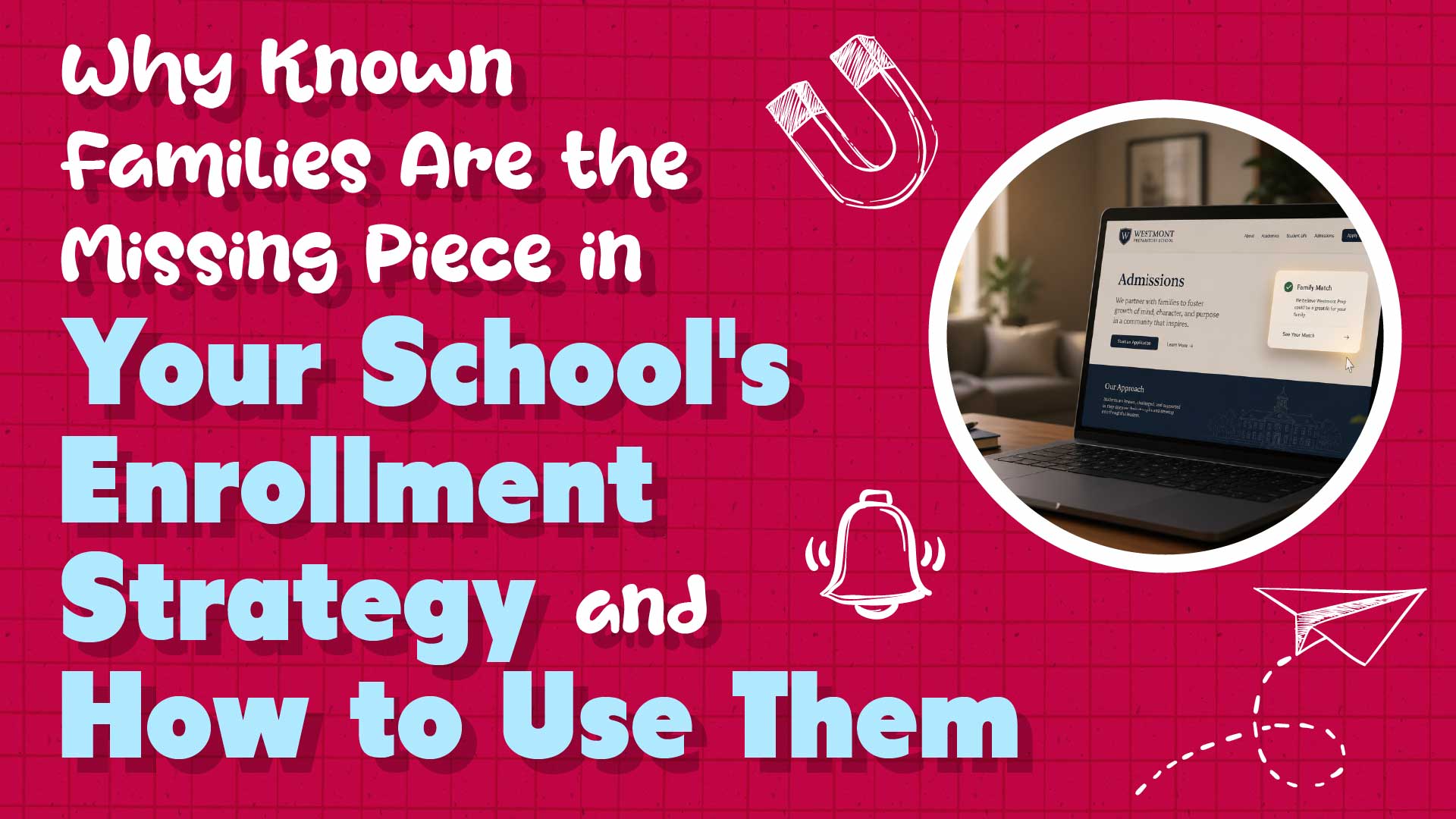
"Known families" are the website visitors your analytics can recognize and tie to real households. Your school's site gets hundreds of visits every month. But most of them are ghosts. Someone spends 20 minutes reading your tuition page, checks out your middle school program details, reviews your admissions timeline, and then vanishes. Your analytics shows the page views. You have no idea who was looking.
This is the missing link between "lots of traffic" and "predictable enrollment."
Most private school marketing programs follow a predictable pattern: drive demand with ads and content, capture interest with forms, nurture leads with email. But there's a massive blind spot in the middle. Dozens of families are actively researching your school right now. reading reviews, checking programs, and evaluating whether they can afford you. Most never fill out a form. So admissions never hears about them. Competing schools might not know they exist either. But you've invested in getting them there.
The question isn't whether families are visiting your site. They are. The real question is whether you're satisfied watching them in a Google Analytics dashboard, or whether you're ready to actually know who they are, what they care about, and when they're ready to talk.
Written By: Adam Bennett | June 24, 2026
Adam is the president and founder of Cube Creative Design and specializes in private school marketing. Since starting the business in 2005, he has created individual relationships with clients in Western North Carolina and across the United States. He places great value on the needs, expectations, and goals of the client.
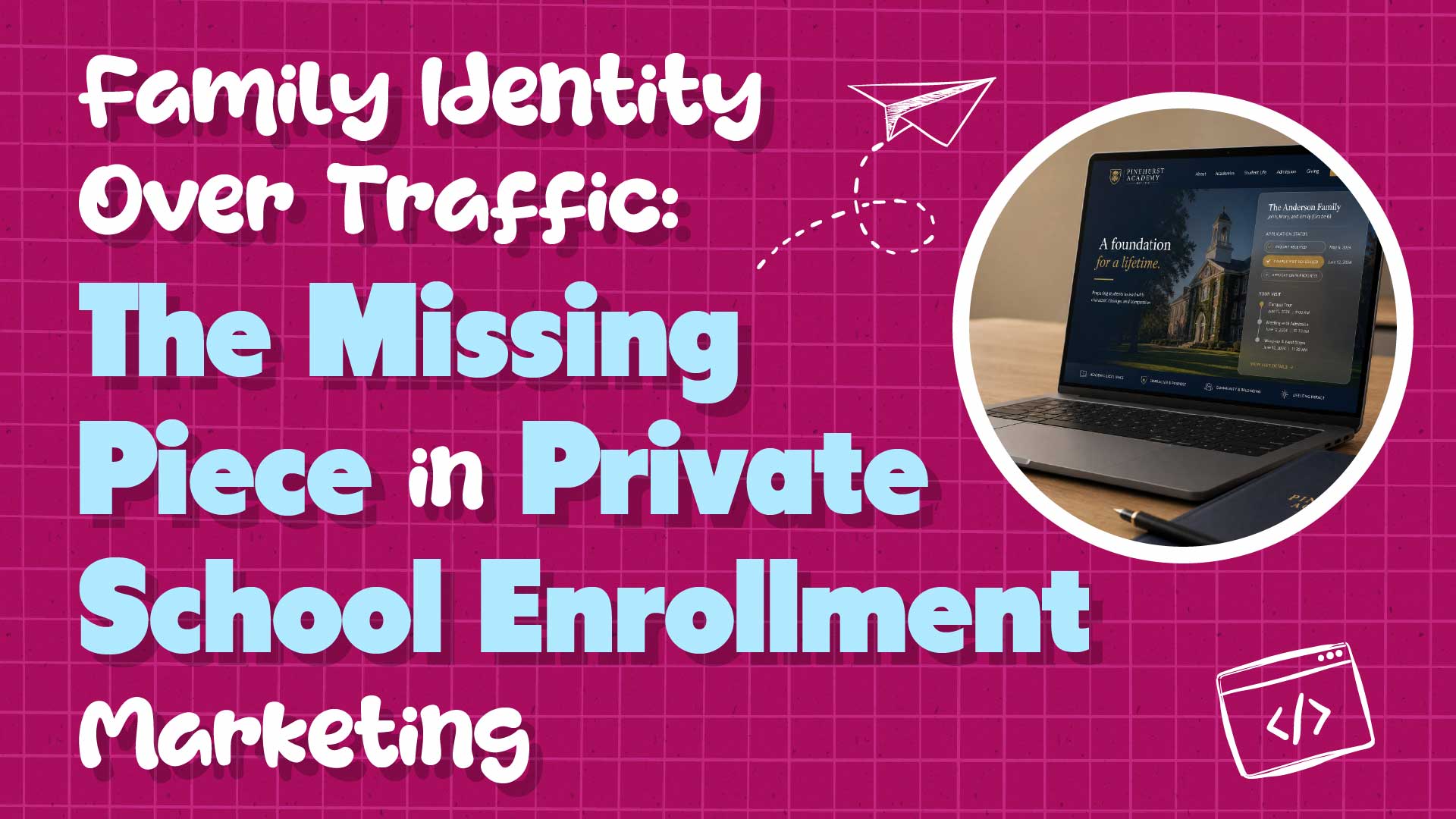
Most school marketing spends money to drive more traffic. More clicks, more visitors, more impressions. But here's the uncomfortable truth: traffic alone doesn't fill seats. If you can't see who is behind those visits or what they're actually researching on your site, you're leaving enrollment on the table.
An identity-first approach changes that equation. Instead of counting anonymous visitors, you identify families at the household level, enrich that data with demographic context, and track what they're actually researching across multiple visits. That's when your website stops being a traffic report and becomes an enrollment intelligence tool. We help private schools implement this exact system to turn traffic into qualified families ready to apply.
This isn't a replacement for your existing admissions system. It's a smarter way to power it. And it works because every meaningful interaction (pricing page, program details, financial aid information) becomes a signal you can act on immediately.
Written By: Adam Bennett | June 23, 2026
Adam is the president and founder of Cube Creative Design and specializes in private school marketing. Since starting the business in 2005, he has created individual relationships with clients in Western North Carolina and across the United States. He places great value on the needs, expectations, and goals of the client.