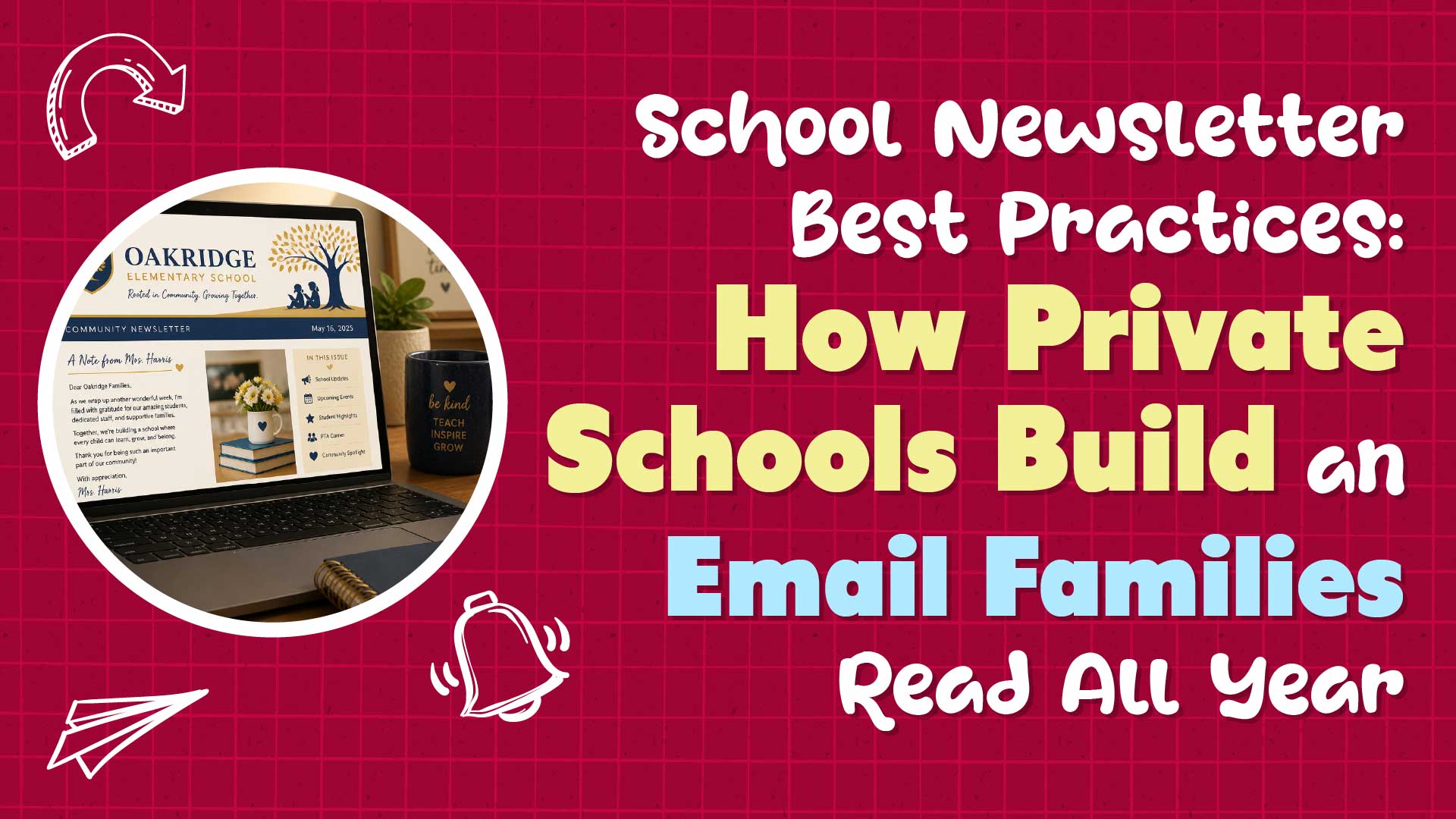
Somewhere in your school's outbox is a newsletter that took someone three hours to build. It went out to every family on the list. A fraction of them opened it. Then it slid into the same inbox graveyard as the dentist's appointment reminder. That is not a knock on the person who built it. It is the default outcome for a newsletter that treats families like a distribution list instead of an audience. The work went in. The reading did not come out. School newsletter best practices exist to close exactly that gap, and most of them cost nothing but attention.
A school newsletter, done with intent, is one of the cheapest and most durable marketing tools a school owns. It keeps current families confident that their tuition is buying something real. It keeps prospective families warm in the long stretch between a tour and a decision. We work with private and independent schools that have strong programs and loyal parents, but send a newsletter that reads like a memo from the front office. The intent is there. The strategy is not. This post lays out the practices that close that gap, built for a small team with more responsibilities than hours.
A fair warning on the numbers up front. There is no published open or click benchmark that is specific to K-12 schools emailing parents. The figures that exist come from the wider education vertical, from nonprofits, and from general email research. Each one is labeled as such below, because your board will check. Where this post cites a benchmark, it tells you whose data it is and why it is only a proxy. Honest framing beats a confident number that does not hold up in a board meeting.

Written By: Adam Bennett | July 10, 2026
Adam is the president and founder of Cube Creative Design and specializes in private school marketing. Since starting the business in 2005, he has created individual relationships with clients in Western North Carolina and across the United States. He places great value on the needs, expectations, and goals of the client.

August school marketing is the to-do-list version of standing in the kitchen during Thanksgiving prep, with the turkey going in, the pies half-made, and three timers about to go off at once. You are welcoming new families and getting the website ready for a flood of "schools near me" searches. All the while, you try to remember that the families who will enroll next fall are already out there, quietly forming opinions. It is a lot, and most admissions and marketing teams at private and independent schools are doing it with one or two people. At Cube Creative Design, we help private and independent schools turn that chaotic month into a working list, so the right things get done, and the rest can wait. This August school marketing checklist walks through the six tasks that matter most, why each one pays off, and how to do them without a giant team or budget.

Written By: Chad J. Treadway | July 08, 2026
Chad is a Partner and our Chief Smarketing Officer. He will help you survey your small business needs, educating you on your options before suggesting any solution. Chad is passionate about rural marketing in the United States and North Carolina. He also has several certifications through HubSpot to better assist you with your internet and inbound marketing.
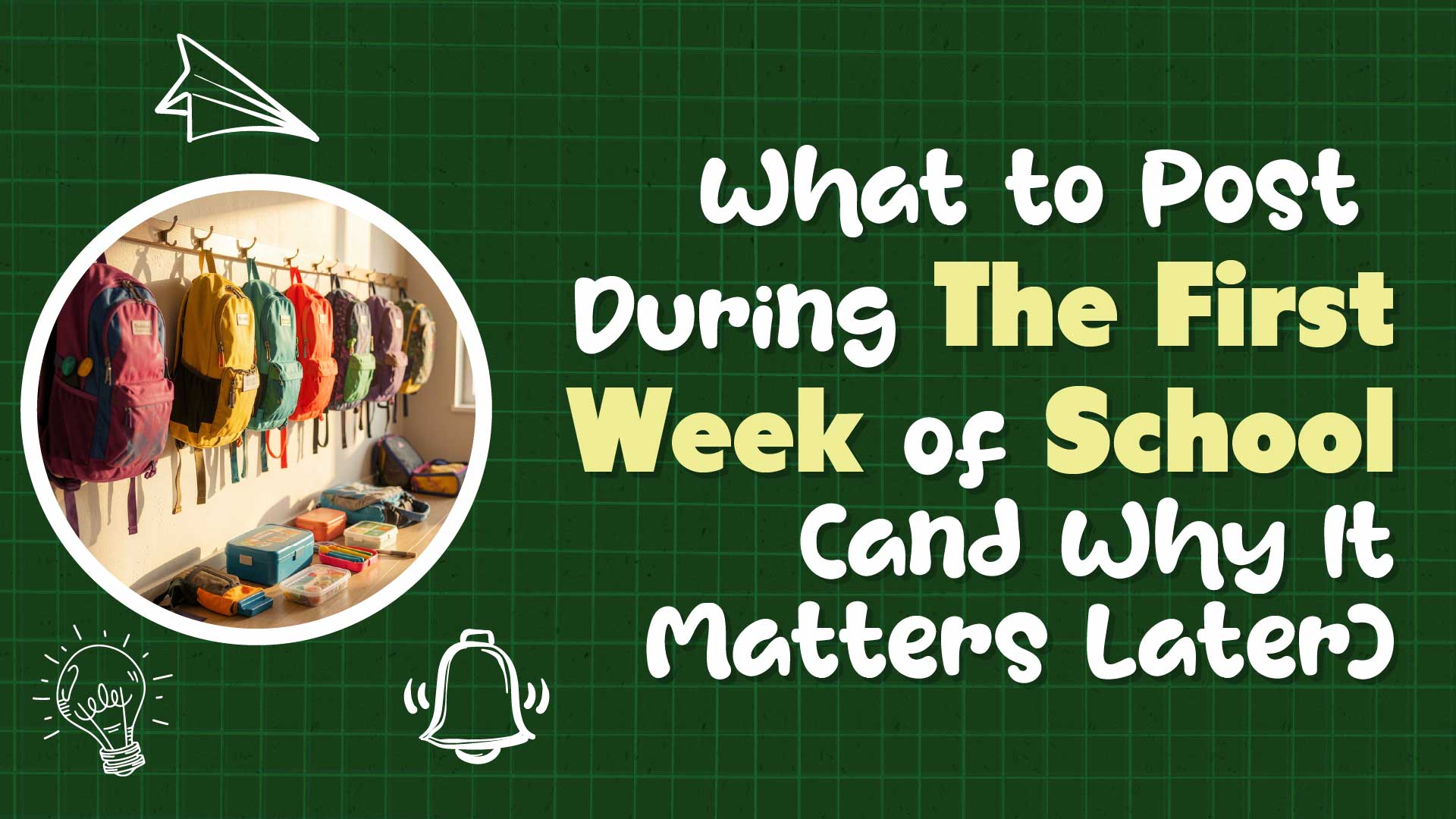
The first week of school runs on adrenaline, and if you handle marketing on top of running the building, it can slip by before you capture a single frame. That is a missed opportunity, because this one week gives you more honest, usable content than any other stretch of the year. The hugs at drop-off, the new kindergartner finding a cubby, the teacher who has greeted families at the same door for a decade; these moments tell prospective families what your school actually feels like. Cube Creative Design works with faith-based and independent schools that want to capture that energy without a production crew. This guide gives you concrete first-week school content ideas and a simple way for a one-person team to capture, post, and reuse them all year.

Written By: Hannah Kilpatrick | July 06, 2026
Hannah Kilpatrick Cube Creative DesignHannah Kilpatrick graduated from Western Carolina University in 2021 with a Bachelor of Science in Communication with a Minor in Marketing and a Concentration in Public Relations. She has been around social media since its creation. (Meaning, she was in the first grade when Facebook became available to the general public.) As our very own professional Gen-Z, Hannah is a whiz when it comes to social media creation and paid advertising.
Most private schools start planning their fall enrollment campaign in August. By then, the families they're trying to reach have already visited three schools, had lunch with a current parent, and asked ChatGPT which school in their area has the best STEM program. By the time the open house invitations go out, the decision has already narrowed to two finalists, and your school is probably not one of them.
This is the structural problem with how most schools approach fall enrollment campaign planning. The school's calendar starts in late summer. The family's calendar started six months earlier. That gap is where strong-performing schools have spent the spring building a pipeline, and where everyone else is improvising in real time.
This post is for K-12 private school leaders who want to stop running a sprint and start running a relay. We'll walk through the actual 12-month enrollment cycle from the family's perspective, the funnel benchmarks that separate strong performers from average ones, where digital ad budgets pay off and where they don't, how AI is reshaping the way families build their consideration set, and the operational infrastructure that has to be in place before fall starts, not during it. The schools that get this right convert 34% more inquiries than the ones that don't, and the gap is widening every year.
Written By: Adam Bennett | June 30, 2026
Adam is the president and founder of Cube Creative Design and specializes in private school marketing. Since starting the business in 2005, he has created individual relationships with clients in Western North Carolina and across the United States. He places great value on the needs, expectations, and goals of the client.