For once, private schools aren't getting left behind in the education technology race. You're used to watching public districts roll out the newest tools on budgets that make your operating funds look like petty cash. OpenAI just leveled the playing field in a way that actually matters for independent schools.
If you're skeptical about AI hype, you should be, because education has seen plenty of 'revolutionary' technology that underwhelmed. This tool isn't magic, and it won't solve your enrollment challenges or your budget constraints. What it can do is hand your overextended staff back a few hours each week.
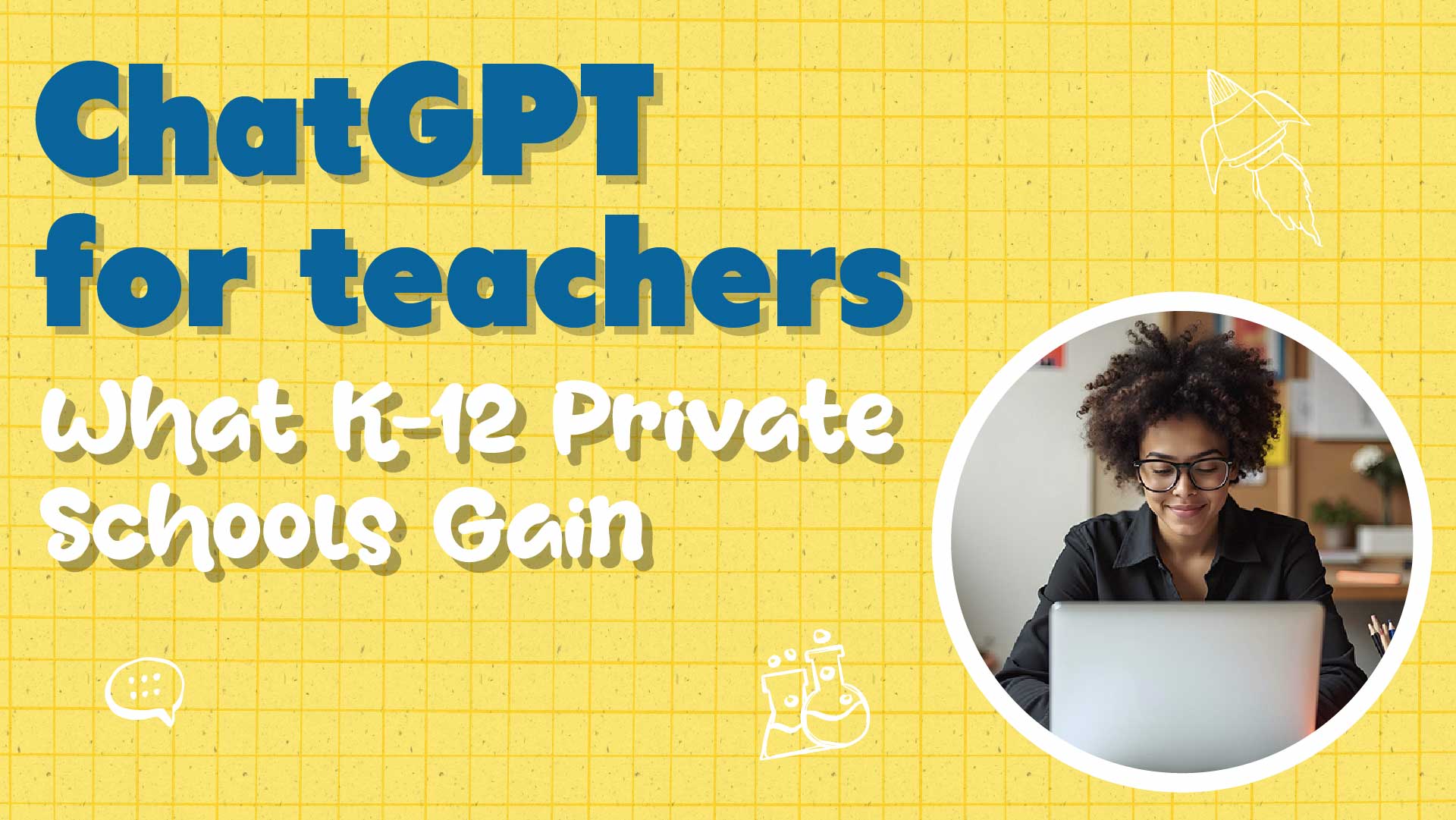
ChatGPT for Teachers is now available to every U.S. K-12 educator, and yes, private schools are included by name. Not as an afterthought. Not with asterisks and fine print. You get the same premium features, the same security protections, and the same price as everyone else: free through June 2027.
If you're thinking this sounds too good to be true, I get it. But it's the real deal, and understanding how to use it strategically could save your teachers countless hours while strengthening your school's data security. Let's break down what this means for private schools of all sizes.
What Is ChatGPT for Teachers? (And Why Should You Care?)
ChatGPT for Teachers is a separate, secure workspace built for K-12 teachers. Financial Express reports that the platform "creates a secure, dedicated workspace where instructors can experiment with AI in a controlled environment, free from the distractions and data risks of the consumer version." Think of it as the gap between using your own email for school business and having a real school email account with school controls. Same basic job, very different safety and oversight.
OpenAI calls this "education-grade protections" that line up with FERPA rules.
"Our objective here is to make sure that teachers have access to AI tools as well as a teacher-focused experience so they can truly guide AI use," said Leah Belsky, OpenAI's vice president of education, in an official statement.
This isn't just marketing speak, because the platform is architected differently from the consumer version most people use at home.
Here's what sets it apart: your school's data isn't used to train AI models. That's not marketing language, and this version really does work differently. According to OpenAI's official documentation, what you share inside ChatGPT for Teachers doesn't feed back into model training by default. Standard ChatGPT does the reverse, and your prompts become training data unless you opt out by hand. That gap matters for protecting your curriculum and your student data.
The platform bundles paid features that would normally cost $20 per month per user. You get unlimited messages on GPT-5.1 Auto, the model OpenAI runs in the teacher workspace, plus web search, file upload and analysis tools, image generation, and connectors that tie into Google Drive, Microsoft 365, and Canva. According to Financial Express, the platform's personalized features "should help slash time on routine tasks," since teachers can build and share custom GPTs tuned to their own subject while pulling from a library of peer-created prompts for quick ideas.
For private schools running lean budgets and leaner staff, that's real value. When your marketing director also runs admissions tours and your assistant principal covers classes during teacher absences, tools that truly save hours matter.
Yes, Private Schools Are Explicitly Included
Let's clear up any confusion right away: private schools qualify in full. The eligibility rules, as published by OpenAI's help center, say that applicants must be "verified U.S. K-12 educators" who are "employed as an educator in a public, private, or charter school."
That wording isn't an accident. EdTech Innovation Hub confirms that "eligibility is not limited to public school educators; teachers from private and charter K-12 institutions are included, as long as they are working at a recognized U.S. school."
Who qualifies? The definition is broader than you might expect:
- Classroom teachers across all grade levels and subjects
- School administrators and principals
- Instructional coaches and curriculum directors
- Support staff connected to your school system
- Marketing and admissions professionals
If you're on payroll at a K-12 private school and your work touches school operations, you're likely eligible. The one hurdle is verification through a third-party service called SheerID. Government Technology reports that this usually means "submitting a school-affiliated email address," or sending proof like pay stubs or job letters if your email domain isn't known right away.
Free access runs through June 2027, which gives schools a multi-year runway to evaluate the platform, integrate it, and measure the impact before any pricing change. Think of it as an extended, fully funded pilot program. You just don't have to write a grant application or justify the expense to your board.
The Privacy and Compliance Advantage
If you've spent the past year fielding parent questions about AI and student data privacy, this part should ease some nerves. ChatGPT for Teachers rests on a very different privacy setup than consumer AI tools.
The core promise: OpenAI's education terms state that "student data ultimately belongs to and remains under the control of the School." In that setup, OpenAI acts as a "School Official with a legitimate educational interest," which is the exact label FERPA calls for. Your school still owns any parent notices or permissions about data use. The platform itself is built to support that work, not to complicate it.
Here's how it compares to what most teachers are probably already using:
| Feature/Policy Area | ChatGPT for Teachers (Free K-12) | Standard Consumer ChatGPT |
|---|---|---|
| Model Training Usage | Data not used to train models by default (Institutional Guarantee) | Data may be used for model training (requires user opt-out) |
| Compliance Support | Designed to help meet FERPA requirements | No specific education compliance guarantees |
| Administrative Controls | SSO, RBAC, and Domain Claiming are available | Limited to individual account settings |
| Deployment Scope | Institutional Workspace (School/District focused) | Individual User Account |
So what does that mean day to day? If your teachers are already using AI tools (and let's be honest, many are), you want them on this version. The other option is staff on personal accounts with consumer-grade privacy terms, working on lesson plans that hold student data, curriculum you paid to build, or assessment results. That's the textbook definition of "shadow IT," and it's a liability waiting to happen.
Schools without enterprise IT departments face a real bind, and ChatGPT for Teachers solves it with enterprise-level protections you set up yourself. You get Single Sign-On, Role-Based Access Control, and domain management. Those features normally take a long enterprise sales cycle, but here they arrive through a simple setup built for smaller schools.
Where Human Judgment Remains Non-Negotiable
Before we compare rival platforms and rollout plans, let's cover what this tool can't do, because knowing the limits matters as much as knowing the strengths.
AI can't assess student learning needs or make pedagogical decisions. It doesn't know that Emma learns best through movement or that your eighth-grade class struggles with figurative language. It can't judge whether a struggling reader needs phonics help or comprehension support. Those judgments take professional skill built over years of training and daily observation. The tool can help you write up what you saw, or build differentiated materials once you've made the assessment, but it can't make the assessment for you.
AI output can carry errors or unfit content, and teachers have to catch it. These models sometimes write text that sounds authoritative but holds wrong facts, stale data, or quiet bias. A Civil War lesson plan might botch a date. A vocabulary list might slip in a word with the wrong overtone. A sample parent letter might strike the wrong tone for your community. That's why OpenAI's own terms warn that output "may not always be accurate" and tell users to "evaluate output for accuracy and appropriateness, including utilizing human review, before using it for any purpose."
The tool works best on admin tasks. It's far less reliable on the finer points of teaching. Drafting a newsletter? Excellent use. Building a meeting agenda? Perfect. Adapting a reading for other levels? Very effective. But designing a lesson that builds real grasp of fractions? Writing discussion questions that push students toward higher-order thinking? Shaping feedback that moves a struggling writer forward? Those take the kind of teaching skill AI mimics but can't match. Let the tool absorb the slow admin work so you keep more energy for the hard teaching only you can do.
Some teachers will resist AI for real reasons of principle, and not all of that pushback comes from fear of tech or refusal to learn a new tool. Some staff have honest concerns about AI's impact on the environment, questions about bias in the models, or a firm objection to further automation of human work. Others worry about deskilling. If we lean on AI for first drafts, do we lose the muscle memory of good writing? These aren't backward positions. They're fair ethical concerns, and they deserve respect rather than a brush-off.
If you're leading this rollout at your school, the goal isn't universal adoption at all costs. It's giving staff access to tools that make their work more sustainable, while you respect their right to choose when and how to use them.
How ChatGPT for Teachers Stacks Up Against Other AI Options
Editor's note, updated July 28, 2026: this section has been rewritten to reflect the current free educator offerings from OpenAI, Google, and Anthropic. Every figure below was checked against the vendors' own pages on that date.
Three companies now offer a free product built specifically for K-12 educators, and all three verify that you teach before letting you in. The details differ in ways that matter to a school, so here is where each one actually stands.
ChatGPT for Teachers launched on November 19, 2025, and OpenAI has made it free through June 2027 for verified US K-12 educators. Verification runs through SheerID with a school email. Teachers get unlimited messages on GPT-5.1 Auto, web search, file uploads, image generation, and connectors for Canva, Google Drive, and Microsoft 365. Custom GPTs and shared projects let a department build once and reuse it. Anything you share isn't used to train OpenAI's models by default, and the workspace is built to help schools meet FERPA requirements. OpenAI says it may adjust pricing after June 2027, with advance notice.
Gemini for Education is free for qualifying institutions, and this is the part schools miss: you can get it by signing up for Google for Education Fundamentals even if you run a different productivity suite. Google Workspace for Education bundles Gemini, Gemini in Classroom, and NotebookLM at no cost. Google says your data isn't human-reviewed, isn't used to train its AI models, and isn't used for ad targeting, and that Gemini supports compliance with COPPA, FERPA, HIPAA, and FedRAMP. Students under 18 get a separate experience with extra guardrails. Expanded access to premium models sits behind Google AI Pro for Education at $15 per user per month on an annual commitment.
Claude for Teachers launched on July 14, 2026, and Anthropic offers it free to verified K-12 educators in the United States. Its distinguishing feature is a Learning Commons connector that maps academic standards across all 50 states, down to the smaller competencies beneath each standard. Anthropic says teacher data isn't used for model training, and student information falls under a K-12 data processing addendum written to comply with FERPA. Two limits matter for a school. It's sold to individual educators right now, with a school and district version still to come, and it carries an 18-and-over policy, so it's a teacher's tool rather than a student's. Educators can sign up through June 30, 2027 for a full year of access.
Microsoft is the outlier, because it has no free product aimed squarely at K-12 teachers. Microsoft 365 Education gives qualifying schools its A1 suite, and Copilot Chat rides along with it. The full Microsoft 365 Copilot is a paid add-on. If you already run Microsoft 365, Copilot is the path of least resistance, but you're getting a general business tool rather than something designed around a lesson plan.
Niche school AI tools also serve the K-12 market. They include LittleLit (age-appropriate AI curriculum), 2 Hour Learning (mastery-based, AI-driven personal learning), Alpha School (a network of AI-powered schools), SchoolAI (a personal AI tutor), and Panorama Solara (AI-driven lesson planning and student assessment). Khanmigo for Teachers is free as well, and it ties lesson planning to Khan Academy's own content library. Each one fills a narrow teaching role, and none of them is a general-purpose work tool.
So which one fits your school? Start with what you already run, then check who the tool is actually sold to. ChatGPT for Teachers is the easiest to deploy across a whole staff, because school leaders can claim their domain and manage people with role-based access and SAML single sign-on. Gemini for Education is the strongest fit if your teachers already live in Docs and Classroom, and it's the only one of the three you can adopt without leaving your current productivity suite. Claude for Teachers is the one to watch if standards alignment is your priority, though a school can't yet buy it centrally. All three carry credible K-12 privacy terms, so privacy is no longer the tiebreaker it was a year ago.
The rivalry between the major AI firms, OpenAI, Google, Microsoft, and Anthropic, is working in schools' favor. Each one wants its AI to become the standard in education, so premium features keep arriving free or deeply discounted. Private schools should play that rivalry with a plan, and choose the platform that best serves their own needs while the window of free access stays open.
How Different Roles Can Use ChatGPT for Teachers (Teachers, Admins, Marketing)
The real test of any tool is whether it actually solves a problem you've got. Roles across your school can use ChatGPT for Teachers in specific ways:
For Classroom Teachers
The platform excels at time-intensive tasks that don't directly involve students.
- Lesson planning becomes faster when AI can generate differentiated versions of the same content for multiple reading levels.
- Analyzing assessment data to identify patterns happens in minutes instead of hours.
- Adapting external resources to fit your curriculum doesn't require starting from scratch.
- One teacher's custom prompt for creating vocabulary exercises can become a shared resource across your entire language arts department.
For Administrators
How many hours a week do you spend drafting parent letters, writing grant proposals, filling a newsletter, or writing policy?
Government Technology says the platform is built to help teachers "adapt materials, collaborate, and use AI tools for lesson planning, grading, administrative documentation, and communication."
The Memory feature lets the AI keep your school's context, including grade levels, programs, and house style. Output comes back more relevant right away, so you spend less time editing.
For Marketing Directors
Content is the most direct use. Whether you're drafting social posts, planning email campaigns to prospective families, or building talking points for enrollment events, AI can speed up the first draft.
Treat it as a collaborative writing partner, not a replacement for your expertise and judgment. You supply the strategy and the authentic voice, and the AI supplies the first draft plus the variations you need for different channels.
If you're a solo marketing director at a 200-student school, you don't have a "team" to collaborate with in the usual sense. That's exactly where Memory earns its keep. The AI can keep your school's voice, key messaging points, and preferred formats. It works like a partner who's always available and never forgets your institutional knowledge, even while you juggle everything else on your desk.
For Development and Admissions Teams
Personal outreach at scale becomes far more workable. You can build custom GPTs for set workflows. One might write follow-up notes after campus tours, and another might draft donor acknowledgment letters that hold a consistent tone while addressing individual giving patterns.
The team features are what set this apart from solo productivity tools. Shared workspaces let staff build resources together, and a custom GPT from your math department head can reach every math teacher at once. The platform becomes an in-house professional development tool. Staff pick up best practices from colleagues inside your own trusted space, instead of leaning only on outside PD that may not match how your school teaches.
The connectors tie into Google Drive, Microsoft 365, and Canva, so you're not constantly copying and pasting between tools. You can upload files straight in for analysis or reworking, and outputs flow back into your workflow without friction.
The Strategic Implementation Path
Any teacher can get into ChatGPT for Teachers today by verifying their job through the self-serve process. But if you're an administrator weighing security, compliance, and long-term value, one-by-one signup isn't enough.
The real payoff comes from moving beyond one-off accounts to central school control.
Step 1: Claim Your School's Email Domain
Your first admin priority is taking control of your school domain (like @yourschool.org). That pulls every verified staff member into one protected workspace and makes your school the owner of the rollout. Need tighter controls, such as blocking outsiders from signing up with your domain? You can escalate through OpenAI's support for "domain claiming assistance."
Skip this step and your data ends up scattered. Some teachers use personal accounts, some use school accounts, and you can't see any of it. Claiming the domain draws the boundary for safe schoolwide use.
Step 2: Implement Single Sign-On (SSO)
Tie SSO into the identity system you already run, whether that's Google Workspace, Microsoft 365, or another provider. It makes login simpler and safer at the same time, and better yet, it cuts off access on its own when staff leave. If a teacher resigns mid-year, their ChatGPT access ends with their school account. No separate manual step required.
For smaller schools without their own IT staff, that may sound scary. Good news: if you already use SSO for other tools, and most schools on Google or Microsoft do, the setup follows the same pattern.
Step 3: Configure Role-Based Access Control (RBAC)
Not everyone needs the same level of access. RBAC lets you define who can change school settings, invite colleagues, or reach certain features. Your tech coordinator may need full admin rights, while department heads may need permission to build and share custom GPTs within their teams. Classroom teachers need the core features and no ability to change school settings.
That fine control stops stray setting changes while making sure people have the tools their role needs.
Step 4: Establish Clear Acceptable Use Policies
Rolling out tech with no policy is asking for trouble. Your Acceptable Use Policy for AI should address:
- Human Review Requirements: Staff must review and verify all AI-generated content before use. OpenAI's own terms caution that AI output "may not always be accurate" and advise that users must "evaluate output for accuracy and appropriateness, including utilizing human review, before using it for any purpose."
- Prohibited Uses: Staff cannot use AI output for decisions with legal or material impact on individuals (like student placement decisions or performance evaluations) without substantial human judgment and verification.
- Data Boundaries: Clear guidance on what information should and shouldn't be entered into the system. Even with strong privacy protections, staff need to understand that student names, specific family information, or other personally identifiable details generally shouldn't be necessary for most legitimate educational uses of the tool.
- Professional Responsibility: The tool enhances professional judgment; it doesn't replace it. Teachers remain responsible for pedagogical decisions, content accuracy, and maintaining educational standards.
Step 5: Provide Professional Development
The best tool on earth delivers little value if nobody knows how to use it well. That's where the built-in library of teacher-tested prompts and templates helps. Teachers can see examples from colleagues and adapt them to their own needs.
Structured PD might include:
- Introduction sessions for different roles (teachers vs. administrators vs. support staff)
- Department-specific workshops where teams develop shared custom GPTs
- Ongoing "AI office hours" where early adopters help colleagues
- Documentation of your school's most effective prompts and workflows
Time estimates:
- Introduction sessions (45-60 minutes per role)
- Department-specific workshops (90 minutes per department)
- Weekly 30-minute AI office hours during the first semester of implementation
More groups are stepping in to build teacher AI fluency. The American Federation of Teachers (AFT) is working with OpenAI to build "AI fluency" among educators, so the tech gets used not just well but ethically and soundly in the classroom.
A Realistic Note on Adoption
Not everyone will embrace this right away, and that's fine. Some staff have fair concerns, and they ask about impact on the environment, bias in the models, or whether AI erodes the very skills we teach students. These aren't signs of resistance. They're thoughtful positions, and they deserve room in your planning.
Your timeline should leave room for questions, concerns, and an opt-out pathway for staff who aren't comfortable with AI tools. The goal is to make work more sustainable for the people who want these tools, not to mandate universal adoption. Some of your best teachers may never touch AI, and they'll continue being excellent educators. Others will find it transforms their workflow. Both can coexist inside a healthy school culture that respects professional autonomy.
What About After 2027?
The elephant in the room: this is free through June 2027, but then what?
Treat this window as a long, fully funded pilot program. Your strategic focus should be twofold:
First, maximize responsible integration. Use these years to embed the tool into core workflows across your school. Build shared custom GPTs. Write down best practices. Train staff. Set up systems that show measurable value. The deeper and more thoughtful your rollout during the free period, the stronger your case for continued investment later.
Second, document ROI rigorously. Have 3-5 teachers log hours on set tasks (lesson planning, parent letters, writing tests) for one month without AI, then one month with AI. Note the percent drop and multiply it across your faculty to project annual savings. Collect staff quotes about the exact ways the tool improved their work. Put a number on what you no longer spend on outside consultants or content. When you take the case to your board in 2027 for budget, you need data, not anecdotes.
Your board likely holds a wide range of AI know-how and some strong opinions about AI in education. A few members will focus on hours saved and cost cut. Others will worry about academic integrity, student privacy, or whether AI is a passing fad rather than a real shift in how work gets done. Your write-up should speak to both the time saved and the soundness of the teaching. Boards care about hours, but they care more about whether the tool serves your school's mission without harming the student experience. Frame the case around both: staying sustainable, and staying true to your school's values.
As Financial Express reports, "Post-2027, pricing will roll in, but OpenAI promises advance notice and affordability to keep it accessible for cash-strapped districts."
Will there eventually be a cost? Almost certainly. The free offer is plainly a play to win the market. By June 2027 you'll likely have workflows built around this platform, which makes switching harder, and that's exactly OpenAI's goal. But if you've logged real value, the expense is easy to defend.
The alternative is sitting it out because you're worried about future costs. Do that, and your staff will keep using unapproved consumer tools with weaker security, or they'll simply work slower than they could. Neither outcome serves your school well.
Getting Started: Your Action Plan
For Individual Teachers:
- Visit the OpenAI educator access page
- Initiate verification using your school email address
- Most educators with recognized school email domains verify in under 5 minutes; schools not yet in SheerID's database typically receive approval within 24-48 hours.
- Choose to either create a new workspace for your school or join an existing one
- Start exploring with low-stakes tasks: drafting an email, creating a lesson outline, or generating discussion questions
For Administrators:
- Coordinate with your technology director or IT contact about domain verification and SSO setup
- Review current Acceptable Use Policies and draft AI-specific guidelines
- Identify early adopters among your staff who can pilot the platform and provide feedback
- Plan professional development sessions for different staff roles
- Establish a timeline for measuring and documenting impact
- Contact OpenAI support about domain claiming if you want institutional control
Timeline Recommendation:
- Weeks 1-2: Secure domain control and configure basic administrative settings
- Weeks 3-4: Launch pilot with 5-10 early adopters across different roles
- Weeks 5-8: Gather feedback, refine policies, and document early wins
- Months 3-6: Scale to broader staff adoption with ongoing training
- Months 6-12: Develop custom GPTs, establish best practices, begin formal ROI documentation
The self-serve model means you can start today.
The platform launched in beta with a set of U.S. districts serving 150,000 educators. That group included California's Capistrano Unified School District, Texas's Dallas Independent School District, and Virginia's Fairfax County Public Schools, according to Financial Express.
Lucky for you, you don't need board approval to let teachers verify their accounts and start exploring. But for the most value, move quickly toward a schoolwide rollout with proper controls.
The Bottom Line
Private schools spend a lot of time competing at a disadvantage. Public districts have buying teams, full IT departments, and tech budgets that dwarf what most independent schools can spend. Meanwhile, we're asked to deliver an equal or better education while charging tuition that covers the true cost of it.
ChatGPT for Teachers is a rare moment where the playing field is truly level. You get the same premium features, the same security protections, and the same price as everyone else. No special deal to cut. No enterprise minimums. No asterisks.
The question isn't whether you can afford to adopt this tool. It's whether you can afford to skip it, given that it's free and your competition, private and public alike, is already working out how to make it work for them.
The edge goes to schools that roll it out with care: real security controls, clear policies, full training, and hard measurement of impact. That's how a free tool turns into real value for your school.
Your teachers are already hunting for ways to work faster. Your administrators are already drowning in messages. Your board is already asking how you're preparing students for a future shaped by AI. This is one answer that needs no extra budget.
At least not until 2027. And if you document the value well, that conversation gets a lot easier.
Ready to find out whether AI can really help your school work smarter? Contact me to talk through rollout plans that fit your school's size, culture, and priorities.
Frequently Asked Questions
Can private school teachers really use ChatGPT for Teachers for free?
Yes, absolutely. OpenAI's eligibility criteria state plainly that educators from "public, private, or charter schools" are included. The SheerID verification step confirms your job at a recognized U.S. K-12 school, and private schools count in full. Access stays free through June 2027 for every verified teacher, whether they work at a public or a private school.
How does the verification process work for private schools?
Verification runs through a third-party service called SheerID. EdTech Innovation Hub reports that the process "typically involves submitting a school-affiliated email address" or "providing documentation that establishes your employment status as a K-12 teacher if your email or school is not instantly validated." The Hub adds that "[t]his can include recent pay stubs, employment confirmation letters, or other official documentation." Most private school teachers with a school email domain verify in minutes. If your school isn't in the database yet, the upload step is simple and usually clears within 24-48 hours.
What happens to our institutional data and curriculum materials?
This is where ChatGPT for Teachers parts ways with consumer AI tools. OpenAI's terms guarantee that what you share inside the ChatGPT for Teachers workspace "is not used to train the underlying AI models by default." Your curriculum materials, lesson plans, and school messages stay yours. The platform is built to support FERPA compliance, and it treats student data as owned and controlled by the school. That setup guards your intellectual property while you still get to use AI.
Do we need to implement this institution-wide, or can individual teachers just use it on their own?
Both approaches work, but they serve different ends. One teacher can verify an account today and start using the platform alone, with no school approval or setup. For the best security, compliance, and teamwork, though, schools should move toward a schoolwide rollout with central domain control, Single Sign-On, and clear Acceptable Use Policies. The platform supports both paths. If you're worried about data governance and school risk, put the central path first. Start with one-off signups if you need to prove value quickly, then plan the route toward schoolwide controls.
What are the risks of using AI in education, and how does this platform address them?
The main risks are inaccurate output, bias in generated content, misuse on high-stakes decisions, and data privacy. ChatGPT for Teachers meets several of those in its design: FERPA-aligned privacy protections, school-level controls for compliance, and clear warnings in OpenAI's terms that output "may not always be accurate" and must be reviewed before use. Tech alone doesn't erase risk, though. Schools have to set clear rules. A human reviews all AI-generated content. Nobody uses it for high-stakes calls about students without real human judgment. Staff get trained on both the strengths and the limits. The platform sharpens expert judgment, and it doesn't replace it. Teachers stay responsible for accuracy, fit, and school standards.
How much will ChatGPT for Teachers cost after 2027?
OpenAI hasn't named a price for the period after June 2027, but Financial Express reports that "OpenAI promises advance notice and affordability to keep it accessible for cash-strapped districts." For context, the premium features you get now would normally cost $20 per user per month on the consumer platform. That bundle covers GPT-5.1 Auto, unlimited messages, web search, file analysis, and integrations. Since OpenAI wants to win the school market, the price will likely land well under consumer rates, though probably not at zero. Use the free period through June 2027 to track ROI hard: hours saved, work sped up, and costs cut. That record becomes your case when you take a budget request to your board. If you can show the platform saves your staff 5-10 hours a week across the board, even a modest per-user fee is easy to defend as a time-saving investment rather than an optional tech expense.

Written By: Chad J. Treadway | November 24, 2025
Chad is a Partner and our Chief Smarketing Officer. He will help you survey your small business needs, educating you on your options before suggesting any solution. Chad is passionate about rural marketing in the United States and North Carolina. He also has several certifications through HubSpot to better assist you with your internet and inbound marketing.
Art's Language Arts teacher took one look at his essay and knew something was off. After teaching him for three years, she recognized his voice, his style, his quirks. This wasn't his work.
"Art, I've been teaching you for three years," she said. "There's no way you wrote this."
The language was too polished. The vocabulary is too advanced. The sentence structure too... perfect. Art had become another statistic in the rapidly growing world of student AI use, and his teacher was about to handle it in a way that would actually help him learn.
Art's experience isn't an isolated incident—it's part of a broader shift reshaping K-12 education right now. According to the Pew Research Center, 26% of U.S. teens now use ChatGPT for schoolwork—doubling from just 13% a year ago. Meanwhile, The 74 Million found that 60% of teachers are using AI tools themselves, saving up to six hours per week.
If you're a private school administrator, teacher, or concerned parent, this scenario probably sounds familiar. The AI train has left the station, and trying to block it is like trying to stop teenagers from texting by banning phones. It doesn't work, and it leaves students unprepared for a future where AI literacy will be as essential as knowing how to use a computer. (Remember when some schools tried to ban calculators? How did that work out?)
The good news? K-12 private schools are successfully implementing AI in ways that enhance learning, maintain academic integrity, and prepare students for an AI-integrated world. This guide will show you exactly how they're doing it, with specific tool recommendations for elementary, middle, and high school, plus practical strategies for addressing the inevitable "but what about cheating?" question.
Written By: Chad J. Treadway | November 24, 2025
Chad is a Partner and our Chief Smarketing Officer. He will help you survey your small business needs, educating you on your options before suggesting any solution. Chad is passionate about rural marketing in the United States and North Carolina. He also has several certifications through HubSpot to better assist you with your internet and inbound marketing.
Budget season lands the same way every year. Your Head of School asks for next year's marketing budget, the deadline is a few weeks out, and the board votes on it months after that. You've got to defend every dollar, and prove ROI on money that won't be spent for 8+ months.
Welcome to budget season, where marketing directors moonlight as forecasters, rival watchers, and storytellers all at once.
Here's what makes this budget cycle different from the ones you remember: the demographic cliff is no longer a distant threat; it's here. According to the National Center for Education Statistics (NCES), total K-12 enrollment is set to drop by 2.7 million students by the 2031-2032 school year. The pain won't be spread evenly, and the Northeast and Midwest will feel it worst. States like California, New York, and New Mexico are set to lose more than 10 percent of their students. Yet some regional schools are bucking the trend, holding steady or adding students, thanks to school choice programs that put private school within reach for more families.
This shrinking pool creates what experts call a "flight to quality." Families with the means to choose are getting pickier; they want schools that can state their value in plain terms and show better results. In that market, a strong brand and sharp marketing aren't optional; they're survival tools. Add the fact that 94% of prospective students research schools online before enrollment decisions, and your website, ad strategy, and content aren't nice-to-haves; they're the ground where enrollment is won or lost.
This guide gives you budget templates by school size, channel splits backed by industry data, ROI benchmarks you can defend to your board, and a way to pitch marketing as a "revenue driver" instead of an "expense." Because if you can't defend the spend, you won't get the money. And if you don't get the money, well, enjoy explaining falling enrollment a couple of years from now.
The Marketing Budget Formula That Works
Let's start with the question your CFO asks first: "How much should we actually be spending?"
The answer rides on two things: your school's size and your goals.
Industry Benchmarks by School Size
According to NAIS research, 54% of all independent schools have yearly marketing budgets over $70,000, and another 28% spend more than $120,000. But raw dollar amounts only tell part of the story.
The smarter approach is to set your budget as a share of total operating revenue. Industry experts say schools should allocate 2-12% of annual revenue to marketing, and the exact share depends on your growth phase:
- Maintenance mode (stable enrollment, minimal competition): 2-5%
- Growth mode (expanding programs, competitive market): 6-10%
- Aggressive growth or turnaround: 10-12%
Take a mid-sized school with $10 million in operating revenue in growth mode, and that works out to a $60,000-$100,000 yearly marketing budget. Not exactly chump change, but look at this: the median cost to enroll a single new student is $3,677. If your tuition is $20,000 a year and families stay five years on average, each new enrollment is worth $100,000 in revenue. Suddenly that marketing spend looks less like an expense and more like the bargain of the century.
But pick your stance before you pick a budget framework. A school in stable maintenance mode needs a very different spend than one pushing hard to expand or clawing back from a drop. The share you choose isn't random; it reflects your school's ambition and the market you're in.
The Dangerous Gap: What Your Competitors Are (Not) Investing
Research on school marketing budgets shows the sector spends far too little: a Niche survey of schools found that 19% have no traditional marketing budget and 31% put no money at all into digital. That data comes from higher ed, but the same pattern shows up in K-12 private schools, and it hands market share to any rival with a real budget.
Read that again. Nearly one in five schools spends nothing on marketing, and nearly one in three has zero digital marketing budget, in a market where 94% of families search online before they decide.
The market has split in two. On one side sit schools that still bet on word-of-mouth and a good name. They're wide open to the demographic and market pressure above. On the other side sit schools putting real money into visibility, brand, and digital presence.
If you're a school leader ready to commit to a data-driven budget, your rivals' thin spending is a gift. Frame your proposal not as an effort to "keep up," but as a move to cash in on their weakness. While they wonder why applications keep sliding, you'll be signing their would-be students.
The Per-Student Investment Model
A second way to run the math looks at spend per enrolled student. Industry analysis suggests schools spend between $2,000 and $5,000 per enrolled student on marketing activities. For a school with 400 students, that's a range of $80,000-$200,000.
The wide spread reflects different market pressure. Schools in packed markets, or those facing aggressive charter school competition, usually spend at the high end. Schools with waitlists or a strong name in town can hold enrollment while spending less.
Here's the uncomfortable truth most marketing directors won't say out loud: if you're well below these benchmarks, you're not being thrifty; you're being negligent. Your rivals are putting money into visibility, brand, and digital presence, and every dollar they spend that you don't is market share they take while you watch.
Special Considerations for New School Launches
If you're opening a new school, the math looks nothing like it does at an established one. According to Kalix Marketing, new schools need at least 6 months' worth of heavy marketing capital on hand for a proper launch. Going slow to save cash is a common cause of failure, because without enough visibility in that first window, you never build the enrollment momentum you need to last.
For a new school aiming at 100 students at $20,000 tuition in year one, that means setting aside $200,000-$500,000 in marketing capital for the first year. Yes, that's 10-25% of projected first-year revenue. But launching underfunded and missing the enrollment mass you need costs far more than spending hard upfront for a strong launch.
The logic is simple but often ignored: a new school with no name, no alumni network, and no word-of-mouth has to buy the visibility that older schools get for free. That front-loaded spend isn't optional; it's the price of entry. Schools that try to "bootstrap" a launch on scraps often land in a loop: low visibility means weak enrollment, weak enrollment means a tight budget, and a tight budget means even less visibility. Breaking that loop after year one is far harder than funding it right from the start.
Strategic Budget Allocation: Where to Invest for Maximum ROI
Once you've set your top-line budget, the real work begins: you've got to split it up. Here's where most schools make a mistake that sinks the whole effort.
The Digital-First Reality (But Not Digital-Only)
Let's start with what most schools get wrong: research shows private schools put about 80% of their marketing spend into paid ads. (Source: IBIS Studio)
That might sound smart until you notice that paid ads only work while you pay for them. The moment the budget stops, so do the leads. Schools that lean too hard on paid ads have hooked themselves on a channel with zero lasting value. They're renting visibility instead of building equity.
A smarter split balances short-term lead generation with long-term asset building. Here's the framework that works: put 85-90% of your ad spending into digital, but spread it across channels that build different kinds of value.
The Balanced Digital Allocation Model:
SEO and Content Marketing (40-50% of digital budget): According to Ibis Studio, SEO leads are often 40-60% cheaper than paid ad leads, as low as $25-$40 per lead once your rankings hold steady. Over 12 months, SEO usually brings in 2-3 times more leads per dollar than paid ads. This is your base, the one asset that keeps working when you're not spending.
Paid Advertising (20-25% of digital budget): Use Google Ads and Meta (Facebook/Instagram) for seasonal pushes around application deadlines and open houses. The average cost per lead for Google Ads in education is $80-$150, and Meta ads usually run $60-$120 per lead. At those prices, paid ads work best for short, high-intent pushes, not year-round brand awareness.
Social Media and Email Marketing (15-20% of digital budget): Email marketing brings back an estimated 42:1 return on investment, and 82% of parents prefer email from their school. Social media does a different job that matters just as much: schools with an active social presence see 23% higher enrollment inquiry rates. (Source: Amra And Elma LLC )
The Tiered Campaign Strategy for Maximum Paid Advertising Efficiency
When you run paid ads, skip the rookie mistake of blasting one campaign at a broad audience. Build your campaigns in three tiers:
Awareness Tier (20-30% of paid budget): Broad reach campaigns built on lookalike audiences drawn from your current parents. Goal: brand visibility with families who match your ideal profile but haven't heard of you yet.
Consideration Tier (50% of paid budget): Retargeting aimed at recent website visitors. These families have shown interest, so nurture them with program highlights, student stories, and clear value messaging. This tier gets the best conversion rates because you're spending on warm leads, not cold ones.
Conversion Tier (20% of paid budget): Tight campaigns aimed at engaged families, such as email subscribers, repeat website visitors, and open house registrants, with a direct ask like an application deadline reminder or an invite to an admitted student event.
That structure keeps you from paying top rates for cold audiences while maximizing conversion rates from warm leads. Most schools run Awareness campaigns and nothing else, which explains the sad ROI they get from paid ads.
Don't Abandon Traditional Marketing (Yet)
Here's where the data gets fun. For all the talk of digital, NAIS research found in-person events were by far the best traditional tactic, with 78% of students calling the campus visit a deciding factor.
Put 20-30% of your total budget into events and community work. That covers open house production, admitted student events, and a local presence. These aren't dusty old tactics; they close the leads your digital work brings in.
But here's what matters most, and it costs nothing to run: word-of-mouth referrals. Dojo Business reported, "word-of-mouth referrals contribute 25-35% of new enrollments annually. This is the most powerful marketing channel in private education, yet it receives zero budget allocation in most marketing plans."
You can't budget for word-of-mouth directly, but every dollar you put into parent satisfaction, community events, and retention feeds that channel. This is why retention marketing (more on it later) deserves its own protected budget line: it's not just about keeping students; it's about creating advocates who drive a third of your new enrollments.
Technology and Tools: The Infrastructure Investment
Here's a line item many schools underfund: the tech stack that makes everything else work. Put 10-15% of your budget into:
- CRM and enrollment management systems
- Marketing automation platforms
- Analytics and tracking tools
- Content creation and design software
This feels like overhead until you learn that the typical independent school has three or fewer full-time staff on marketing. (Source: EAB) Tech multiplies a small team's reach. Without it, you're trying to manually manage hundreds of inquiries while you also write content, run ads, and plan events. It doesn't work.
The Build vs. Buy Decision: Understanding Personnel Costs
Before you sign up for tools, look at the full cost of doing the work. If you plan to build a whole in-house team, price in these market-rate salaries:
- Director of Marketing: $104,451
- SEO Strategist: $73,409
- CRM Manager: $93,934
- Content Creator/Social Media Manager: $50,000-$70,000
A full team runs $350,000+ in yearly salary alone, before benefits or tools. For many schools, that math makes partnering with a specialized marketing agency the better path, and so does building a lean in-house team backed by contractors.
Your 10-15% tech line should also reflect whether you're backing an in-house team or an agency. Agencies usually bundle tool access with know-how, which can cut the need for separate subscriptions and give you deeper guidance than a small in-house team can build on its own.
The Metrics That Justify Your Budget
Your Head of School and board don't care about impressions, reach, or engagement rates. They care about enrollments and revenue. Here's how to tie your marketing spend to the results they value.
Cost Per Enrollment: Your North Star Metric
The 2022 Independent School Cost-Per-Enrollment Study found the median cost per enrollment (CPE) was $3,677. Elementary schools came in lower at $2,869, and secondary schools ran higher at $5,844.
Work out your school's CPE with this formula: Total Marketing Spend ÷ Number of New Enrollments.
If your CPE sits well above these benchmarks, you've got a conversion problem somewhere in your funnel. If it sits well below, you've got a great story to tell about marketing efficiency.
Channel-Specific KPIs: Benchmarks That Signal Performance
Before you look at overall ROI, effective measurement requires tracking performance at the channel level. Here are the industry benchmarks that split strong work from weak:
Website Performance:
- Inquiry Form Conversion Rate: 2.5% is average; 3.2%+ indicates compelling messaging and a smooth user experience
- Virtual Tour Registration Rate: Target 1.8% of visitors
- Open House Registration Rate: Target 2.1% of visitors
- Bounce Rate: 30% or lower indicates engaging content; 70%+ signals content relevance or site experience problems
Email Marketing Performance:
- Open Rate: 20%+ is the education sector benchmark
- Click-Through Rate: 5%+ indicates content resonates with your audience
- Combined with the 42:1 ROI, these metrics demonstrate whether your nurture campaigns are moving families through the decision journey.
Social Media Engagement: Track engagement rate each month with this formula: (Likes + Comments + Shares) ÷ Total Followers × 100. It shows which posts spark real community talk and which get a passive scroll-by. Schools with active, engaged social communities see 23% higher enrollment inquiry rates than those with big but quiet followings.
These channel metrics work as early warning systems. When website conversion rates drop, application numbers follow 2-3 months later. Watch them and you can fix things early instead of managing a crisis late.
Marketing ROI: The Ultimate Defense
NAIS revealed, "The median ROI was $7 in tuition for each dollar spent to enroll a new student in their first year." Larger schools (700+ students) did even better at $8.60 per dollar spent.
Let's make this real. Spend $75,000 on marketing, enroll 20 new students at $20,000 tuition each, and you've brought in $400,000 in first-year revenue. That's a 533% return on investment, or a 5.3:1 ROI in benchmark language.
Now add student lifetime value. Inspired School Marketers reported, "The average retention rate for independent schools is around 90%." If students stay five years, those 20 new enrollments mean $2 million in total tuition over their time at your school. Your $75,000 spend just made $2 million. Try finding another department that can say that.
The Enrollment Funnel: Where to Focus Improvement Efforts
The average yield from application to enrollment for NAIS schools is 71.4%. But the real insight comes from tracking conversion at each stage:
Inquiry to Application: Strong schools turn inquiries into applications at these rates, based on market position:
- Newer or Less-Established Schools: 10-20%
- Elite/Highly Selective Schools: 15-25%
- Established Independent Schools: 20-35%
Knowing where your school sits gives you context for real goals. A newer school hitting 15% shouldn't measure itself against a legacy school at 30%; focus on year-over-year gains and steady spending that builds brand strength over time.
Application to Enrollment: The industry average is 71.4%.
If your inquiry-to-application rate is below your school type's benchmark, you've got a qualification or nurture problem. If your application-to-enrollment rate is below 60%, you've got a yield problem. Each one needs a different fix and a different budget.
What's Different Now: Three Strategic Priorities
Priority 1: Retention Marketing Gets a Budget Line
Here's a stat that should change how you split your money: it takes 7 times more work and resources to enroll a new family than to keep a current one.
Yet most schools park retention in student life, not marketing. That's a costly mistake. Every family that leaves mid-year or doesn't re-enroll costs you the tuition and the $3,677 you'll spend to replace them.
The money case for retention is hard to argue with: every student you keep pays full next-year tuition and costs you nothing to sign. Retention work covers parent engagement platforms, community events, and satisfaction surveys. Its return will dwarf the ROI on acquisition, because you skip the $3,677 median cost to replace that student. Yet most marketing budgets still put zero dollars into retention, treating it as a student life job, not a core marketing one.
A healthy school holds retention above 90%, and the strongest reach 92% or higher. If you're below 90%, put 10-15% of your marketing budget into retention initiatives: parent communication platforms, community-building events, and satisfaction surveys. The return on retention spending will dwarf your acquisition ROI.
Priority 2: AI Integration for Efficiency and Personalization, With Strategic Guardrails
AI has moved fast from a sci-fi idea to a real tool. But to use it well, you need to know both what it can do and where it falls short.
AI is good at the doing: personalizing email content, tuning send times, and segmenting audiences so the message fits. It can draft blog posts, social updates, and newsletters, which cuts the time content takes. For a small team, that means you can keep a steady, polished content presence without hiring anyone.
But here's the catch many schools miss: AI is a powerful assistant for execution, not a replacement for human strategy. As one marketing consultant bluntly states, "AI as a strategist... I still have yet to see this done well". The tech can help you run a strategy faster, but it can't build one for you.
The quality of AI output depends entirely on the quality of your instructions, called "prompts." Generic prompts give you generic, thin results that need a full rewrite. Sharp prompts that supply context, audience details, and clear goals can yield strong first drafts that need only light edits.
This is why your AI budget should cover two things:
Tools and Platforms ($500-$1,000 annually): Subscriptions for AI-enhanced marketing platforms and AI writing tools, such as paid versions of ChatGPT or Claude.
Professional Development ($500-$1,500 annually): Train your marketing team on prompt engineering, the skill of asking AI the right questions the right way to get output you can use. Skip the training and your team gets generic, thin results that need a full rewrite anyway, which wipes out the time you saved.
The best way in isn't chasing the newest AI tool. Find the bottlenecks in your workflow first, then see where AI can clear them. Start with one area, maybe email personalization or a social content calendar, prove the value, then widen the scope.
Priority 3: Video Content Becomes Non-Negotiable
SRV Edge data shows video gets 12 times more shares than text and images combined, and 92% of students show interest in schools that use video in their marketing.
Put 15-20% of your creative budget into video production. That doesn't mean one pricey brand film; it means a library of video: virtual tours, student stories, day-in-the-life features, and event highlights.
The smartest approach follows the "Hero, Hub, Help" model: spend big on a few polished hero pieces, meaning the brand film built for broad awareness. Make regular hub content such as a monthly series of student spotlights to keep people watching. Then shoot cheap help content like FAQ videos and walkthroughs of the application process. Now you have video for every stage of the enrollment journey without a Hollywood budget for each piece.
How to Present This Budget for Approval
You've done the research, built a data-driven budget, and split it well, so now comes the hard part: getting it approved.
Lead With Competition, Not Features
School leaders move fastest when they hear about competitive disadvantages relative to peer institutions, so open your pitch with rival intel. What are peer schools funding? What visibility do they have that you don't? Where are you losing inquiries to a better-funded rival?
This immediately reframes the conversation from "Why do we need to spend this much?" to "Can we afford not to?"
Address What Boards Don't Talk About (But Should)
Research on school board budget deliberations shows a troubling pattern: boards dig into line-item costs but rarely look at student outcomes, how last year's budget performed, or cost against value, and your pitch has to fill those gaps.
Structure your pitch to answer three questions boards usually skip:
1. Student Outcomes Connection: How will this spend improve student quality and outcomes? Tie more applications to more selectivity. Tie a better yield rate to a stronger name, which draws more committed families. Show how a broader applicant pool makes the classroom better.
2. Prior Budget Effectiveness: Show a 2-3 year trend. Chart CPE over time, conversion rates by channel, and which moves paid off best. That proves rigor, and it proves you learn.
3. Value Delivered vs. Cost: Frame every big expense as value made, not money spent: a $25,000 paid ad campaign isn't a cost; it should bring 200 inquiries, which lead to 15 enrollments worth $300,000 in first-year tuition and $1.5M in lifetime value.
Fill the gaps that usually dog board budget talks and you make marketing the most data-driven, accountable department in the room.
Translate Marketing Metrics Into Strategic Outcomes
Board members and school leaders don't speak in click-through rates and bounce rates; they speak in mission, student outcomes, and reputation. Your budget pitch has to bridge that gap by turning your metrics into their language:
Reframe Your KPIs:
- "Website Visits" becomes "Community Interest in School Programs"
- "Time on Page" becomes "Engagement with School Mission and Values"
- "Resource Downloads" becomes "Families Actively Researching Educational Options"
- "Inquiry Form Submissions" becomes "Qualified Prospects Seeking Information"
- "Event Registrations" becomes "Families Investing Time in Learning About Our Community"
Connect to Strategic Plan Goals: Pick the 3-4 key priorities in your school's strategic plan and map how marketing spending backs each one:
- Strategic Priority: Academic Excellence → Marketing investments in SEO and content allow us to highlight our innovative curriculum and faculty expertise, attracting families who prioritize rigorous academics.
- Strategic Priority: Diversity and Inclusion → Targeted digital advertising in underrepresented communities and multilingual content creation expand our reach to diverse family demographics.
- Strategic Priority: Financial Sustainability → Improved conversion rates and lower cost-per-enrollment deliver more tuition revenue per marketing dollar, strengthening the school's financial position.
That alignment shows marketing isn't a silo, but a partner in the school's core mission.
Connect Every Dollar to Revenue
Don't present line items, present revenue drivers. Instead of "$25,000 for Google Ads," say "$25,000 to generate 200 high-intent inquiries projected to yield 15 enrollments worth $300,000 in first-year tuition."
Use the student lifetime value math often: if your tuition is $25,000 a year and the average student stays six years at 90% retention, each new student is worth about $150,000 in total revenue. When $3,677 in marketing buys a $150,000 asset, the case makes itself.
Draw a funnel diagram with the stages from Awareness → Interest → Consideration → Application → Enrollment, and map your marketing work to each one, which makes marketing's impact hard to ignore, because it shows how each dollar moves families along.
Offer Tiered Options
Present your budget in three tiers:
- Must-Have: The baseline budget to maintain current performance
- Should-Have: Strategic growth investments with moderate risk and strong projected ROI
- Nice-to-Have: Innovative initiatives with higher risk but significant competitive advantage potential
That structure shows careful planning, gives leadership room to choose, and makes sure you leave with the money you must have.
Sample Budget Allocation: $100,000 Annual Marketing Budget
Here's what a smart $100,000 budget looks like for a mid-sized school:
Digital Marketing ($45,000 - 45%)
- SEO and Content Marketing: $22,500
- Paid Advertising (Google/Meta): $12,500
- Social Media and Email: $10,000
Events and Community Engagement ($25,000 - 25%)
- Open houses (3-4 annually): $15,000
- Admitted student events: $6,000
- Community presence: $4,000
Technology and Tools ($12,000 - 12%)
- CRM/enrollment management: $5,000
- Marketing automation: $3,000
- Analytics and design tools: $4,000
Creative and Content Production ($10,000 - 10%)
- Video production: $5,000
- Photography: $3,000
- Design and collateral: $2,000
Retention Marketing ($5,000 - 5%)
- Parent engagement platforms: $3,000
- Community events: $2,000
Contingency ($3,000 - 3%)
- Testing new tactics
- Unexpected opportunities
- Cost overruns
Quarterly Pacing: Don't Spend Evenly
Marketing spending should match the enrollment cycle, not calendar quarters. Guidance from Amplify says schools should line up spending with peak recruiting months.
- Q1 (July-September): 20% of budget - Planning and preparation
- Q2 (October-December): 35% of budget - Peak recruitment season
- Q3 (January-March): 30% of budget - Application and yield campaigns
- Q4 (April-June): 15% of budget - Planning and website refresh
A Note on Q1 Spending: Q1 gets the smallest share (20%), but it decides how well the bigger quarters go. Use the summer for planning, website work, content, and campaign setup, so that when families start looking in September, your school is ready to grab their attention. Skimping on Q1 planning is like trying to harvest a crop you never planted, and Q2 and Q3 will fall flat without that groundwork.
The most common mistake is spreading the budget evenly across all four quarters, which starves the high-intent fall season, right when families are looking hardest.
Conclusion
Budget season feels like a high-wire act, where you're juggling spreadsheets, rival intel, ROI math, and board politics all at once. But here's the reality: your marketing budget isn't an expense line to shrink; it's the main lever for enrollment growth and for keeping the school open.
The demographic cliff is here, competition is getting harder, and families are pickier than ever about where their tuition goes. Schools that treat marketing as a real priority backed by data, allocated intelligently, and measured rigorously will take market share. Schools that treat it as a nice-to-have will spend the next decade explaining falling enrollment to worried boards.
You've got the data now. You've got the benchmarks. You've got the framework and the ROI math. Build a budget that's defensible, sharp, and ambitious, then present it with confidence.
Because the school that buys visibility, builds digital assets, and converts inquiries best isn't just spending money; it's making sure it has students to teach next year and the years after.
Ready to make your case? Contact me and let's build a marketing strategy that turns your board into your biggest advocates.
Frequently Asked Questions
What percentage of our operating budget should go to marketing?
Industry benchmarks range from 2-12% of total operating revenue, and your growth stage decides where you land.
Strategic Budget Framework:
- Maintenance mode (stable enrollment, minimal competition): 2-5%
- Growth mode (expanding programs, competitive markets): 6-10%
- Aggressive growth or turnaround situations: 10-12%
Real-World Example: For a school with $10 million in operating revenue pursuing growth, budget $60,000-$100,000 a year. The payback is large. Each new enrollment is worth $100,000+ in lifetime value at a median acquisition cost of just $3,677.
Reality Check: Research shows 19% of schools have no traditional marketing budget, and 31% allocate zero funds to digital marketing. That hands market share to any rival with cash. The rest just wonder why applications keep falling.
How do we calculate if our marketing is actually working?
Start with Cost Per Enrollment (CPE), your most important success metric. Work it out as: Total Marketing Spend ÷ Number of New Enrollments.
Industry Benchmarks for CPE:
- Overall median: $3,677
- Elementary schools: $2,869
- Secondary schools: $5,844
Marketing ROI Math: The industry median delivers $7 in tuition for each dollar spent, which is a 700% return, or 7:1. Add student lifetime value for the full picture. If students stay five years at $20,000 annual tuition, your $3,677 acquisition cost earns $100,000 in total revenue.
Channel-Specific Performance Benchmarks:
- Website inquiry conversion rate: 2.5% average; 3.2%+ indicates strong performance
- Email marketing: 20%+ open rates, 5%+ click-through rates
- Application-to-enrollment yield: 71.4% industry average
If your metrics sit well below these benchmarks, you've got conversion problems you can name and fix by moving budget around.
Should we invest more in digital or traditional marketing?
Put 85-90% of ad spending into digital channels, because 94% of prospective families research schools online before they decide.
Strategic Digital Allocation:
- SEO and Content Marketing (40-50%): Delivers 40-60% cheaper leads than paid advertising at $25-$40 per lead once rankings stabilize
- Paid Advertising (20-25%): Google Ads average $80-$150 per lead; Meta ads run $60-$120 per lead
- Social Media and Email (15-20%): Email marketing delivers 42:1 ROI; active social presence increases inquiry rates by 23%
Don't Ditch Traditional: Put 20-30% to events and community engagement. In-person events still work, and 78% of students consider campus visit experience a deciding factor. The trick is to use digital to fill those seats.
What's the most cost-effective marketing channel for private schools?
SEO and content marketing deliver the highest long-term ROI. They bring in 2-3 times more leads per dollar than paid ads over 12 months.
SEO Advantages:
- Cost efficiency: $25-$40 per lead vs. $80-$150 for paid ads
- Compounding returns: Content assets continue working without ongoing spend
- Higher-quality leads: Organic visitors show stronger engagement and conversion rates
The Strategic Balance: Use SEO to build the base and paid ads for seasonal speed. 40-50% of the digital budget should go to SEO/content, with 20-25% to paid ads during peak recruiting months (October-March).
Timeline You Should Plan For: SEO needs 6-12 months to show results, so pair it with paid ads for quick leads during application season. Schools that lean too hard on paid ads build a pricey habit, and the moment spending stops, so do the leads.
How much should we allocate to retention versus acquisition marketing?
This is the biggest missed chance in most school budgets. It costs 7 times more to acquire a new family than to retain an existing one, yet most marketing budgets put zero dollars into retention.
Retention Budget Framework:
- Schools with 90%+ retention: Allocate 5-8% of marketing budget to retention
- Schools below 90% retention: Allocate 10-15% to retention initiatives immediately
- Target benchmark: 92%+ retention rate for healthy schools
The Money Impact: Every point of better retention saves thousands in acquisition costs. A 400-student school that moves retention from 88% to 92% keeps 16 more families and avoids $58,832 in replacement costs (16 × $3,677 median CPE).
High-ROI Retention Investments:
- Parent engagement platforms and communication tools
- Community-building events and networking opportunities
- Family satisfaction surveys with proactive intervention systems
- Alumni family re-engagement programs
Remember: students you keep pay 100% of next-year tuition and cost you nothing to sign. By the math, that makes retention the highest-ROI work you can fund.
What technology infrastructure should we budget for marketing?
Put 10-15% of your total marketing budget into technology and tools. That base multiplies your team's capacity and lets you track much more.
Essential Technology Stack:
- CRM and enrollment management systems: $3,000-$8,000 annually
- Marketing automation platforms: $2,000-$5,000 annually
- Analytics and tracking tools: $1,000-$3,000 annually
- Content creation and design software: $1,000-$2,000 annually
Build vs. Buy: A full in-house marketing team costs $350,000+ annually in salaries alone. For many schools, an agency partner or a lean in-house team backed by contractors pays back better. It also comes with tool access and know-how.
AI Budget: Set aside $1,000-$2,500 annually for AI tools and training. Focus on prompt engineering training for your team. Generic prompts give generic results, but sharp prompts can produce strong first drafts and cut writing time a lot.
How do we handle marketing budget approval and board presentations?
Lead with competitive intelligence, not feature requests. Boards move fastest on data about where they're losing, not on marketing tactics.
Presentation Structure That Works
Connect to Strategic Plan Goals: Map every marketing dollar to your school's 2-3 key priorities. Show how SEO backs your academic excellence message. Show how targeted ads advance diversity goals, and how better conversion rates shore up the finances.
Present Revenue Drivers, Not Line Items: Instead of "$25,000 for Google Ads," present "$25,000 to generate 200 high-intent inquiries projected to yield 15 enrollments worth $300,000 in first-year tuition and $1.5M in lifetime value."
Offer Tiered Options:
- Must-Have: Baseline budget to maintain current performance
- Should-Have: Strategic growth investments with proven ROI
- Nice-to-Have: Innovative initiatives for competitive advantage
Address Board Blind Spots: Bring a 2-3 year trend showing CPE over time, conversion rates by channel, and which moves paid off best. Most board budget talks skip that analysis, so fill the gap and marketing becomes the most data-driven department in the room.

Written By: Adam Bennett | November 19, 2025
Adam is the president and founder of Cube Creative Design and specializes in private school marketing. Since starting the business in 2005, he has created individual relationships with clients in Western North Carolina and across the United States. He places great value on the needs, expectations, and goals of the client.
You've budgeted $15,000 for ads this recruitment season. Your board wants 100+ new inquiries to justify the spend. So you Google "private school advertising ideas" and get the same tired advice: "Try Facebook ads!" "Put up billboards!" "Send direct mail!" But which ones actually work for a school your size? And how do you split a tight budget for the best return?
Here's the uncomfortable truth: most ad advice for private schools falls into one of two camps. Either it's so vague ("just be on social media!") that it's useless, or it's so complex ("set up a multi-touch attribution model!") that you'd need a Fortune 500 marketing team to pull it off.
The Competition Reality
Private school marketing directors keep saying the same thing: you have to stand out in a crowded market where several schools chase the same families. And it's putting the budget behind proven tactics that matters, not just spending more.
Medium-sized private schools face a problem of their own. Small schools (under 200 students) lean on word-of-mouth and grassroots community work. Large schools (800+ students) have their own marketing teams and six-figure budgets. But if you sit in the middle, with 200-800 students and a marketing budget of $70K-$150K a year, you're stuck in the gap.
Overcoming the "Marketing" Stigma
Plenty of schools have faculty and staff who see marketing as unseemly, or at odds with the mission. But research by Cheng, Albert & Trivitt, Julie & Wolf, Patrick found that "when we reframed our marketing as sharing our educational philosophy rather than selling seats, faculty resistance to marketing activities dropped by 64%." This guide treats advertising the same way, as honest storytelling about a strong school.
The Real Numbers Behind Private School Advertising
According to the National Association of Independent Schools (NAIS), the median cost-per-inquiry (CPI) at independent schools was $697, and the median cost-per-enrollment (CPE) was $3,677. The same study put the median return on investment (ROI) for enrollment spending at $7 in first-year tuition for each dollar spent.
For a school charging $25,000 a year, that means:
- You need 300-500 inquiries annually to maintain enrollment
- Each enrolled student should cost no more than $2,500-$4,000 to acquire
- Your target CPI should be $50-150, depending on your market
- Every marketing dollar should generate $7+ in tuition revenue
But here's where it gets interesting: target conversion rates for the private school enrollment funnel run 25-35% from first inquiry to application, and 50-65% from acceptance to enrollment (yield rate).
What This Guide Provides
This isn't another generic listicle. I've sorted 25 proven advertising tactics into three groups: digital, traditional, and experiential. For each one, you'll find:
- Budget range: What it actually costs ($500, $2,500, $10,000+)
- Setup time: How long it takes to launch and see results
- Best for: Which school sizes and markets benefit most
- ROI expectations: What results you can fairly expect
- Real examples: How schools have made this tactic work
Whether you're working with a modest $10,000 ad budget or running a full $50,000+ program, you'll find tactics scaled to what you have.
2026 Marketing Trends Every Private School Should Know
The Competition Has Changed
The private education market hit $98.9 billion in 2025, according to Byter. You're not just up against the private school down the street anymore. Ravenna Solutions reports that microschools, hybrid homeschools, online academies, and public charter schools have changed what school can look like. These models tend to sell flexibility, low cost, and individualized learning.
What Parents Actually Do Before Enrolling
Research by Amra & Elma found that 94% of prospective students research schools online before they decide, and 67% of parents visit a school's website more than once before they make contact.
Here's something even more telling. According to Solved Consulting, short-form video gets 1200% more shares than text and images combined, and viewers hold on to 95% of a message from video, against just 10% from text.
Budget Allocation: Industry Standards
The NAIS Research: 2024-2025 State of Independent School Marketing survey found that 54% of all schools have annual marketing budgets of more than $70,000, and another 28% have budgets over $120,000.
BusinessDojo tells private schools to put 3-6% of their total operating budget into marketing, with newer schools spending 7-8% in their first three years. For advertising alone, they suggest:
- Digital Marketing (45-55%): Website, SEO, social media advertising, Google Ads
- Print and Traditional Media (10-20%): Local newspaper ads, direct mail, brochures
- Events and Community Engagement (15-25%): Open houses, information sessions, sponsorships
- Content and Brand Development (10-15%): Photography, video production, design work
Digital Advertising Tactics
1. Google Search Ads for Local Intent Queries
Budget Range: $500-$3,000/month
Setup Time: 1-2 weeks to launch, 3 months to tune
Best For: All school sizes, particularly competitive urban markets
Expected ROI: $4-8 per dollar spent
Businesses make an average of $8 for every $1 spent on Google Ads. That's an 800% return.
Why It Works: Parents searching "private school near me" or "best elementary school in [city]" already want to buy. Research on digital marketing shows that search ads convert best, because they catch people who are already looking.
How to Run It:
- Target location-specific keywords within a 10-15-mile radius
- Create separate campaigns for each grade level entry point
- Use ad extensions to highlight differentiators (class size, programs, etc.)
- Set up conversion tracking for inquiry form submissions and tour bookings
- Bid higher during peak search months (September-February)
Real Example: Research shows private schools spend $2,795 on average to recruit one undergraduate student, while public schools spend about $494, according to Ruffalo Noel Levitz data.
Cost Breakdown:
- Minimum monthly spend: $500 (very limited reach)
- Recommended monthly spend: $1,000-$2,500
- Management fees: 15-20% of ad spend if outsourced
2. Facebook and Instagram Lead Generation Ads
Budget Range: $1,000-$5,000/month
Setup Time: 1 week to launch, then ongoing tuning
Best For: Schools targeting parents of Pre-K through 8th grade
Expected ROI: 15-30 qualified leads per $1,000 spent
Neil Patel says Facebook and Instagram are ideal for parent engagement, testimonials, and event updates.
Why It Works: Research by Amra & Elma found that personalized marketing campaigns can lift enrollment rates by 19%. Industry experts say more schools now use engagement scoring to spot the families who keep opening your email, then build new audiences and retarget those contacts with content made just for them.
How to Run It:
- Target parents aged 28-45 with children aged 0-14 in your service area
- Create custom audiences from website visitors, email lists, and engagement
- Use video content that shows real student experiences
- A/B test different creative formats (carousel, video, single image)
- Implement lead forms directly in Facebook to reduce friction
- Personalize ad creative based on grade level interest, program affiliation, and engagement history
Ad Creative Best Practices:
- Use real student photos (with permission) rather than stock images
- Keep text overlays minimal (less than 20% of the image)
- Include specific differentiators in ad copy
- Feature parent testimonials when possible
- Create dynamic ads that adapt messaging based on user behavior
Cost Breakdown:
- Small campaign: $1,000-$2,000/month
- Medium campaign: $2,500-$4,000/month
- Large campaign: $5,000+/month
3. YouTube Video Ads (TrueView and Discovery)
Budget Range: $1,500-$4,000/month
Setup Time: 2-4 weeks to create video content, 1 week to launch
Best For: Schools with compelling visual stories and competitive advantages
Expected ROI: 20-40 inquiries per month at $2,500 spend
Why It Works: According to Solved Consulting, viewers hold on to 95% of a message from video, against just 10% from text.
How to Run It:
- Create 30-60 second "day in the life" videos showing authentic student experiences
- Target parents watching parenting, education, and local content
- Use in-stream ads (skippable after 5 seconds) and discovery ads
- Retarget viewers who watch 50%+ of your video
- Link to dedicated landing pages with inquiry forms
Video Content Ideas:
- Virtual campus tour highlighting unique facilities
- Teacher testimonials explaining teaching philosophy
- Student success stories and college acceptances
- Parent testimonials about community experience
- "Behind the scenes" content from special programs
Cost Breakdown:
- Video production: $500-$2,000 (one-time)
- Ad spend: $1,500-$4,000/month
- Targeting costs per view: $0.10-$0.30
4. Geofencing Mobile Ads
Budget Range: $2,000-$5,000/month
Setup Time: 2 weeks to set up, ongoing campaigns
Best For: Schools in competitive markets with multiple nearby competitors
Expected ROI: 10-25 inquiries per $2,500 monthly spend
Why It Works: Ravenna Solutions reports that sharp schools use geofencing, a location-based tactic, to serve ads to phones inside set zones, like local preschools or real estate offices.
How to Run It:
- Create digital "fences" around competitor schools, daycare centers, and preschools
- Serve mobile ads to parents when they visit these locations
- Use addresses from your inquiry list to create lookalike geofences
- Target parents at youth sports facilities, libraries, and family-friendly venues
- Set up conversion tracking for website visits and inquiry forms
Where to Target:
- Competitor private schools within 10 miles
- Top-performing public elementary schools
- High-end daycare centers and preschools
- Real estate offices in affluent neighborhoods
- Youth sports complexes and recreation centers
Cost Breakdown:
- Setup fees: $500-$1,000
- Monthly ad spend: $2,000-$5,000
- Technology platform fees: Included in spend
5. Retargeting/Remarketing Campaigns
Budget Range: $500-$2,000/month
Setup Time: 1 week to install pixels and set up campaigns
Best For: All schools; essential for converting "warm" traffic
Expected ROI: 30-50% lift in conversion rate from website visitors
Why It Works: Most website visitors don't inquire on the first visit. Higher Education Marketing notes that retargeting ads keep your school top-of-mind with parents who've already been to your website.
The Personalization Advantage: According to Amra & Elma, personalized campaigns can lift enrollment rates by 19%. Retargeting lets you match the message to the pages a parent read, the time they spent, and what they clicked, which moves conversion rates by a lot.
How to Run It:
- Install Facebook Pixel, Google Ads remarketing tag on all pages
- Create audience segments based on pages visited (admissions, tuition, programs)
- Exclude current families and enrolled students from campaigns
- Use sequential messaging that changes based on time since visit
- Feature specific programs or benefits that align with the pages viewed
- Implement dynamic retargeting that shows personalized content based on grade level pages visited
More Ways to Personalize:
- Segment audiences by grade level interest (elementary vs. middle vs. high school)
- Create custom messaging for visitors who viewed specific programs (STEM, arts, athletics)
- Adjust ad frequency and messaging based on engagement level
- Use dynamic ad templates that populate with relevant program information
- Implement cross-channel retargeting (web visitors see coordinated messages on Facebook, Google, and YouTube)
Audience Segments to Create:
- Visited admissions pages but didn't submit an inquiry
- Viewed tuition information but didn't apply
- Watched video content or virtual tours
- Downloaded information guides or viewbooks
- Registered for events but didn't attend
Cost Breakdown:
- Pixel installation: Free (DIY) or $200-500 (professional)
- Monthly ad spend: $500-$2,000
- Creative design: $0-500/month
6. Instagram Reels and TikTok Ads
Budget Range: $1,000-$3,000/month
Setup Time: Ongoing content creation; 1 week to launch ads
Best For: Schools targeting younger families and promoting culture/community
Expected ROI: High engagement; 20-40 qualified inquiries per $2,000 spend
Why It Works: Edlio says to share culture and events through short-form video on TikTok or Instagram Reels. Avada agrees, and tells schools to use these apps to show real student life.
How to Run It:
- Create authentic, unpolished content showing daily school life
- Use trending audio and formats adapted to the educational context
- Feature student takeovers (with appropriate oversight)
- Highlight unique programs, events, and traditions
- Run conversion campaigns promoting open houses and info sessions
Content Ideas:
- "Day in the life" of different grade levels
- "Things you didn't know about [School Name]"
- Student and teacher "get ready with me" content
- Behind-the-scenes preparation for school events
- Student-led campus tours showing favorite spots
Cost Breakdown:
- Content creation: In-house using smartphones (minimal cost)
- Ad spend: $1,000-$3,000/month
- Management: Can be done in-house
7. Programmatic Display Advertising
Budget Range: $2,000-$6,000/month
Setup Time: 2 weeks to launch, then ongoing tuning
Best For: Schools with larger budgets seeking broad awareness
Expected ROI: 500-2,000 impressions per dollar; 0.5-2% click-through rate
Why It Works: Programmatic ads follow your ideal parents across thousands of websites, building name recognition and keeping you top-of-mind while a family's doing its homework.
How to Run It:
- Target parent demographics across premium education and parenting websites
- Use dynamic creative that adapts messaging based on user behavior
- Implement frequency capping to avoid ad fatigue
- Coordinate messaging with search and social campaigns
- Track view-through conversions, not just clicks
Who to Target:
- Parents with children aged 3-14
- Household income $75,000+
- Located within 15 miles of campus
- Interested in education, parenting, and child development
- Visiting education and school research websites
Cost Breakdown:
- Ad spend: $2,000-$6,000/month
- Creative development: $500-$1,500 one-time
- Platform fees: Typically included
8. LinkedIn Ads for Faculty Recruitment
Budget Range: $1,000-$3,000/month
Setup Time: 1 week to launch
Best For: Schools seeking to attract high-quality teaching talent
Expected ROI: 5-15 qualified teaching candidates per $2,000 spent
Why It Works: Neil Patel notes that LinkedIn is a good place to put faculty work and thought leadership in front of people. It's rarely used for student recruitment, but it's strong for building your team.
How to Run It:
- Target certified teachers within 30-50 miles
- Highlight competitive advantages (smaller classes, resources, culture)
- Promote specific open positions and general teaching opportunities
- Use sponsored InMail for direct outreach to passive candidates
- Showcase faculty achievements and professional development opportunities
Who to Target:
- Current title: Teacher, Educator, Faculty
- Education: Bachelor's degree or higher in Education
- Location: Within commuting distance
- Skills: Teaching, curriculum development, classroom management
Cost Breakdown:
- Ad spend: $1,000-$3,000/month
- InMail messages: $0.50-$1.00 each
- Creative and copy: $200-500
9. Native Advertising in Local Publications
Budget Range: $1,500-$5,000 per campaign
Setup Time: 3-4 weeks to create and publish
Best For: Schools in markets with strong local media presence
Expected ROI: 30-80 inquiries per $3,000 campaign
Why It Works: Native ads run as editorial content on trusted local news sites and parenting magazines, so you get third-party trust and you're still in control of the message.
How to Run It:
- Partner with local news sites, parenting magazines, and community publications
- Create editorial-style content about educational topics with subtle school mentions
- Include links to relevant landing pages on your website
- Target parents reading parenting, education, and local news content
- Run campaigns during peak enrollment decision periods
Content Topics:
- "5 Signs Your Child Would Thrive in Independent Education"
- "How to Choose the Right Middle School for Your Family"
- "What Makes a Quality STEM Program?"
- "The Benefits of Small Class Sizes: What Parents Should Know"
Cost Breakdown:
- Native article placement: $1,500-$5,000 per article
- Content writing: $500-$1,000 (if not included)
- Distribution and amplification: Typically included
10. Email Marketing Campaigns to Purchased Lists
Budget Range: $500-$2,000 per campaign
Setup Time: 2 weeks to acquire the list and create the campaign
Best For: Schools targeting specific geographic and demographic segments
Expected ROI: 1-3% response rate; 20-60 inquiries per $1,000 spend
Why It Works: According to Amra & Elma, the return on good email marketing can run as high as 42:1 ($42 in revenue for every $1 spent). Add personalization and Amra & Elma found that campaigns can lift enrollment rates by 19%.
IMPORTANT: Email best practices are clear on this: only send email to people who gave your school their address on purpose. With purchased lists, you're buying permission-based contacts who opted in to hear about schools.
How to Run It:
- Purchase targeted email lists from reputable education list providers
- Segment by geography, home value, and presence of school-aged children
- Create compelling subject lines with a clear value proposition
- Include clear call-to-action (schedule tour, download guide, attend event)
- Follow up with automated nurture sequences
- Personalize content based on the child's age, household characteristics, and neighborhood
Ways to Personalize:
- Segment lists by child age to deliver grade-level specific content
- Use dynamic content blocks that change based on recipient data
- Reference neighborhood-specific details (proximity to campus, local landmarks)
- Tailor program highlights to family demographics (dual-income families = before/after care emphasis)
- A/B test personalized vs. generic subject lines (expect 25-40% higher open rates with personalization)
List Targets:
- Homeowners within a 10-15-mile radius
- Household income $75,000+
- Children aged 3-14 in the household
- Owned home for 1+ years (indicating stability)
Cost Breakdown:
- Email list purchase: $200-800 (depending on quantity)
- Email platform: $50-200/month
- Creative design: $200-500
- Copywriting: $200-400
11. Podcast Sponsorships (Local Parenting Podcasts)
Budget Range: $500-$3,000 per sponsorship
Setup Time: 4-8 weeks from outreach to air date
Best For: Schools with strong brand story seeking engaged, affluent parents
Expected ROI: 10-30 inquiries per sponsorship; high trust factor
Why It Works: Podcast listeners pay close attention, they're affluent, and they trust the host. A sponsorship reads like a real endorsement in a very personal medium.
How to Run It:
- Identify local parenting and education podcasts with 1,000+ listeners
- Negotiate pre-roll, mid-roll, or post-roll spots
- Provide the host with talking points, but allow authentic delivery
- Include a unique URL or promo code for tracking
- Commit to 4-6 episodes for frequency and recognition
Who to Target:
- Local or regional parenting podcasts
- Education and child development podcasts
- Community news and culture podcasts
- "Mompreneur" and working parent podcasts
Cost Breakdown:
- Small podcast (1,000-5,000 downloads): $500-$1,000 per episode
- Medium podcast (5,000-20,000 downloads): $1,500-$3,000 per episode
- Host-read ad premium: 20-30% over recorded spots
12. Influencer Partnerships With Local Parent Bloggers
Budget Range: $500-$3,000 per partnership
Setup Time: 4-6 weeks from outreach to publication
Best For: Schools seeking authentic testimonials and expanded local reach
Expected ROI: 500-5,000 impressions; 15-50 inquiries per partnership
Why It Works: Local parent influencers have already earned trust with their followers. Their word carries more weight than a traditional ad.
How to Run It:
- Identify local parent bloggers and Instagram influencers with 2,000+ followers
- Offer complimentary experiences (shadow days, summer camps, events)
- Allow authentic, honest reviews (don't script content)
- Amplify influencer content through your own social channels
- Track using unique URLs or inquiry source questions
Partnership Types:
- Sponsored blog posts about the school experience
- Instagram Stories takeover during school events
- "Day in the life" content featuring a school visit
- Q&A sessions with school leadership
- Honest reviews of specific programs
Cost Breakdown:
- Micro-influencer (2,000-10,000 followers): $500-$1,500
- Mid-tier influencer (10,000-50,000 followers): $1,500-$3,000
- Local celebrity/blogger: $3,000-$10,000
- Product/experience trade: Lower cost alternative
Traditional Advertising Tactics
13. Direct Mail Postcards to Targeted Neighborhoods
Budget Range: $1,500-$5,000 per campaign
Setup Time: 3-4 weeks from design to delivery
Best For: All school sizes; especially effective for local market penetration
Expected ROI: 1-3% response rate; 30-90 inquiries per 3,000-piece mailing
Why It Works: According to NAIS, 83% of independent schools said word-of-mouth was their most effective traditional marketing channel in 2021. Direct mail builds on that, putting your school in the hands of families on the blocks you've picked.
Case studies show that targeted direct mail can pay off well. Some schools report new enrollments from mailings sent to blocks with young children inside a 3-mile radius.
How to Run It:
- Target households with children within a 5-10 mile radius
- Focus on neighborhoods with home values aligned to your tuition
- Use an eye-catching design with a clear call-to-action
- Include a limited-time offer (free trial day, waived application fee)
- Coordinate with digital campaigns for maximum impact
Who to Target:
- Homeowners (not renters)
- Household income is sufficient for tuition
- Children aged 2-14
- Home value $250,000+
- Specific ZIP codes or carrier routes
Design Best Practices:
- Use professional photography of real students (with permission)
- Highlight one key differentiator prominently
- Include a clear next step (call, visit website, QR code)
- Feature upcoming open house or event
- Use a trackable phone number or URL
Cost Breakdown:
- List purchase: $200-400 per 1,000 names
- Design and printing: $300-600 per 1,000 postcards
- Postage: $400-650 per 1,000 pieces (bulk rate)
- Total per 3,000-piece mailing: $2,100-$4,950
14. Local Print Advertising (Community Magazines)
Budget Range: $500-$3,000 per placement
Setup Time: 6-8 weeks lead time for publication
Best For: Schools in affluent communities with strong local media
Expected ROI: 10-40 inquiries per $2,000 ad; high brand awareness value
Why It Works: NAIS research found that 7 out of 10 schools run ads in magazines.
How to Run It:
- Advertise in upscale community magazines and parenting publications
- Run ads in fall (September-November) and winter (January-March)
- Place ads adjacent to education and parenting content when possible
- Use consistent creative across multiple issues for recognition and brand building
- Feature time-sensitive offers tied to enrollment deadlines
Publication Types:
- Regional family and parenting magazines
- Upscale community lifestyle magazines
- Local business journals (for B2B awareness)
- School district community newsletters
- Cultural arts organization publications
Ad Placement Options:
- Full page: $2,000-$5,000 (highest impact)
- Half page: $1,000-$2,500 (good visibility)
- Quarter page: $500-$1,500 (budget-friendly)
- Inside front/back cover: Premium pricing (30-50% upcharge)
Cost Breakdown (for a typical regional magazine):
- Quarter page: $800-$1,500
- Half page: $1,500-$2,500
- Full page: $2,500-$5,000
- Multiple-issue discounts: 10-30% savings
15. Billboard and Outdoor Advertising
Budget Range: $2,000-$8,000 per month (varies dramatically by market)
Setup Time: 4-6 weeks from design to installation
Best For: Schools on high-traffic routes seeking broad awareness
Expected ROI: Difficult to track directly; best for brand building
Why It Works: Billboards keep you in front of the same commuters every day, and the name sticks. Use them as one piece of a campaign that's also running online.
How to Run It:
- Select locations on routes to your campus and competitor schools
- Near major interchanges and high-traffic corridors
- Keep messaging simple (5-7 words maximum)
- Include compelling visuals and a clear website or phone number
- Rotate creative quarterly to maintain interest
Where to Put Them:
- Within 5 miles of campus on major thoroughfares
- Near competitor schools or daycare centers
- At decision points (intersections where parents choose which school route to take)
- Near affluent residential neighborhoods
- By youth sports facilities and family destinations
Design Best Practices:
- Maximum seven words of text
- Large, readable font (test visibility from 300+ feet)
- Single clear message or offer
- Simple, uncluttered design
- School logo prominently displayed
Cost Breakdown (varies a lot by market):
- Small market (1 bulletin): $1,500-$3,000/month
- Medium market (1 bulletin): $3,000-$5,000/month
- Large market (1 bulletin): $5,000-$10,000/month
- Design and production: $500-$1,500 one-time
16. Local Radio Advertising
Budget Range: $1,000-$5,000 per month
Setup Time: 2-3 weeks from concept to air
Best For: Schools with a strong story and unique positioning
Expected ROI: 20-50 inquiries per month at $3,000 spend
Why It Works: Radio catches parents in the car during drive time, when they're thinking about their children's day. Local stations let you pick the audience you want.
How to Run It:
- Select stations with strong parent listener demographics
- Run during morning drive time (6-9 AM) and afternoon (3-6 PM)
- Create 30-second spots with memorable messaging
- Include a call-to-action tied to a specific event or deadline
- Run campaigns in 4-week flights for frequency and recall
Station Selection:
- News/talk stations (affluent, educated audience)
- Adult contemporary (parent demographic)
- NPR affiliates (educated, higher-income listeners)
- Avoid: Top 40, rock, urban formats (wrong demographic)
Spot Length and Frequency:
- 30-second spots (standard; most cost-effective)
- 60-second spots (more expensive; allows more detail)
- Minimum 20 spots per week for effectiveness
- Morning drive time commands premium pricing
Cost Breakdown (small to mid-sized market):
- Production: $300-$800
- 20 spots/week on news/talk station: $1,500-$3,500/month
- 30 spots/week: $2,000-$5,000/month
- NPR sponsorship: $1,000-$4,000/month
17. Movie Theater Pre-Show Advertising
Budget Range: $1,500-$4,000 per month
Setup Time: 3-4 weeks from creative to screen
Best For: Schools targeting family-oriented communities
Expected ROI: 10-30 inquiries per month; high awareness value
Why It Works: Movie theater ads reach a captive family audience in a premium room, and sharp production ties your school to a night out that felt good.
How to Run It:
- Target family-friendly movies and showtimes (evenings, weekends)
- Select theaters in affluent neighborhoods within the enrollment zone
- Create a 30-60 second video that shows the student experience
- Time campaigns for enrollment decision periods
- Include a QR code or a short URL for easy response
Which Theaters:
- Theaters in affluent neighborhoods
- Focus on weeknight family movies and weekend matinees
- Premium theaters (dine-in, luxury seating) often have a more affluent audience
- Avoid late-night showings and adult-oriented films
Production Notes:
- Use existing video assets when possible
- Keep messaging simple for viewing from different angles
- Include prominent audio (families are talking before the show starts)
- End with a clear call-to-action and contact information
Cost Breakdown:
- Video production: $1,000-$3,000 (if creating new)
- Theater placement: $500-$1,500/month (per theater)
- Multiple theater packages: Often discounted 20-30%
18. Local Newspaper Advertising
Budget Range: $500-$3,000 per placement
Setup Time: 1-2 weeks lead time
Best For: Schools in communities with strong local newspaper readership
Expected ROI: 5-20 inquiries per $1,500 ad
Why It Works: Reach is down, but local papers still land with older, well-off homeowners, some of them grandparents paying the tuition and some of them people who carry real weight in town.
How to Run It:
- Run ads in Sunday edition (highest readership)
- Place in the education or family section when possible
- Run ads in January-February and September-October
- Coordinate with open house or major school events
- Use strong visuals and a clear call-to-action
Ad Placement Types:
- Display ads (sized by column inches)
- Classified display ads (smaller, more affordable)
- Special sections (education, back-to-school)
- Sunday magazine inserts (premium placement)
Design Best Practices:
- Black and white or spot color (full color is premium)
- Clear headline with benefit-driven message
- Professional photography
- Plenty of white space for readability
- Phone number and website are prominent
Cost Breakdown (varies a lot by market size):
- Quarter page: $500-$1,500
- Half page: $1,000-$2,500
- Full page: $2,000-$5,000
- Color premium: 25-40% additional
19. Welcome Wagon/New Resident Marketing
Budget Range: $500-$2,000 per quarter
Setup Time: Ongoing monthly programs
Best For: Expanding communities with a steady flow of new families
Expected ROI: 5-15 inquiries per quarter; high conversion rate
Why It Works: New residents are shopping for everything and haven't picked a school yet. Reach them early in the move and you become the first choice.
How to Run It:
- Partner with Welcome Wagon or similar new resident marketing services
- Provide gift certificates for the campus tour or the trial day
- Include a compelling information packet about your school
- Follow up with targeted direct mail within 30 days
- Track inquiries with unique promo codes
Service Options:
- Welcome Wagon packets (traditional service)
- New mover mailing lists (DIY approach)
- Realtor partnerships (provide materials to realtors)
- HOA/community welcome packets
- Chamber of Commerce new business member packets
Materials to Include:
- Welcome letter from Head of School
- School overview brochure
- Scholarship and financial aid information
- Invitation for a private tour
- Gift certificate or coupon for trial day
Cost Breakdown:
- Welcome Wagon service: $500-$1,000 per quarter
- New mover lists: $200-500 per quarter
- Materials printing: $200-400 per quarter
- Gift certificate value: $0 (tour) to $200 (trial day)
Experiential Advertising Tactics
20. Community Event Sponsorships
Budget Range: $500-$5,000 per event
Setup Time: 3-6 months of advance planning
Best For: All schools seeking local visibility and community engagement
Expected ROI: 500-5,000 impressions; 10-30 direct inquiries per event
Why It Works: BusinessDojo says to sponsor local youth sports teams, community festivals, and cultural events where your target families gather. NAIS found that in-person events were by far the most effective traditional marketing tactic.
How to Run It:
- Sponsor events that align with your school's values and attract target families
- Negotiate prominent logo placement and booth space
- Staff booth with admissions team for direct engagement
- Offer giveaways that keep your brand visible (reusable bags, water bottles)
- Collect contact information for follow-up
Event Types to Sponsor:
- Youth sports tournaments and leagues
- Community festivals and street fairs
- Arts and cultural events (theater, symphony, art walks)
- Charity runs and family-friendly races
- Library summer reading programs
- Science fairs and STEM competitions
Sponsorship Levels:
- Title sponsor: $5,000-$20,000 (name in event title)
- Platinum sponsor: $2,500-$10,000 (prominent placement)
- Gold sponsor: $1,000-$5,000 (strong visibility)
- Silver/Bronze sponsor: $500-$2,500 (basic recognition)
Booth Ideas:
- Interactive booth with student ambassadors
- Free giveaways (reusable bags, water bottles with logo)
- Prize wheel with school swag
- QR code for digital tour or information download
- Photo booth with branded backdrop
Cost Breakdown:
- Sponsorship fee: $500-$5,000
- Booth materials and signage: $200-$1,000
- Giveaway items: $200-$1,000
- Staff time: Internal resource
21. Free Community Educational Workshops
Budget Range: $500-$2,000 per workshop
Setup Time: 6-8 weeks from planning to event
Best For: Schools with expert faculty who want to build thought leadership
Expected ROI: 20-50 attendees; 10-20 qualified inquiries per workshop
Why It Works: BusinessDojo suggests lunch-and-learn sessions or short seminars that cast your school as a community resource, which builds trust and proves you're the expert.
The Thought Leadership Advantage: According to Graeme Smith, "An educational thought leader does not merely possess expertise; they effectively communicate that expertise to motivate educators, administrators, and families to adapt, transform, and improve educational practices." Free workshops make your faculty trusted advisors long before a family thinks about enrolling.
How to Run It:
- Host workshops on topics parents care about (college prep, STEM education, etc.)
- Feature your faculty as expert presenters
- Offer childcare to make attendance easier
- Collect contact information at registration
- Follow up with all attendees within one week
- Position workshops as community service, not advertising. That lifts turnout and goodwill
Workshop Topic Ideas:
- "Helping Your Child Thrive in Middle School: A Parent's Guide"
- "Understanding the College Admissions Process"
- "Building Study Skills and Time Management"
- "Choosing the Right School: What Parents Should Consider"
- "Supporting Your Gifted or Learning-Different Child"
- "The Science of Reading: How Children Learn to Read"
- "Navigating Social Media and Digital Citizenship"
- "Building Resilience and Mental Wellness in Children"
Faculty Thought Leadership Benefits:
- Positions teachers as experts, not salespeople
- Builds trust before enrollment conversations begin
- Creates content for social media and blog posts
- Generates positive word-of-mouth in parent networks
- Differentiates your school from competitors who only "sell"
Logistics:
- Host on campus to showcase facilities
- Weeknight evenings (6:30-8:00 PM) or weekend mornings
- Provide light refreshments
- Include a brief school overview at the conclusion
- Offer campus tours after the workshop
Cost Breakdown:
- Venue: $0 (use your campus)
- Marketing (digital ads, flyers): $200-$500
- Refreshments: $100-$300
- Materials/handouts: $100-$200
- Childcare staffing: $100-$500
22. Pop-Up Information Sessions at Local Businesses
Budget Range: $200-$1,000 per session
Setup Time: 4-6 weeks from partnership to event
Best For: Schools seeking to reach busy working parents
Expected ROI: 10-30 attendees; 5-15 qualified inquiries per session
Why It Works: Take your admissions team to where parents already are, which removes the hurdle of showing up and catches them when they're already thinking about their children.
How to Run It:
- Partner with family-friendly businesses (coffee shops, bookstores, restaurants)
- Host informal "Coffee with Admissions" drop-in sessions
- No RSVP required; low-pressure environment
- Offer to answer questions and provide information
- Schedule during parent-friendly times (Saturday mornings, weeknight evenings)
Partner Business Types:
- Local coffee shops with space for meetings
- Independent bookstores with community rooms
- Family-friendly restaurants with private areas
- Co-working spaces targeting parents
- Libraries and community centers
Session Format:
- 2-hour drop-in window
- Admissions director available for casual conversations
- Information packets and viewbooks are available
- Bring a tablet or a laptop to show the virtual tour
- Collect contact info from interested families
Cost Breakdown:
- Space rental: $0-$200 (many businesses provide free in exchange for foot traffic)
- Coffee/refreshments: $50-$300
- Materials: $100-$200
- Marketing: $100-$300
- Staff time: Internal resource
23. Student Showcase Events Open to Community
Budget Range: $1,000-$3,000 per event
Setup Time: 8-12 weeks planning; ongoing
Best For: Schools with strong arts, athletics, or STEM programs
Expected ROI: 50-200 community attendees; 20-40 inquiries per major event
Why It Works: Invite the community to student performances and showcases, where they see the quality for themselves and feel something. That's what sticks with a family.
How to Run It:
- Open theatrical productions, concerts, and art shows to the public
- Invite the community to STEM fairs and robotics competitions
- Promote through local media and community calendars
- Staff events with the admissions team to engage visitors
- Collect contact information at check-in or intermission
Event Types:
- Theater productions (fall play, spring musical)
- Band and choir concerts
- Art exhibitions and gallery nights
- STEM showcases and invention conventions
- Athletic tournaments and competitions
- Student film festivals or talent shows
How to Promote It:
- Free community listings in local media
- Social media event promotion
- Posters in family-friendly businesses
- Cross-promotion with event sponsors
- Email to the inquiry list and past prospects
Cost Breakdown:
- Event marketing: $500-$1,000
- Lobby materials and displays: $200-$500
- Refreshments (if provided): $200-$500
- Admissions staff overtime: $0-$500
- Program printing: $200-$500
24. Open House Events (Traditional But Essential)
Budget Range: $2,000-$8,000 per event
Setup Time: 6-8 weeks planning; 2-4 times per year
Best For: All schools; foundational enrollment marketing tactic
Expected ROI: 50-200 attendees; 30-60 applications per well-executed event
Why It Works: NAIS found that individual tours and group open houses were the most effective admissions touchpoints. Study after study backs it up: these in-person events carry the enrollment decision.
Academic Validation: Research by Ste-Marie (2018) found that relationship marketing, which covers open houses, personal tours, and direct access to teachers, was seen by both administrators and parents as the best way to build awareness and win enrollments, and it beat traditional advertising. Parents were swayed most by small class sizes, a safe and secure campus, and direct access to teachers while they made the choice.
How to Run It:
- Host 2-4 open houses during peak decision periods (October, January, March)
- Sunday afternoons typically attract the best attendance
- Combine tours, classroom visits, faculty interaction, and student performances
- Assign current parent ambassadors to welcome and guide visitors
- Follow up with all attendees within 48 hours
- Emphasize relationship building over information delivery. Personal ties drive enrollment decisions
Essential Components Based on Research:
- Direct Teacher Access (top parent priority according to Ste-Marie study)
- Small group Q&A sessions with department heads
- Casual mingling time with faculty
- Opportunity for one-on-one conversations
- Safety and Environment Demonstrations (second priority)
- Campus security overview
- Highlight safety protocols and supervision ratios
- Showcase a secure, welcoming physical environment
- Small Class Size Evidence (third priority)
- Classroom observations with current students
- Student-to-teacher ratio demonstrations
- Individual attention examples
- Traditional Open House Elements:
- Welcome presentation from Head of School (20 minutes)
- Student-led campus tours in small groups
- Student performances (music, drama, athletics)
- Information fair with department leaders
- Refreshments and casual mingling time
Marketing the Event:
- Promote via Facebook event, Instagram, and website
- Email to all inquiries, prospects, and past attendees
- Direct mail postcard to targeted neighborhoods
- Local media calendar listings
- Digital ads (Facebook, Google) 2-3 weeks prior
Cost Breakdown:
- Event marketing: $1,000-$3,000
- Catering and refreshments: $500-$2,000
- Materials (folders, brochures, name tags): $300-$1,000
- Student performers/staff overtime: $200-$1,000
- Signage and decorations: $200-$500
25. Partnership Marketing With Complementary Businesses
Budget Range: $500-$3,000 per partnership
Setup Time: 8-12 weeks to establish partnership
Best For: All schools seeking creative, cost-effective awareness
Expected ROI: Highly variable; 500-5,000 impressions; 10-30 inquiries
Why It Works: BusinessDojo says to team up with pediatric practices, family law firms, and real estate agents who serve the same families. These pros point new families toward schools all the time.
The Brand Trust Connection: Research by Rasoolimanesh et al. (2024) found that a school's brand loyalty is significantly influenced by its reputation and the trust it builds with its stakeholders. Partnering with trusted local businesses lets a school borrow that trust, and it works best when the partner already serves the families you're after.
How to Run It:
- Identify businesses that serve your target families but aren't competitors
- Develop mutually beneficial partnerships (cross-promotion)
- Provide professional-quality materials for their waiting rooms or offices
- Offer to host educational events at their location
- Create referral programs with tracking mechanisms
- Focus on authentic relationships, not transactional exchanges. Borrowed trust only works if the partnership is real
Ideal Partner Types:
- Pediatric and family medicine practices (the highest parent trust factor)
- Orthodontists and pediatric dentists
- Family law attorneys
- Real estate agencies (especially those serving relocating families)
- Educational psychologists and tutoring centers
- Music and arts schools
- Youth sports organizations
- Children's clothing boutiques
- Family financial advisors
Partnership Models:
- Materials placement: Leave brochures and viewbooks in waiting rooms
- Co-hosted events: Partner on educational workshops (combines both organizations' credibility)
- Referral programs: Offer incentives for qualified referrals
- Cross-promotion: Share social media content
- Bundled services: Create packages (e.g., "New to the Area" with a realtor)
- Thought leadership collaborations: Co-author content, co-present at community events
Building Trust Through Partnerships:
- Select partners whose values align with your school's mission
- Ensure partners can authentically endorse your school
- Create co-branded content that serves families (not just promotes)
- Host joint community service projects
- Establish long-term relationships, not one-off promotions
Materials to Provide Partners:
- Professional brochure holders with fresh materials
- Digital assets for their websites and emails
- Co-branded event invitations
- Referral cards that they can hand to clients
- Regular content updates (quarterly)
Cost Breakdown:
- Materials printing: $300-$1,000
- Partnership development time: Internal resource
- Co-hosted event costs: $500-$2,000
- Referral incentives: $0-$500
- Materials display units: $200-$500
Budget Allocation Framework
How to Allocate Your Advertising Budget
Based on BusinessDojo's advice and NAIS research, here's how to split your total marketing budget:
Industry Context: Research by Amra & Elma shows that private and independent schools put about 80% of their marketing spend into paid advertising. The split below is more balanced, at 45-60% paid depending on budget, and here's why:
- Owned media (website, email lists) and earned media (word-of-mouth) remain highly effective
- Smaller budgets benefit from higher-conversion tactics rather than broad awareness
- Research shows that relationship marketing outperforms pure advertising for enrollment decisions
Small Budget ($10,000-$30,000 annually)
Digital Focus (60%):
- Google Search Ads: $3,000-$6,000
- Facebook/Instagram Ads: $2,000-$6,000
- Retargeting Campaigns: $1,000-$3,000
Traditional (20%):
- Direct Mail: $2,000-$4,000
- Local Print: $1,000-$2,000
Experiential (20%):
- Open Houses: $2,000-$4,000
- Community Sponsorships: $1,000-$2,000
Medium Budget ($30,000-$80,000 annually)
Digital (50%):
- Google Search & Display: $8,000-$20,000
- Social Media Advertising: $6,000-$15,000
- YouTube Video Ads: $3,000-$8,000
- Retargeting: $2,000-$5,000
Traditional (25%):
- Direct Mail: $4,000-$10,000
- Print Advertising: $3,000-$8,000
- Radio or Billboard: $3,000-$8,000
Experiential (25%):
- Open Houses: $4,000-$10,000
- Community Events: $3,000-$8,000
- Educational Workshops: $2,000-$5,000
Large Budget ($80,000-$150,000+ annually)
Digital (45%):
- Comprehensive Google Strategy: $15,000-$35,000
- Multi-Platform Social: $12,000-$30,000
- Programmatic Display: $8,000-$20,000
- Video Advertising: $6,000-$15,000
Traditional (25%):
- Direct Mail Campaigns: $8,000-$20,000
- Multiple Print Placements: $6,000-$15,000
- Billboard or Radio: $6,000-$15,000
Experiential (30%):
- Signature Events: $10,000-$25,000
- Community Partnerships: $8,000-$20,000
- Multiple Workshops: $4,000-$10,000
Timing Your Campaigns
September-November (Peak Inquiry Period):
- Increase digital ad spend by 40-60%
- Launch direct mail campaigns
- Host major open house events
- Maximize traditional advertising
December-February (Application Period):
- Maintain digital presence
- Focus on retargeting warm leads
- Host targeted info sessions
- Nurture inquiries through email
March-May (Decision Period):
- Reduce broad awareness advertising
- Increase personalized follow-up
- Host accepted student events
- Focus on yield initiatives
June-August (Planning Period):
- Reduce advertising spend by 30-50%
- Maintain baseline digital presence
- Plan and prepare fall campaigns
- Focus on retention marketing
Measuring Success: Key Metrics
Cost Per Inquiry (CPI)
Target: $50-$150 depending on market and tuition. Formula: Total advertising spend ÷ Number of inquiries generated
According to NAIS, the median CPI at independent schools was $697, though that covers all enrollment marketing costs, not just advertising.
Cost Per Enrolled Student (CPE)
Target: $2,000-$5,000 depending on school size and tuition. Formula: Total marketing budget ÷ Number of new enrollments
NAIS found the median CPE at independent schools was $3,677, which splits into $2,869 for elementary schools and $5,844 for secondary schools.
Return on Investment (ROI)
Target: 5:1 to 10:1 (tuition revenue to marketing spend). Formula: (First-year tuition from new students - Marketing cost) ÷ Marketing cost
NAIS reported a median ROI of $7 in first-year tuition for each dollar spent on enrollment.
Conversion Rates
- Inquiry to Application: 25-35%
- Application to Acceptance: 75-90%
- Acceptance to Enrollment: 50-65%
Channel-Specific Metrics
Digital Advertising:
- Click-through rate (CTR): 1-3% for search, 0.5-2% for display
- Cost per click (CPC): $2-$15, depending on keywords
- Landing page conversion rate: 5-15%
Traditional Advertising:
- Response rate: 1-3% for direct mail
- Brand lift: Measured through surveys and awareness studies
Experiential:
- Event attendance rate: 40-60% of RSVPs
- Attendee to application rate: 30-50%
Common Mistakes to Avoid
1. Spreading Budget Too Thin
The biggest mistake schools make is trying to do everything at once. Pick 3-5 tactics that fit your goals and your market, then run them well.
2. Not Tracking Results
Marketing best practices are blunt about this: every budget has to be trackable. Give each campaign its own phone number, URL, or promo code.
3. Ignoring Mobile Optimization
According to Cerini & Associates, a one-second delay in mobile page load time can cut inquiry conversions by 7%. Research shows that over 6 out of 10 parents start their school search on mobile devices.
4. Inconsistent Messaging Across Channels
Your brand voice, your promise, and your calls-to-action shouldn't change whether a parent sees your Facebook ad, gets your postcard, or walks into your open house.
5. Failing to Follow Up Quickly
Research shows that responding to inquiries within 5 minutes increases conversion rates by 900% versus waiting 30 minutes. Build a system that answers right away.
6. Not Testing and Optimizing
Run A/B tests on ad creative, landing pages, and messaging to lift conversion rates. Small gains in conversion rate can change your whole result.
7. Neglecting Current Families
Word-of-mouth remains the most effective marketing channel. According to NAIS, 83% of schools cite it as their most effective traditional marketing channel. Don't buy your way to enrollment growth while you ignore retention.
Conclusion
Private school advertising in 2026 takes a mix of three things: sharp digital work, old-fashioned relationship building, and events people show up for. But here's what the research says matters most. In Ste-Marie's (2018) qualitative study of independent schools, relationship marketing, which means open houses, personal tours, and direct teacher access, was seen as more effective than traditional advertising at driving enrollment.
The schools that thrive aren't always the ones with the biggest budgets. They're the schools that:
- Understand their true costs: They know their CPI, CPE, and ROI for each marketing channel
- Focus their resources: They execute 3-5 tactics excellently rather than 15 tactics poorly
- Prioritize relationships over transactions: Research by Riccomini et al. (2024) found that marketing innovation aligned with student and family expectations, not just promotional spending, drives competitive advantage.
- Build trust authentically: According to Rasoolimanesh et al. (2024), brand loyalty is significantly influenced by reputation and trust, suggesting that advertising should focus not just on academic programs but on character and social impact.
- Measure relentlessly: They track every inquiry source and improve based on data.
- Stay consistent: They maintain a steady marketing presence throughout the year.
- Tell authentic stories: They showcase real students, real outcomes, and real community.
Reframing the Conversation
Remember what the research showed: when schools reframed marketing as sharing their educational philosophy rather than selling seats, faculty resistance dropped by 64%. The same holds for advertising. You're not buying enrollments. You're paying for the visibility and trust that let the right families find you.
Whether you're working with a $10,000 budget or $100,000, the plan is the same. Spend where it counts, measure it, keep tuning it, and never stop telling your school's own story.
The families you want are out there right now, looking for the right school for their children. These 25 advertising ideas are proven ways to reach them. Start with one or two that fit your budget and your market, run them well, and build from there.
Your next enrolled family is out there waiting. Let's help them find you.
Need help building an advertising plan for your school's own situation? Contact me for a free consultation, and let's talk through which of these 25 tactics will do the most for your enrollment goals.
Frequently Asked Questions
How Much Should a Private School Spend on Advertising?
Most private schools should put 3-6% of their total operating budget into marketing, with 20-30% of that going to advertising.
Budget Framework by School Size:
- Small schools ($2-4M revenue): $30,000-$80,000 total marketing; $6,000-$24,000 advertising
- Medium schools ($4-8M revenue): $80,000-$200,000 total marketing; $16,000-$60,000 advertising
- Large schools ($8M+ revenue): $200,000+ total marketing; $40,000+ advertising
Industry Benchmarks:
- 54% of independent schools have marketing budgets exceeding $70,000 annually
- Average monthly spend: $1,000-$10,000, depending on school size
- Peak season allocation: Increase advertising spend by 40-60% during the September-November inquiry period
For a school with $5 million annual tuition revenue, expect to spend $150,000-$300,000 on marketing in total, with $30,000-$90,000 of that going to advertising.
What Type of Advertising Works Best for Private Schools?
Research shows relationship-building tactics beat pure advertising. But you'll get the best results when you run both together.
Most Effective Tactics (Based on NAIS Research):
- Word-of-mouth referrals - 83% of schools cite as the most effective channel
- In-person events - Open houses and tours drive the highest conversion rates
- Google Search Ads - $4-8 return per dollar spent on high-intent keywords
- Facebook/Instagram Ads - 15-30 qualified leads per $1,000 spent
- Direct mail - 1-3% response rates to targeted households
Optimal Budget Allocation:
- Digital advertising: 45-55% (Google, Facebook, retargeting)
- Traditional advertising: 25-30% (direct mail, print, radio)
- Experiential marketing: 20-25% (open houses, community events)
Key Success Factors:
- Focus on 3-5 tactics executed excellently rather than spreading the budget thin
- Maintain a consistent year-round presence with seasonal increases
- Track every inquiry source for optimization
- Integrate messaging across all channels for maximum impact
How Can Small Schools Compete With Larger School Marketing Budgets?
Small schools can hold their own by working on conversion rather than broad awareness.
Strategic Advantages for Small Schools:
- Authentic storytelling resonates more than expensive production values
- Personal relationships with prospective families (easier to maintain)
- Agile decision-making allows faster campaign optimization
- Community connections provide cost-effective word-of-mouth opportunities
Budget-Maximizing Tactics:
- Target precisely - Use a 5-10 mile geographic radius to avoid waste
- Use owned media - Website optimization and email marketing cost only time
- Build partnerships - Co-marketing with complementary businesses extends reach
- Focus on high-conversion periods - Concentrate 60% of the annual budget in September-November
- Emphasize relationship marketing - Open houses and personal tours convert at 30-50% rates
Cost-Effective Channel Priorities:
- Google Search Ads: $500-$2,000/month for local intent keywords
- Facebook Lead Generation: $1,000-$3,000/month targeting parents aged 28-45
- Direct Mail: $1,500-$3,000 per campaign to qualified neighborhoods
- Community Sponsorships: $500-$2,000 per event for local visibility
Remember: Effective enrollment marketing isn't about having the biggest budget. It's about making data-driven decisions and keeping at it.
How Do You Measure the ROI of School Advertising?
Track three core metrics: Cost Per Inquiry (CPI), Cost Per Enrolled Student (CPE), and Revenue ROI.
Essential Measurement Framework:
Cost Per Inquiry (CPI):
- Target: $50-$150 depending on market and tuition level
- Formula: Total advertising spend ÷ Number of inquiries generated
- Industry median: $697 (includes all enrollment marketing, not just advertising)
Cost Per Enrolled Student (CPE):
- Target: $2,000-$5,000 depending on school size and tuition
- Formula: Total marketing budget ÷ Number of new enrollments
- Industry benchmarks: $2,869 elementary; $5,844 secondary
Revenue ROI:
- Target: 5:1 to 10:1 ratio (tuition revenue to marketing spend)
- Formula: (First-year tuition revenue - Marketing cost) ÷ Marketing cost
- Industry median: $7 return per $1 invested in enrollment marketing
Conversion Rate Targets:
- Inquiry to Application: 25-35%
- Application to Acceptance: 75-90%
- Acceptance to Enrollment: 50-65%
Tracking Implementation:
- Assign unique identifiers to each campaign (phone numbers, URLs, promo codes)
- Ask every inquiry: "How did you hear about us?" during initial contact
- Implement UTM tracking on all digital campaigns
- Use CRM systems to track full funnel progression
- Monthly reporting on channel performance and optimization opportunities
Red Flags: If ROI falls below 5:1, take a hard look at your targeting, messaging, and channel mix right away.
Written By: Adam Bennett | November 10, 2025
Adam is the president and founder of Cube Creative Design and specializes in private school marketing. Since starting the business in 2005, he has created individual relationships with clients in Western North Carolina and across the United States. He places great value on the needs, expectations, and goals of the client.