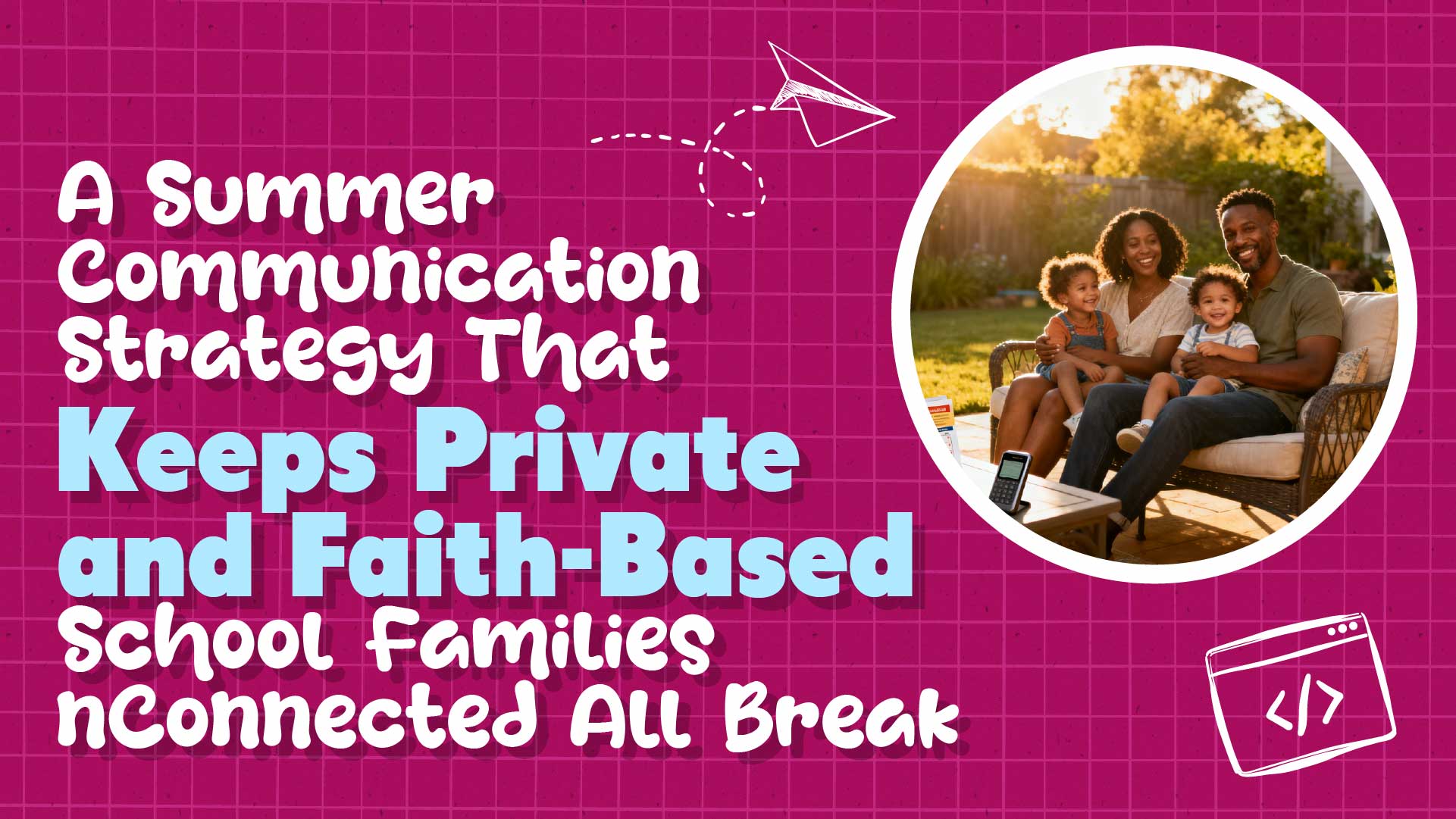
Every June, something predictable happens at schools across the country. The last bell rings, the hallways empty out, and the school's communication goes silent. No newsletters. No social media posts. No emails. Just three months of quiet, where the only reminder parents get that their school exists is the tuition payment coming out of their bank account.
That silence is more expensive than you think. At Cube Creative Design, we work with private and independent schools on their marketing year-round, and the pattern repeats itself every fall. Schools that stayed connected over the summer start the year with excited, committed families. Schools that went dark spend September re-selling parents on why they made the right choice. A solid year-round content strategy prevents that gap from forming in the first place.
This is not about sending a barrage of emails while families are trying to enjoy their vacation. It is about maintaining a consistent, low-effort presence that reminds families they belong to something worth coming back to. Think of it like watering a garden. You do not need to flood it every day. But if you ignore it for three months, do not be surprised when things look a little withered by September.
What Happens When Schools Go Silent Over Summer?
Summer break creates a natural gap in the relationship between your school and its families. During the school year, parents interact with your school daily: drop-offs, pickups, emails from teachers, newsletters, events, and conferences. That constant contact reinforces their decision to enroll.
Remove all of it for 12 weeks, and something shifts. Parents have time to talk with neighbors about the public school down the street. They notice that tuition payments are more than they were during the busy school year. They wonder if the grass really is greener somewhere else. And when a well-meaning friend says, "Have you looked at the new charter school that just opened?" there is no recent positive experience from your school to counterbalance that question.
It is not that parents are disloyal. It is that silence creates a vacuum, and doubt fills vacuums faster than confidence does.
NAIS data indicate that the median attrition rate for independent schools is approximately 8%, with elementary and middle schools seeing rates as high as 10.3%. A meaningful portion of those departures is decided during the summer months, when families are between contracts and have space to reconsider.
For a faith-based K-8 school with 165 students, a 10% attrition rate means losing 16 to 17 students. A comprehensive retention strategy addresses this year-round, but summer communication is a critical piece. At $11,000 per student in tuition, that is over $175,000 in lost revenue. Not all of those losses happen because of summer silence, but some of them do, and those are the most preventable.
How Do You Build a Summer Communication Calendar?
The goal is not to fill inboxes. It is to create a steady rhythm of meaningful contact that takes almost no time to produce. Here is a month-by-month framework that any school can adapt.
May: The Transition Month
May is when you plant the seeds. Families are still in school-year mode, so your communication can include:
- End-of-year celebration recap. Share photos and highlights from the last weeks of school. This is emotional content that reminds families why they love being part of your community.
- Summer communication preview. Let parents know what to expect over the break: a monthly newsletter, social media updates, and a back-to-school timeline. Setting expectations means they will actually look for your messages instead of ignoring them.
- Teacher farewell notes. Have each teacher send a brief note to their students' families thanking them for the year. This can be a simple email or, even better, a handwritten card.
June: The Check-In Month
By June, families are settling into summer routines. Keep it light.
- Summer newsletter #1. Feature a note from the principal, a summer reading list, and a preview of any summer programs or camps the school offers. Keep it under 500 words.
- Social media: behind the scenes. Post photos of teachers at professional development, facility improvements, or new classroom setups. Parents love seeing that the school does not stop working when students are away. For more on summer social media tactics, we have a dedicated guide.
- Personal outreach to new families. If you enrolled new families for the fall, June is the perfect time for a personal call from the principal or admissions director. A five-minute call makes a lasting impression. Ask if they have questions about the fall, mention one thing you are excited about for the coming year, and let them know they can reach you over the summer. That single conversation can be the difference between a confident new family and one that spends July second-guessing their decision.
- Summer reading or activity suggestions. Parents appreciate practical resources. A short list of age-appropriate books or activities — especially ones that tie into your school's curriculum or values — positions the school as a partner in their child's development, not just a service provider.
July: The Quiet Month
July is the month when most schools completely disappear. Do not be one of them. But do not overdo it either.
- Mid-summer update. A short email with one or two updates: a building project, a new program, a new hire. Keep it brief and conversational.
- Social media: community connection. Share photos from community events, church activities (for faith-based schools), or staff doing fun things over the summer. The point is showing that your school is made of real people, not just a building.
- Back-to-school timeline. Start sharing important dates: orientation, supply lists, uniform information, and the first day of school. Parents appreciate having this early so they can plan ahead.
August: The Excitement Month
August is where the tempo picks up. Families should be getting excited, not anxious. A strong back-to-school social media push during this window sets the tone for the year.
- Summer newsletter #2. Feature new teachers and staff, highlight any changes or improvements to the school, and include a detailed back-to-school checklist.
- Welcome back video. A simple video from the principal — shot on a phone, nothing fancy — welcoming families back and expressing excitement for the year ahead. Post it on social media and embed it in the newsletter.
- New family orientation details. For newly enrolled families, send detailed logistics: where to park, what to bring, and who to ask for help. First impressions matter, and reducing anxiety leads to a better start.
- Returning family event. If possible, host a casual get-together before school starts: an ice cream social, a back-to-school picnic, or a parent coffee. These events cost almost nothing and set the tone for the year.
What Should Summer Social Media Look Like?
During the school year, your social media probably focuses on events, achievements, and enrollment. Summer is different. The audience shifts from prospective families to current families, and the goal shifts from recruitment to retention.
Content That Works in Summer
- Teacher spotlights. Introduce new teachers or share what returning teachers did over the summer. Parents want to know who is teaching their children.
- Facility updates. New paint, new playground equipment, and classroom reorganization. These posts show that the school is investing in the experience.
- Student throwbacks. Share highlights from the past school year (with appropriate permissions). End-of-year performances, field trips, and classroom moments remind families of the good times.
- Community content. Share church events, local happenings, or community service activities that the school is involved in. This is especially effective for faith-based schools where the school and the broader community are intertwined.
- Countdown posts. Starting in late July, count down the weeks or days until the first day of school. Simple, easy to produce, and builds anticipation.
Posting Frequency
You do not need to post every day. Two to three posts per week during June and July, ramping up to three to four per week in August, is enough. Consistency matters more than volume.
Halda emphasizes that schools with active summer communication can reduce attrition heading into fall. The key is not frequency but consistency. Families should expect to hear from you, even during the break.
What to Avoid on Social Media Over Summer
A few pitfalls to steer clear of:
- Recruitment-heavy posts. Summer social media should serve your current community, not feel like a sales pitch to new families. If you are running summer enrollment campaigns, separate them from your community content.
- Going completely dark. Even one post per week is better than zero. A three-month gap in your social media feed looks like a school that only cares about families when they are paying tuition.
- Over-polished content. Parents do not want a professional photoshoot of your empty hallways. They want to see real people doing real things. Authenticity builds trust; polish builds distance.
How Can Small Schools Do This on a Tight Budget?
If you are the principal of a 165-student school and you are also the marketing department, the admissions office, and the person who orders the copy paper, a summer communication strategy might sound like one more thing on an already full plate. Fair point. Here is the reality: the most effective summer communication tactics are also the cheapest.
High-Impact, Low-Cost Tactics
- Personal phone calls. Call 5 families per week during June and July. That is one call per school day. Ask how their summer is going and if they have any questions about the fall. The call takes five minutes. The impact lasts all summer.
- Handwritten notes. Write 10 postcards per week to families. A simple "We're looking forward to seeing [child's name] in the fall!" goes a long way. Total cost: stamps and postcards.
- Email newsletters. Use a free email platform (Mailchimp's free tier handles up to 500 contacts). Write two newsletters over the summer. Each one should take less than an hour. For ideas on what to include, our newsletter readership guide covers strategies that drive engagement.
- Phone photos for social media. You do not need a professional photographer. Take photos of the school, your staff, and the community with your phone. Authenticity outperforms polish, especially for smaller schools.
What Not to Spend Money On
- Paid advertising during summer (save it for enrollment season)
- Professionally produced videos (phone videos work fine)
- New marketing software (use what you have)
- Printed mailers beyond postcards (email is free)
The total cost of a solid summer communication plan for a small school can be under $200 for the entire summer. Postcards, stamps, and maybe a small gift for the back-to-school event. Everything else is time and intention.
What Does a Summer Communication Plan Look Like in Practice?
Consider a faith-based K-8 school with 165 students, tuition at $11,000, and an annual marketing budget of $36,000. The principal handles most communication personally with help from one administrative assistant.
Here is what their summer plan looked like:
May: The principal sent a brief email to all families outlining the summer communication schedule. Teachers sent handwritten cards to each family. The school posted a photo gallery from the end-of-year celebration.
June: The first summer newsletter went out, featuring a note from the principal, a recommended summer reading list, and dates for the church's community events. The principal personally called the 12 new families enrolled for the fall. Social media featured photos of teachers at a professional development conference.
July: A mid-summer email shared news about a classroom renovation and introduced the new fifth-grade teacher. The school posted photos from the church's summer Bible camp. The back-to-school timeline went out, including orientation dates and supply list links.
August: The second newsletter included a back-to-school checklist, new faculty introductions, and a welcome-back video from the principal. The school hosted a back-to-school ice cream social at the church, which 80% of returning families attended. Social media counted down the final two weeks with daily posts.
The result: only 6 students did not return for the fall, compared to 14 the previous year (when the school did almost no summer communication). That is 8 additional retained students at $11,000 each, representing $88,000 in tuition revenue preserved by a summer communication plan that cost less than $200 in materials.
The principal spent roughly 30 minutes per week on summer communication across all channels. The administrative assistant handled the newsletter layout and social media scheduling. No outside help was needed. No new software was purchased. The entire plan ran on a free email platform, a smartphone camera, and a box of postcards from the office supply store.
The key was not any single tactic. It was the cumulative effect of families hearing from the school every two to three weeks throughout the summer. By August, parents were not wondering whether they made the right choice. They were counting down the days until school started.
When Should Back-to-School Communication Start?
Most schools wait until August to start back-to-school messaging. By then, families are already anxious about the transition, scrambling for supplies, and fielding questions from their kids about what the new year will be like.
Start in July. Here is why:
- Families need planning time. Uniform orders, supply purchases, schedule adjustments, and childcare transitions all take time. Giving families six weeks instead of two reduces stress.
- Early communication signals organization. When your school sends back-to-school details in July, parents see a school that has its act together. That builds confidence.
- It extends the excitement window. Two weeks of anticipation is a sprint. Six weeks of anticipation is a build. The longer families have to look forward to the new year, the less likely they are to second-guess their enrollment.
Your July back-to-school communication should include: the first day of school date, orientation schedule, supply lists, uniform information, and any changes to pickup/drop-off procedures. Save the detailed teacher assignments and classroom details for August.
The Transition from Summer to School Year
The final week before school should include one last communication that ties the whole summer together. Thank families for staying connected over the break, highlight what is new and exciting for the coming year, and give them one clear action item: show up for orientation, complete the online forms, or bring the supply list. Keep it simple and forward-looking. The summer is over, and your job now is to make the first day feel like a homecoming, not a cold start.
If your school is looking for help building a communication plan that keeps families engaged without adding hours to your already full schedule, contact me, and we will map out a summer strategy that fits your school and your bandwidth.
Frequently Asked Questions
How Many Emails Should a School Send During Summer Break?
Two to three emails over the entire summer are enough for most schools. Send one in June (end-of-year recap and summer preview), one in mid-July (updates and back-to-school timeline), and one in August (back-to-school details and welcome back). Keep each email under 500 words and focused on one or two topics.
What Is the Most Effective Low-Cost Summer Communication Tactic?
Personal phone calls to families consistently rank as the highest-impact tactic. A five-minute call from the principal or a teacher makes families feel valued and connected. Handwritten postcards are a close second. Both cost almost nothing and create a personal touch that email cannot replicate.
When Should We Start Sending Back-to-School Information?
Start in July with logistics: first day of school, orientation dates, supply lists, and uniform information. Save detailed teacher assignments and classroom placements for early August. Starting in July gives families more time to plan and reduces the anxiety that comes with last-minute communication.
How Do We Keep New Families Engaged Over Summer Before They Start?
Personal outreach is essential. Have the principal or admissions director call each new family in June to welcome them and answer questions. Include them in all summer communications so they feel part of the community before the first day. Invite them to any summer events, and consider pairing them with a returning "ambassador" family who can answer informal questions.