You've made the decision. After watching competitors dominate the Google Map Pack while your phone stays quiet during peak season, you're ready to hire a pest control marketing agency. But now what?
If you're like most pest control business owners, you've invested money in marketing before. Maybe Google Ads burned through cash without delivering calls. Perhaps a website that looks decent but remains invisible to potential customers. Starting another marketing relationship might feel like scheduling a second opinion on a termite infestation: necessary but anxiety-inducing.
Here's the reality: the pest control industry has matured into a $26.1 billion market, exhibiting steady growth at a compound annual growth rate of 3.1% over the past five years, according to IBISWorld. Yet the market remains highly fragmented, with over 32,720 distinct companies competing across the United States. IBISWorld describes the industry as having "low market share concentration," with even the largest players like Rentokil and Rollins controlling only a small fraction of the total market.
What does that mean for you? Most of this industry consists of fierce local battles where digital visibility often trumps scale.
Your first 30 days with a qualified pest control marketing agency set the trajectory for your business. Think of it like a thorough termite inspection before treatment. You wouldn't trust an exterminator who starts spraying without first identifying what's actually in the walls. This guide walks you through exactly what should happen during your first month, what questions to ask, and how to evaluate whether your investment is on the right track.
Why the First 30 Days Matter More Than You Think
Before diving into the week-by-week breakdown, it's worth understanding the economics that bring most pest control owners to this decision point. Digital channels have become the primary battleground for market share, fundamentally altering how customers find and choose service providers.
Research from the Local Search Association (via Invoca) found that most home services consumers don't have a specific company in mind when they begin their search. Additionally, in the majority of home services verticals, over 55% of consumers run a search before scheduling an appointment. For pest control specifically, the customer journey is uniquely compressed and urgency-driven.
Unlike discretionary purchases, a pest control query often happens at a moment of panic. Someone discovers a rodent in their kitchen at 10 PM or wakes up to bed bug bites. In those moments, the vendor who appears first in local search, loads fastest, and projects the highest credibility wins the business.
The Real Cost Comparison: Agency vs. In-House
You've probably wondered whether hiring someone in-house makes more sense than working with an agency. The math often surprises people.
Data from the U.S. Bureau of Labor Statistics (May 2024) shows the median annual wage for marketing managers is $161,030. When you factor in benefits, payroll taxes (typically calculated at 30%), recruitment costs, and the necessary software stack, including CRM, email platforms, and SEO tools, the actual fully-loaded cost reaches approximately $209,339 annually. (Yes, that number made me do a double-take, too.)
But here's the deeper problem: that investment buys you a generalist skill set.
Modern digital marketing requires what's known as a "T-shaped" marketer, someone who knows a little about everything but has deep expertise in one or two areas. Finding a single individual with expert-level proficiency in technical SEO, Google Local Services Ads management, conversion rate optimization, content strategy, and graphic design is statistically improbable at small business budgets. The unicorn employee who can code a website, manage a $50,000 ad spend, and write compelling copy doesn't typically work for local pest control firms. They run their own agencies.
In contrast, quality pest control marketing services typically range from $36,000 to $72,000 annually in management fees.
Which Businesses Benefit Most from Agency Partnership?
Not every pest control company needs an agency, and that's okay. Industry analysis identifies specific revenue thresholds that determine optimal structure:
- Under $500,000 Revenue: Agency retainers often strain cash flow at this stage. Owner-led marketing supplemented by project-based freelancers for website builds or content typically works better.
- $500,000 to $2 Million Revenue: This is the sweet spot for agency engagement. The business has outgrown DIY capabilities (which typically cap out at 10 hours per week of owner effort) but can't afford a full in-house team.
- $2 Million to $5 Million Revenue: A hybrid model becomes optimal here, with an internal marketing coordinator orchestrating strategy while an agency handles technical execution.
- Above $5 Million Revenue: Multi-person in-house teams become viable, though many successful enterprises retain agencies for specialized capabilities or overflow capacity.
- Under $500,000 Revenue: Agency retainers often strain cash flow at this stage. Owner-led marketing supplemented by project-based freelancers for website builds or content typically works better.
- $500,000 to $5 Million Revenue: This is the sweet spot for agency engagement. The business has outgrown DIY capabilities (which typically cap out at 10 hours per week of owner effort) but can't afford a full in-house team.
- $5 Million to $10 Million Revenue: A hybrid model becomes optimal here, with an internal marketing coordinator orchestrating strategy while an agency handles technical execution.
- $10 Million to $20 Million Revenue: Multi-person in-house teams become viable, though many successful enterprises retain agencies for specialized capabilities or overflow capacity.
- Above $20 Million Revenue: This is the definitive tipping point for a fully autonomous in-house department. At this scale, the marketing budget (typically 5-8% of revenue) exceeds $1 million, making it more financially efficient to hire a high-level Marketing Director and specialists (PPC, SEO, Video) rather than paying agency management fees on large ad spends.
Before Day One: The Discovery Phase
Any reputable pest control marketing agency begins the relationship before you officially become a client. This discovery phase separates strategic partners from vendors who apply cookie-cutter templates to every business that signs a contract.
During initial consultations, your potential marketing partner should be asking more questions than they're answering. A thorough discovery process examines your business model in detail: How do you generate revenue? Is it primarily one-time service calls, quarterly maintenance contracts, or a mix? What's your average ticket size? If your average initial service runs $250 plus quarterly maintenance at $150, that's essential information for calculating marketing ROI and setting realistic expectations.
The agency should also map its service area comprehensively and identify its competition. Who's currently dominating the Google Map Pack in your area? A proper competitive analysis uses tools like SEMrush or Ahrefs to reveal exactly how much traffic competitors receive, which keywords they rank for, and where gaps exist that you could fill.
Before you commit, a quality agency will provide concrete data about your market position: current organic traffic estimates compared to competitors, keyword gap analysis, domain authority comparison, and local search visibility assessment. This is the inspection report before treatment. Without knowing where you stand, it's impossible to chart a course forward.
Week One: Laying the Foundation
The first week is about information gathering and strategic planning. If your agency jumps straight into execution without this phase, that's a red flag. Random tactics without a strategy are like treating for carpenter ants when you actually have termites. You might look busy, but you're not solving the real problem.
Establishing Asset Sovereignty
The most critical action in the first week involves establishing what professionals call "Asset Sovereignty," which means verifying you own your digital presence outright. A pervasive issue in pest control marketing involves agencies that establish Google Ads accounts, Google Analytics properties, or even websites under their own proprietary access. This practice creates "golden handcuffs," effectively holding clients hostage.
In the first days, your marketing partner will initiate the transfer of administrative rights. Expect them to verify your company retains primary ownership of the website domain and hosting, Google Business Profile, Google Ads, and Local Services Ads accounts, and all historical analytics data. Any resistance from an agency to grant full administrative ownership is disqualifying. Professional agencies act as stewards, never owners.
The Comprehensive Marketing Audit
Simultaneously, the agency initiates what industry sources describe as a "75-point marketing audit." This rigorous analysis typically consumes eight to 12 hours of specialized labor and examines your entire marketing ecosystem.
The audit systematically reviews technical SEO health (site speed, mobile responsiveness, schema markup), conversion pathways (where leads leak from the funnel), competitive benchmarking (Map Pack positioning, citation profiles, review velocity), and historical ad performance (negative keyword opportunities, wasted spend patterns).
Are contact forms too long? Is the phone number clickable on mobile? Does the "Thank You" page track conversions correctly? These details matter more than most owners realize.
The final component establishes baseline measurements. Key metrics include Cost Per Lead by channel, Customer Acquisition Cost, conversion rate, and current ROI. A good marketing ROI is generally considered 5:1, meaning $5 in revenue for every $1 spent. According to Mayple, this 5:1 benchmark represents a strong return, while a ratio of 10:1 is considered exceptional. Anything below 2:1 is barely profitable once business expenses are factored in.
Content Gap Analysis
Many pest control companies discover at this stage the root cause of their visibility problems: they simply don't have enough relevant content for Google to index and rank.
A typical struggling pest control website might have a homepage, an "About Us" page, a single "Services" page listing everything from termite treatment to mosquito control, and maybe a contact page. That's perhaps five to 10 pages competing against competitors with hundreds of indexed pages. We recently audited a Charlotte-area pest control company with eight pages going against a competitor with 347. Guess who dominated the local search results?
Your agency should identify what content is missing: individual service pages for each pest type you treat (bed bugs deserve their own page, not a bullet point), location-specific landing pages for each city or neighborhood you serve, educational content addressing the questions potential customers are actually asking, and seasonal content that captures traffic during peak pest activity periods.
Week Two: Strategy Development and Quick Wins
With the audit complete and access secured, week two shifts to remediation and infrastructure setup. This phase is often invisible to the business owner, involving backend code and dashboard configurations. Think of it as the plumbing work that determines whether the system actually functions.
Google Business Profile Optimization
For local pest control, the Google Business Profile serves as your digital storefront. When someone searches "pest control near me," Google's local pack (those three business listings with the map) typically captures the majority of clicks.
Your agency should tackle several priorities here:
Category refinement comes first. They'll verify your primary category is accurately set to "Pest Control Service" with secondary categories covering specifics like "Wildlife Rescue Service" if applicable. This granularity prevents wasted impressions on irrelevant searches.
Next up: review management system implementation. Expect them to integrate software that automates review requests after service calls. Building review velocity early pays dividends for months.
Finally, visual verification means uploading high-quality images of your team, trucks, and equipment. Real photos reduce the "stranger danger" anxiety inherent in allowing service workers into a home. Stock images? They do the opposite.
The Technical SEO Overhaul
In an industry where urgency drives decisions, page load speed directly correlates to conversion. Research from Portent found that a site loading in 1 second has a conversion rate 2.5 to 3 times higher than a site loading in 5 seconds. For pest control businesses where customers often search during moments of panic, even a few seconds of delay can mean losing potential clients to faster-loading competitor sites.
Priority fixes include addressing slow load times, implementing proper schema markup, correcting crawl errors, preventing pages from being indexed incorrectly, and verifying mobile responsiveness with thumb-accessible click-to-call buttons.
Your agency should also address service page granularity. If your website has a single "Services" page listing everything from termite treatment to mosquito control, you're competing at a disadvantage. Each pest type deserves its own optimized page aligned with specific search intent.
Local Services Ads Integration
Google's Local Services Ads platform (now called 'Google Verified,' replacing the former 'Google Guaranteed' badge) is deceptively complex. The agency manages bureaucratic hurdles, including insurance and licensure verification, background check processes, and dispute dashboard configuration. Agencies often add significant value by disputing invalid leads, such as calls from outside your service area, to recoup budget credits from Google.
Week Three: Strategic Alignment
As technical foundations settle, focus shifts to strategic alignment. This is where the partnership model gets defined.
Defining the Division of Labor
For businesses in the $500,000 to $2 million range, industry analysts recommend implementing the Hybrid Model. Your internal team (whether that's you or a marketing coordinator) provides the soul of the business: local knowledge, brand voice, photos of technicians in the field, customer stories. The agency provides the muscle: enterprise-grade tools, 24/7 bid management, and technical expertise.
For content, your internal team creates authentic social posts and captures field stories while the agency handles SEO technical writing and optimization. For advertising, you define budget caps and business goals while the agency manages bidding strategies, A/B testing, and keyword management. For data, you interpret business impact on revenue and profit while the agency handles analytics setup and attribution modeling.
Seasonal Strategy Calibration
Pest control is inherently seasonal, and marketing budgets must reflect this biological reality. A flat monthly budget is inefficient.
Research suggests front-loaded allocation:
- Q1 (January through March) receives 20% of the annual budget for preparation and asset building.
- Q2 (April through June) commands 40% for peak offensive during ant and termite season.
- Q3 (July through September) receives 25% to maintain momentum during the mosquito and stinging insect season.
- Q4 (October through December) gets 15%, shifting focus to rodent exclusion and customer retention.
Campaigns should launch 2-3 weeks before expected biological spikes. Termite awareness content prepared in late winter launches before the first warm spell triggers swarming.
Week Four: Execution and Calibration
Your pest control marketing services provider should now actively create content designed to capture search traffic.
The Learning Phase Reality
When campaigns launch or undergo significant restructuring, Google's algorithms enter a learning phase lasting seven to 14 days. Think of it like a new technician's first week on your team. They're learning your routes, your customers' quirks, and which products work best in your territory. Google's algorithm is doing the same thing with your ad campaigns, figuring out which audiences convert and which searches waste your budget.
According to HawkSEM research, the Google Ads learning phase can take just a week or up to one month, depending on factors like conversion volume and campaign changes. Costs per lead may fluctuate as the system tests audiences and bid strategies.
During this phase, your agency performs daily account hygiene, monitoring the Search Terms Report to aggressively add negative keywords. If "pest control" triggers ads for someone searching "roach bomb at Home Depot," that term gets blocked immediately to prevent budget waste on DIY-intent searches, which are notoriously common in pest control.
Reputation Management Foundation
Online reviews have become one of the most influential factors in both search rankings and customer decisions. Research by BrightLocal (2024) found that 75% of consumers always or regularly read online reviews when researching businesses, and 88% would use a business that replies to all of its reviews compared to just 47% who would use a business that doesn't respond at all. A pest control company with 100+ positive reviews will outrank competitors with fewer reviews, all else being equal. Data from online review research indicates that online reviews contribute to about 17% of search engine rankings for local businesses, making review quantity and quality critical ranking factors. More importantly, potential customers trust peer reviews more than any marketing claim.
During month one, your agency should establish a systematic approach to review generation and management. This includes implementing automated review request systems that reach customers after service completion, establishing protocols for responding to both positive and negative reviews, and setting up monitoring so you're aware of new reviews across all platforms. Review management isn't just about accumulating five-star ratings. It's about demonstrating to potential customers that you're responsive, professional, and committed to customer satisfaction.
The First Monthly Report
At day 30, the first formal reporting cycle should focus on qualified lead volume (distinguishing raw calls from billable leads), Cost Per Qualified Lead, early conversion rate improvements, and leading ROI indicators. A sophisticated agency moves the conversation beyond vanity metrics to revenue metrics.
What Results to Expect
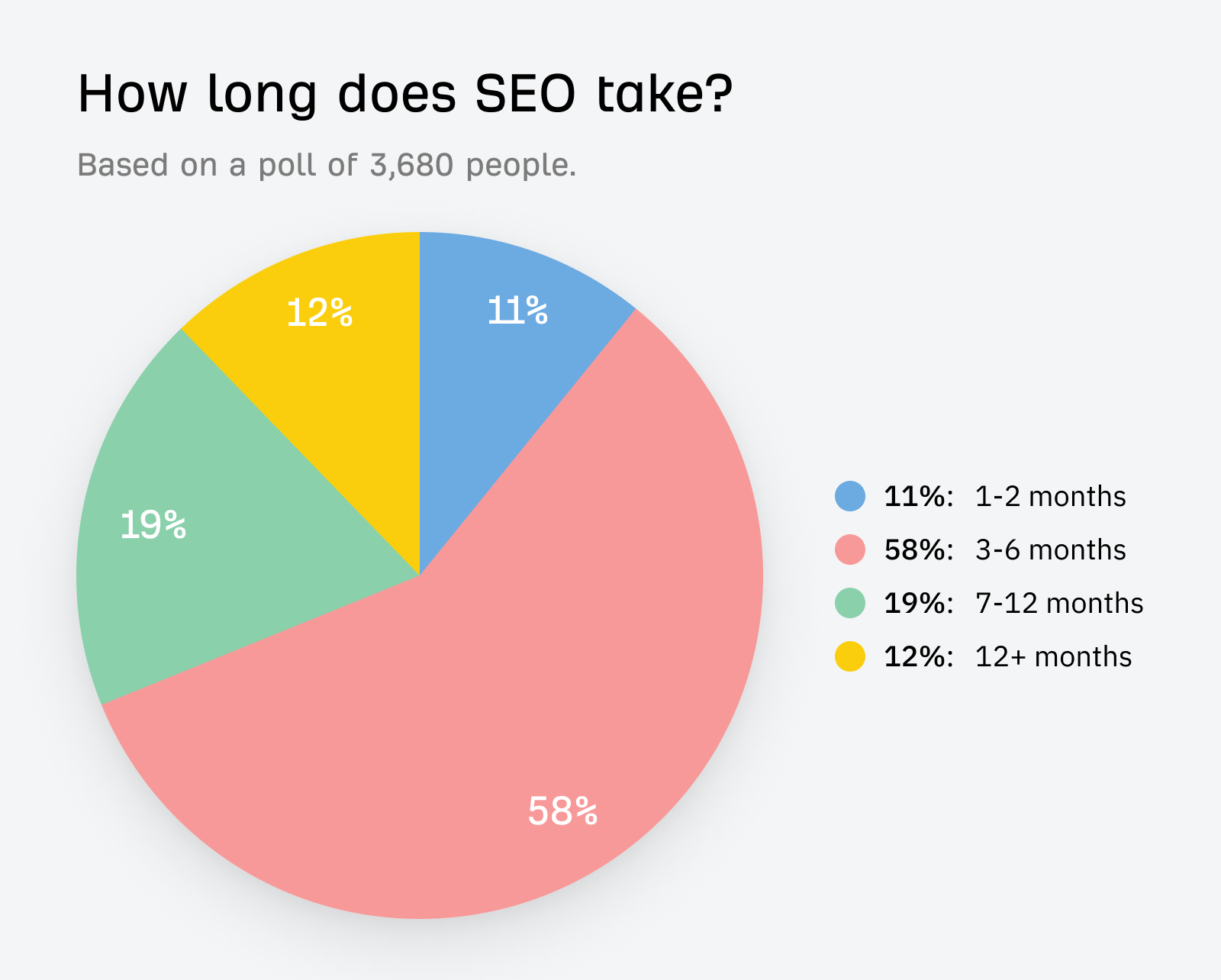
The honest answer: SEO represents a long-term strategy. According to an Ahrefs poll of 3,680 SEO professionals, 58% reported that significant ranking improvements typically take 3-6 months to materialize. In highly competitive markets, it may take 9-12 months.
Month 1: Foundation completion—technical issues addressed, content strategy finalized, Google Business Profile optimized.
Months 2-3: Lower-competition keyword movement and noticeable GBP visibility improvement.
Months 4-6: Expect 50-75% organic traffic increase compared to baseline.
Months 6-12: Compounding returns begin with 100%+ traffic improvement.
Agencies promising first-page rankings within 30 days are either using tactics that risk penalizing your site or being dishonest.
The ROI Framework
Consider the potential for a $1 million revenue business implementing the hybrid model. According to the U.S. Bureau of Labor Statistics, the median salary for marketing specialists is $76,950; with benefits and taxes, that's approximately $100,000 fully loaded. Add a mid-range agency retainer of $54,000, and your total annual investment is approximately $154,000. With an objective of doubling qualified leads from 200 to 400 monthly, assuming a 20% close rate and $2,500 average job value with an 80% gross margin, the annual profit impact reaches $960,000. That's 523% ROI with approximately 1.9 months payback.
Simplified: you need roughly 6 new customers per month to break even on the investment. Every customer beyond the sixth is pure profit growth.
The key insight: SEO creates a compounding asset. Unlike paid advertising, where leads stop when spending stops, content continues working indefinitely. The geographic landing page created today will still generate traffic and leads three years from now.
Red Flags: What Shouldn't Happen
Warning signs that your agency may not deliver value include:
- No discovery process (generic templates instead of customized strategy)
- Guaranteed rankings (SEO doesn't work that way)
- "Black box" methodology (refusing to explain their approach or show actual work)
- Communication voids (polished sales process followed by silence in week two)
- Data hostage situations (resistance to providing admin access)
- No clear reporting schedule
Learn how to evaluate potential SEO partners before signing any contract.
Your Role in Success
While the agency handles heavy lifting, your involvement matters. Provide access promptly; delays slow everything. Share institutional knowledge freely. You understand your customers and market better than any agency ever will. Be available for questions. Quality agencies ask lots of questions early because they're building understanding to serve you better.
Review content carefully before publishing. Check for accuracy and verify that your company's unique value proposition comes through. Most importantly, trust the process. SEO requires patience. Resist judging strategy on week-two results.
Taking the First Step
The competitors dominating your local search results weren't always there. They made a decision, invested in their digital presence, and executed consistently over time. The best time to improve your online visibility was yesterday. The second-best time is today.
Ready to see where your pest control company stands against local competitors? Contact me to discuss a competitive analysis and discover the opportunities your business is missing.
Frequently Asked Questions
How long does it take to see results from a pest control marketing agency?
Expect 3-6 months for significant ranking improvements and 6-12 months for compounding returns that transform lead flow. Technical improvements and Google Business Profile optimization often show results faster. Be wary of anyone promising first-page rankings within 30 days; those claims indicate risky tactics or dishonesty.
How much should a pest control company spend on marketing?
For businesses in the $500,000 to $2 million revenue range, quality agency retainers typically run $36,000 to $72,000 annually. The more important metric is ROI. A good benchmark is 5:1 (returning $5 for every $1 spent), while outstanding performance reaches 10:1. Your optimal budget depends on market competitiveness and growth goals.
What's the difference between hiring an agency and hiring an in-house marketing person?
According to the U.S. Bureau of Labor Statistics, the median marketing manager salary is $161,030; a fully-loaded cost reaches approximately $209,339 annually when factoring in benefits, taxes, and software. More importantly, you get one generalist versus a team of specialists. Most agencies provide access to SEO experts, PPC managers, content strategists, and designers at a lower combined cost.
Should I keep running my own Google Ads while working with an agency?
Generally, no. Overlapping campaigns can compete against each other in ad auctions and drive up costs. A proper onboarding process includes transitioning the ad account management with full transparency and data preservation.
What if my previous marketing efforts have failed—is this investment still worth it?
Previous failures often stem from a lack of strategy, generic execution, or working with generalist agencies. A specialized pest control marketing agency understands your seasonal patterns, local competition, and customer decision journey in ways generalists don't. Past disappointment doesn't predict future results when you upgrade to a specialized partner.