
Finding the right marketing agency in Wisconsin has never been more important or more complicated.
The marketing landscape has shifted dramatically over the past two years. AI-powered search engines like ChatGPT, Perplexity, and Google's Gemini have fundamentally changed how audiences find businesses. Traditional SEO is no longer enough. The agencies that understand this shift and have built their services around it are the ones delivering results in 2026. The ones that have not are still optimising for a world that no longer fully exists.
This list focuses on Wisconsin agencies that are actually equipped for where marketing is heading, not just where it has been. Whether you are a local business in Madison, a regional brand in Milwaukee, or a growing company anywhere across the state, these are the agencies worth your time.
If you asked your marketing director how your school's website is performing, they'd probably give you a number. Maybe traffic is up 12%. Maybe you got 500 more visitors this month than last. Those numbers sound encouraging, but they don't answer the question that actually matters: is the website converting visitors into families who inquire, apply, and enroll?
That's what benchmarks are for. Not vanity metrics that sound good in a board presentation, but performance standards that tell you whether your website is doing its job compared to schools like yours.
For independent school leaders who need to evaluate marketing performance without getting into tactical weeds, these are the benchmarks that matter, what they mean, and where your school should fall.

Written By: Hannah Kilpatrick | March 11, 2026
Hannah Kilpatrick Cube Creative DesignHannah Kilpatrick graduated from Western Carolina University in 2021 with a Bachelor of Science in Communication with a Minor in Marketing and a Concentration in Public Relations. She has been around social media since its creation. (Meaning, she was in the first grade when Facebook became available to the general public.) As our very own professional Gen-Z, Hannah is a whiz when it comes to social media creation and paid advertising.
If your school's website gets 10,000 visitors during enrollment season and converts at the private school average of under 2%, that's fewer than 200 inquiry form submissions. If you convert at 5%, that's 500. Same traffic, same ad spend, same SEO effort; 300 more families in your admissions pipeline because the website did its job.
That gap is what a conversion audit is designed to close. Not a redesign. Not a rebrand. A systematic review of the pages, forms, and pathways families use when they're deciding whether your school is worth a phone call. (If you need a broader look at your enrollment season website strategy, start there and come back here for the conversion-specific audit.)
For school admissions teams heading into the spring enrollment window, this is the highest-leverage project you can run right now. You've already spent the money driving traffic. The question is whether your website is converting that traffic into inquiries or quietly sending families to the school down the road.

Written By: Adam Bennett | March 11, 2026
Adam is the president and founder of Cube Creative Design and specializes in private school marketing. Since starting the business in 2005, he has created individual relationships with clients in Western North Carolina and across the United States. He places great value on the needs, expectations, and goals of the client.
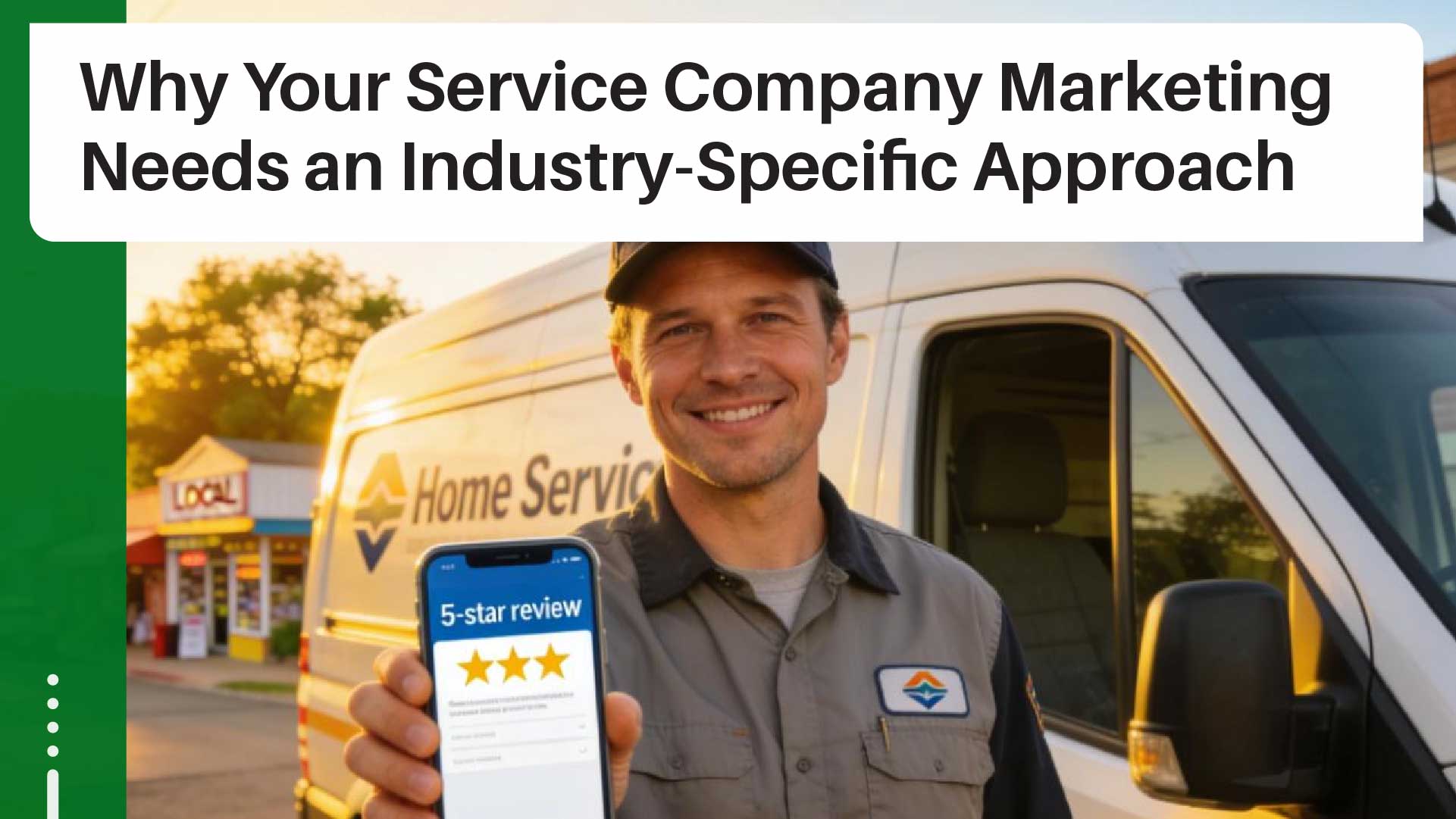
A solo plumber in North Carolina spent $300 a month on a generic digital marketing package from a national agency. The package promised "proven lead generation strategies." Six months later, he'd received 12 low-quality inquiries from outside his 40-mile service area. He canceled the contract, frustrated and out $1,800. His problem wasn't that he needed more marketing—it was that the marketing was built for every business instead of for home service companies.
This scenario repeats itself thousands of times annually. Home service business owners invest in marketing advice and tactics designed for e-commerce stores, SaaS companies, or consumer product brands. They wonder why conversion rates are terrible and why they're throwing money at strategies that work for someone else's industry—just not theirs.
The issue is fundamental: home service marketing operates under completely different rules than general business marketing. Your customers aren't shopping online for a commodity product. They're looking for a trusted local expert who can solve an urgent problem—a leaky pipe, a failing AC system, or a roof ready to fail. They want to see reviews, confirm you serve their area, and pick up the phone. Generic marketing misses every one of these triggers.
This post explains why cookie-cutter marketing tactics fail for plumbing, HVAC, roofing, electrical, landscaping, and other home service trades—and what works instead.

Written By: Chad J. Treadway | March 10, 2026
Chad is a Partner and our Chief Smarketing Officer. He will help you survey your small business needs, educating you on your options before suggesting any solution. Chad is passionate about rural marketing in the United States and North Carolina. He also has several certifications through HubSpot to better assist you with your internet and inbound marketing.