
It’s a competitive market for today’s small business owners. You aren’t only competing against other small business owners but depending on your area you might also be competing with larger companies and franchise operations. But there is good news, much like a David and Goliath, being smaller and also help make you more nimble allowing you to act quicker. If you know how and what information to monitor, your business can be as successful as any.
Here are seven tips for helping your small business save time and money and making your business more profitable.
1. To sell right, you have to buy right
One way small businesses can compete is by being competitive with your prices of physical products. The best way to do that is to buy competitively. Try to buy factory direct where possible, attend wholesale auctions, and consider establishing a buying co-op with other small but noncompeting businesses.
2. Cost: It’s everyone's concern
Make every attempt to help motivate your staff to be mindful of costs and the net profit. The goal being they are as concerned with controlling costs as with generating sales. One way you could encourage participation would be to implement a bonus program based on a percentage of costs saved.
3. Treat your customers right and they'll keep coming back.
Ben Franklin is credited with saying that “The bitterness of poor quality remains long after the sweetness of low price is forgotten.” This goes along with your customer service. While watching the cost is a factor, you don’t want to sacrifice your quality or customer service to do it.
4. Build a network and be mentored
Finding a good mentor be it someone local, regional, or thousands of miles away, will help you navigate the journey of business ownership. Build out a network of professionals in your industry you will find out what others are doing to manage problems with inventory, receivables, personnel, fixed assets, technology, marketing, etc.
5. Change isn’t a bad thing
Legend has it that Henry Ford said, “If I had asked people what they wanted, they would have said faster horses.” Think about that, if it had not been for creative ideas and innovation we wouldn’t have the mobility we do today. See change isn’t a bad thing! Just because its the way its always been down doesn’t mean there isn’t a better way.
6. Ask your employees and your customer service reps
Businesses shouldn’t be afraid to ask the staff and customer service reps for suggestions. These are the folks that are directly involved with both your product and your customers. They are in the perfect position to suggest improvements and give you an insight into what is working and what’s not working.
7. Examine your current marketing strategy
For smaller companies a yearly marketing plan may be efficient, for larger ones, it may be better to look at doing something quarterly or monthly. If you are focusing on content and digital marketing its much easier to pivot and make changes.
Conclusion
Hopefully, these seven tips will help you set up your small business for success! If you are interested in a free review of your current website or would like a consultation on what we can do to help you with your website, content marketing, and digital marketing needs, please be sure to reach out!

Written By: Chad J. Treadway | July 07, 2020
Chad is a Partner and our Chief Smarketing Officer. He will help you survey your small business needs, educating you on your options before suggesting any solution. Chad is passionate about rural marketing in the United States and North Carolina. He also has several certifications through HubSpot to better assist you with your internet and inbound marketing.

I hate to break it you, but your social media page isn’t your website. It’s a common misconception by many small businesses since they are so accessible and popular. However, I have said it before and will continue to say, social media platforms are rented spaces. While they can be used as part of a greater content marketing strategy, you still have to have a website for it all to live. Here are seven quick reasons why a website is non-negotiable!
1. Social media is great but it's NOT your website
We see this a lot and I have even addressed it in a previous post. While most of your potential customers may have access to social media, such as Facebook, Twitter, or Instagram, there are others who shocking don’t have a profile! When they try to load your page, they are forced to log in or create a profile. All this does is creates frustration for the searcher and they move on to the next link. Also at any point, the parent company of the social media channel could decide to charge for its services.
By having a business website (separate from social media). you are providing your customers with one location where they know where to find you! It would be amiss if I also didn’t mention that your website is one of the places that search engines and mapping software go to ensure your name, address, and phone number.
2. 5 W’s your website has that
Today we search for everything. Searching is easy and the ability to do it is as close as the nearest voice-enabled device, phone, tablet, or computer. All these devices use some sort of search engine to find information. As part of a greater content strategy you will want the correct information scattered around the web, your website should be the main source and should provide the answers to user’s questions and what they need to know about your business.
- Hours of operation? Check.
- Services offered? Check.
- Phone number? Check.
- Email address? Check.
- How much does it cost? Maybe?
Consider the alternative of only having a social media page. If any of these items are not clearly displayed on the page, the customer would be required to contact you to get the answers. And let us be honest how often are you going to call a business to find out their hours if you can’t Google it.
Also, think about this, by talking about the cost of your product or services is one of the biggest questions that searchers need answers to. We have a post that talks about it here.
3. Simply put, a website establishes credibility
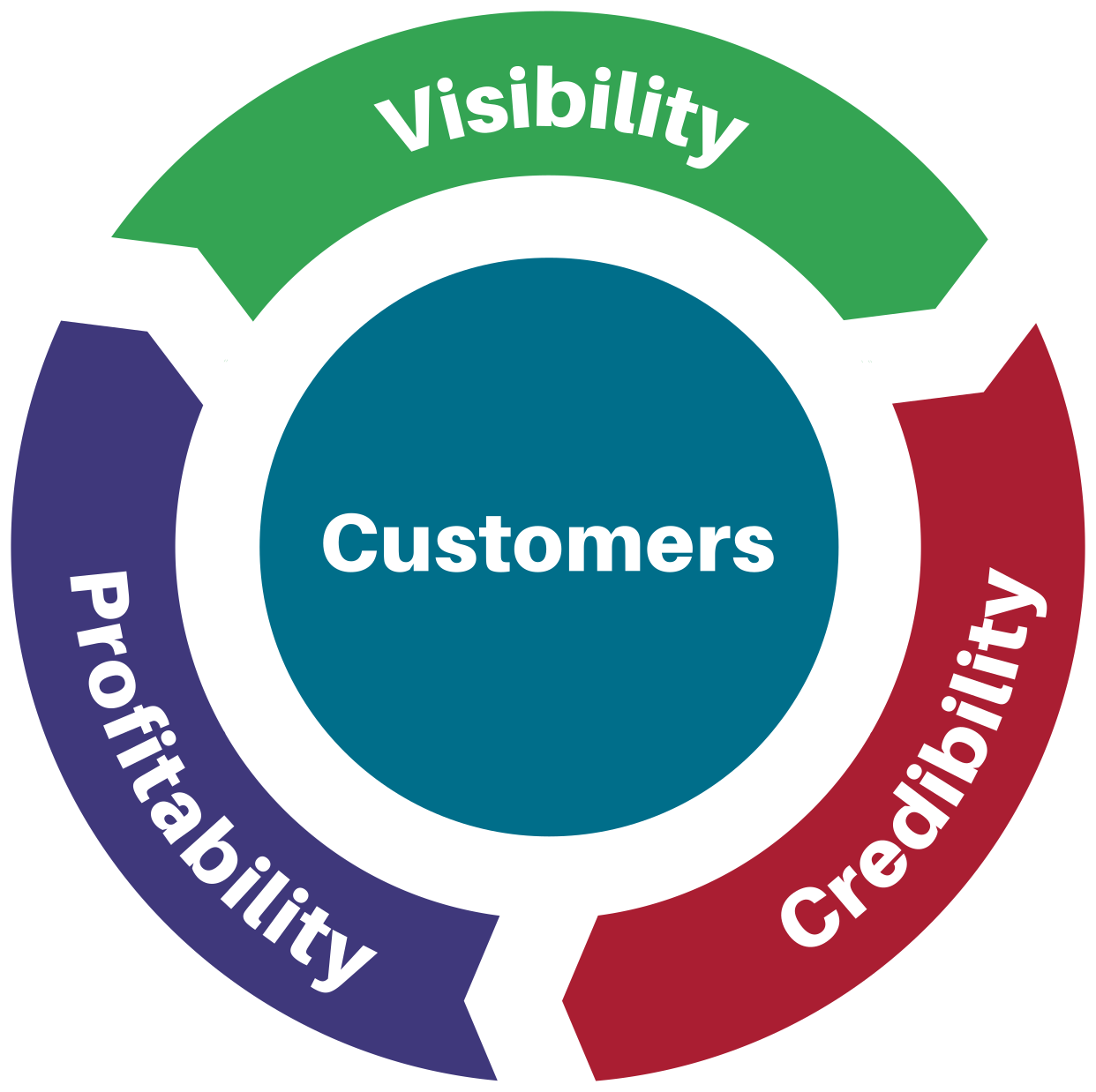 Having a professional website immediately begins building trust and credibility with your customers. Think about a time you Googled a business and the only link that came up was a social media page or just a Google My Business listing. Did you click the link or continue searching for an actual website? Chances are searchers are going to go on, unless you are in an industry that has very little competition and relies on referrals and word of mouth.
4. Your website must look professional.
Often, your website is the first impression customers get of your business. They’re introduced to your brand, your values, and your services. A website that is challenging to navigate or unattractive can quickly have potential customers hitting the back button!
Again, think back to a time you clicked on a website and couldn't quickly find the information you were searching for. You DO NOT want your potential customers to have that same experience when they click on your website.
5. Your website can be an EXPERIENCE for your customers.
When they come to your website, you have the opportunity to guide them where you need them to go. It may be your history and story, your mission, or your vision. Ultimately you want them to convert and either buy something or contact you.
6. Enhances the “know-like-trust” relationship with your customer.
It has often been said, “People Do Business With People They Know, Like and Trust”. While there is debate on the origin, the meaning behind it isn’t debatable. If you can build your credibility and earn my trust, then you have a solid chance to earn my business. Each time someone sees your or your brand, the more they start to trust you and your business. It is more recognizable, and you are more likely to be on their mind when they need your service or product.
7. A website is worth the investment
Your website is your single best marketing tool. Spending a little time, and investing in it will pay dividends.
While there are the DIY options available, my question is always this, what is your core business? Is it building a website and creating a marketing machine? If it takes you 8 hours to build a website, how much did you lose in actual work time from your core business? Hiring a professional agency to design, program, and develop a website with and implement a content strategy will ensure that your users will have the most effective user-experience.
Final Thoughts
Hopefully, these seven tips help you understand that social media isn’t all that you need. At the very least my hope is that you have some food for thought and something to ponder over the coming weeks or months. I encourage you to reach out sooner than later if you have any questions. Cube Creative is here to help you with your website, content marketing, and digital marketing needs!
Written By: Chad J. Treadway | June 11, 2020
Chad is a Partner and our Chief Smarketing Officer. He will help you survey your small business needs, educating you on your options before suggesting any solution. Chad is passionate about rural marketing in the United States and North Carolina. He also has several certifications through HubSpot to better assist you with your internet and inbound marketing.
Jump back in your time machine to the year 1986. Think about what was popular and how different the world we are living in now is versus 34 years ago. 34 years ago computers were barely a thing, there was no such thing as the internet as we know it today or smartphones. Why is that small business still think they can market the same way as they did in the past?
I have often said and will continue to say until someone can prove to me that traditional marketing for small businesses is dying. Traditional marketing is in your face, says look at me and don’t you forget about me! This is all in hopes that you remember them when and if you need them.
Learning to market in this new digital age can be tricky at best. While most people are out there doing their sales and marketing at level 10. What I want to help you do and show you what to do is, give you that little extra push over the cliff, and turn up your sales and marketing to 11!
Written By: Chad J. Treadway | June 02, 2020
Chad is a Partner and our Chief Smarketing Officer. He will help you survey your small business needs, educating you on your options before suggesting any solution. Chad is passionate about rural marketing in the United States and North Carolina. He also has several certifications through HubSpot to better assist you with your internet and inbound marketing.
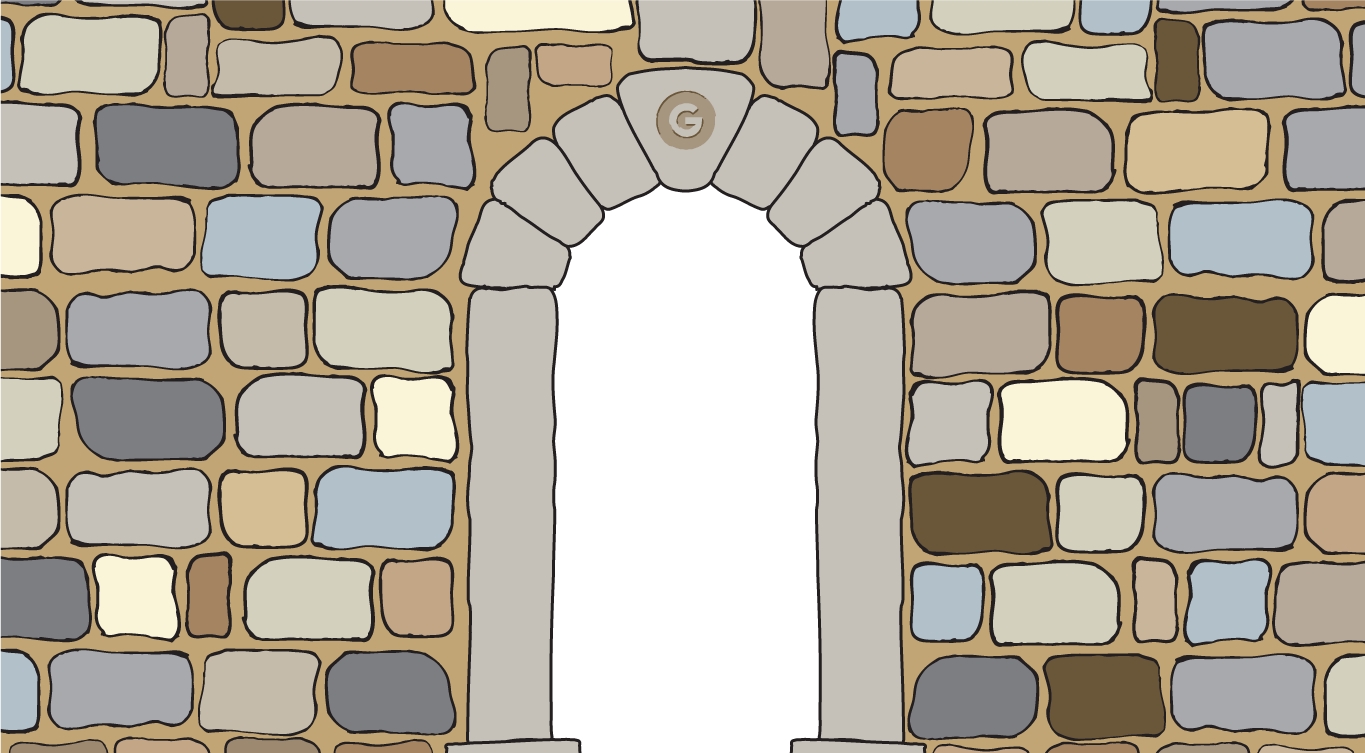
In this final post of the Building The Arch Series, think of the archway opening we have built through the wall. All the noise and distractions that have prevented people from finding your business.
We are to the point we can add one of the most critical pieces in an arch, which is the keystone. The keystone is the wedge at the top, upon which all the other components lean. It is the essential component of the arch system, and it is always the last piece set in place. Essentially, it locks all other components into position. For our purposes, Google My Business is that keystone.
Written By: Chad J. Treadway | May 29, 2020
Chad is a Partner and our Chief Smarketing Officer. He will help you survey your small business needs, educating you on your options before suggesting any solution. Chad is passionate about rural marketing in the United States and North Carolina. He also has several certifications through HubSpot to better assist you with your internet and inbound marketing.