If there's one universal truth in education, it's that crises don't schedule appointments. They burst through the door unannounced, usually during board meetings or parent-teacher conferences. From weather emergencies to social media firestorms, modern private schools face an evolving landscape of potential disruptions that can damage hard-earned reputations in mere hours.
At the fictional Greenfield Academy, Director of Admissions Jordan Grayson learned this lesson during what staff now ominously refer to as "The Tuesday Incident." What began as a minor transportation mishap escalated into a full-blown communication crisis when parents, lacking official information, created their own narrative across three social platforms before the administration even drafted its first email.
"We had emergency protocols for everything from tornados to intruders," Grayson admits, "but nothing comprehensive for communicating during a reputation crisis. The Tuesday Incident taught us that most schools are prepared for physical emergencies but woefully underprepared for information emergencies."
This framework provides the structure, protocols, and templates private schools need to navigate communication crises with clarity and confidence. Whether you're revamping existing procedures or building from scratch, these systems will help protect your school's most valuable asset—its reputation.

Written By: Adam Bennett | March 27, 2025
Adam is the president and founder of Cube Creative Design and specializes in private school marketing. Since starting the business in 2005, he has created individual relationships with clients in Western North Carolina and across the United States. He places great value on the needs, expectations, and goals of the client.
Let's face it—if your school marketing strategy still hinges on simply declaring, "We're the best!" you might as well be shouting into the void. Today's education consumers—both decision-makers and parents—have developed a sophisticated filter for marketing hyperbole. What they want instead is evidence. Social proof has become the gold standard for establishing credibility in the education market, serving as the digital equivalent of word-of-mouth recommendations that schools have traditionally relied upon.
As one experienced admissions director put it, "We can make claims about academic excellence all day, but when prospective families hear actual success stories from our community, that's when applications surge." This observation highlights a fundamental truth: in school marketing, showing is infinitely more effective than telling.
Written By: Adam Bennett | March 24, 2025
Adam is the president and founder of Cube Creative Design and specializes in private school marketing. Since starting the business in 2005, he has created individual relationships with clients in Western North Carolina and across the United States. He places great value on the needs, expectations, and goals of the client.
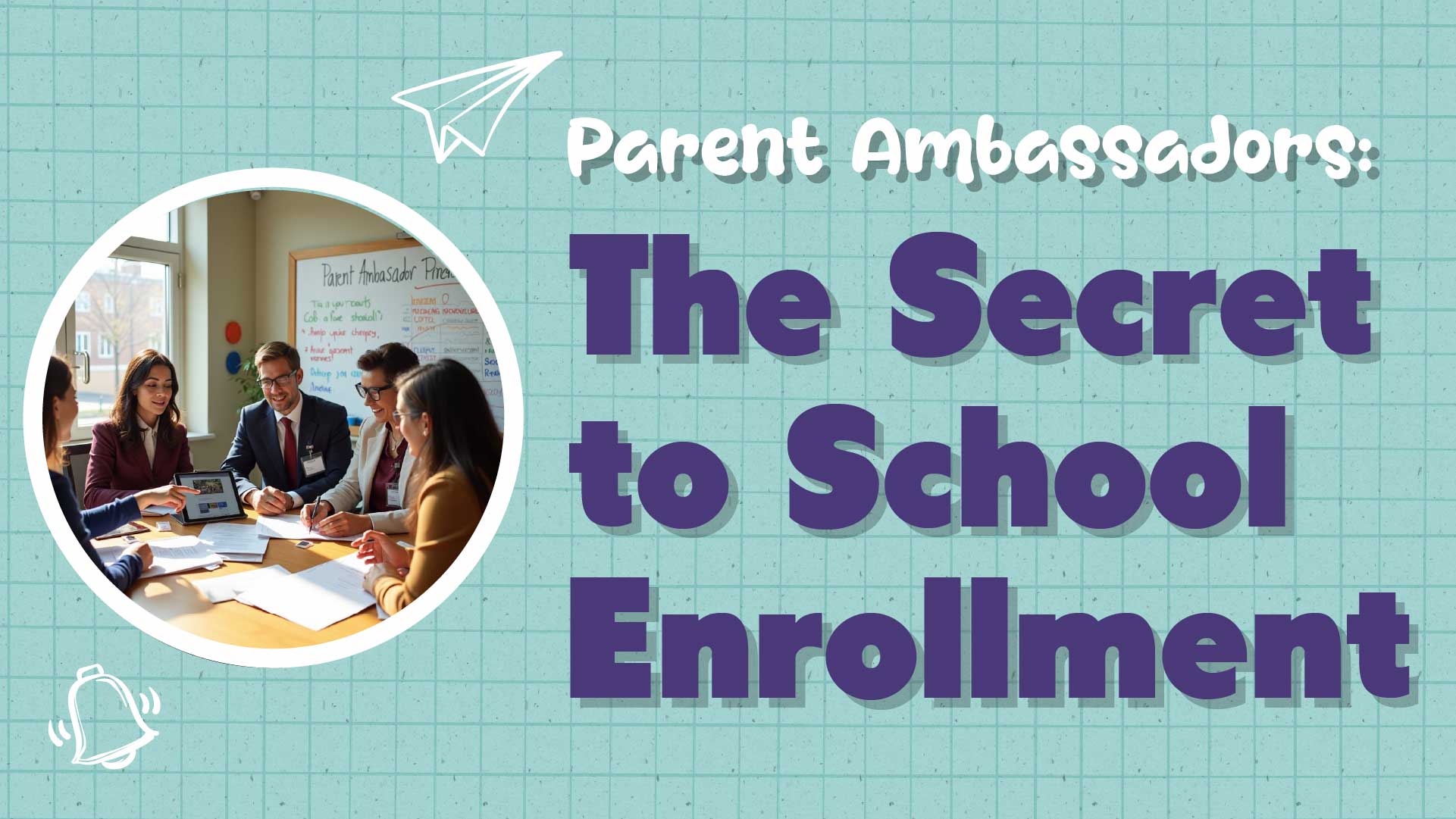
Let's face it—no marketing campaign, glossy brochure, or perfectly crafted website can compete with the authentic enthusiasm of a satisfied parent. In the competitive landscape of private education, word-of-mouth remains the gold standard for enrollment marketing. Parent ambassador programs formalize this powerful channel, transforming your most enthusiastic families into strategic partners in your school's growth.
At the fictional Greenfield Academy, Director of Admissions Jordan Grayson saw a substantial increase in applications after implementing a structured parent ambassador program. "Parents trust other parents far more than they trust us," Grayson admits with refreshing candor. "Our ambassadors provide that crucial peer perspective that resonates with prospective families."
Whether you're launching a new program or revitalizing an existing one, this guide provides the framework for success. And for private schools engaged in school marketing in Seattle, WA, where educational options abound, a strong ambassador program can be the competitive edge you need.
Written By: Adam Bennett | March 19, 2025
Adam is the president and founder of Cube Creative Design and specializes in private school marketing. Since starting the business in 2005, he has created individual relationships with clients in Western North Carolina and across the United States. He places great value on the needs, expectations, and goals of the client.
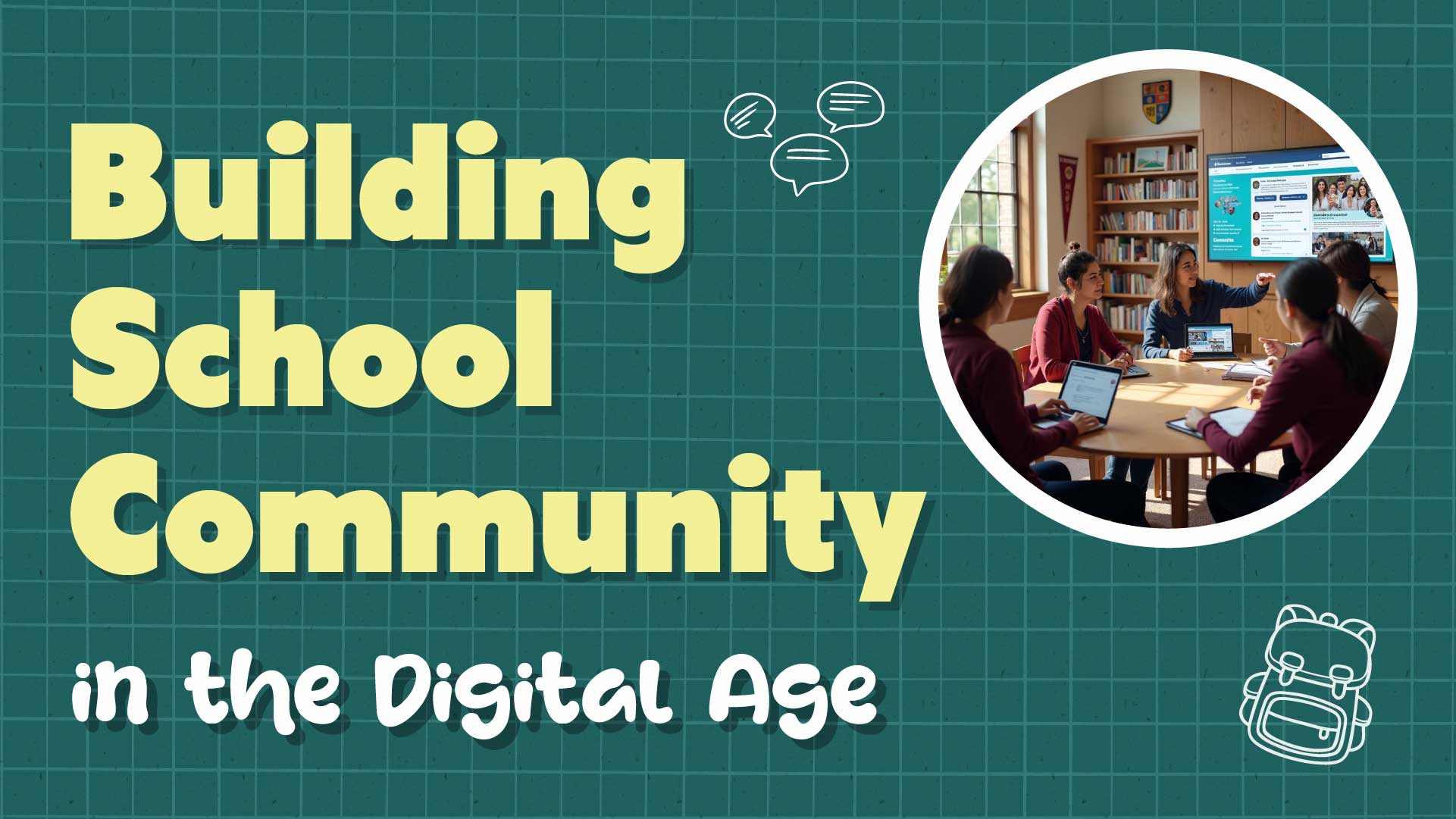
In an era where a child's first introduction to technology often happens before their first day of school, educational institutions face a curious paradox: Despite our unprecedented connectivity, building meaningful community connections has become increasingly challenging. The digital revolution that promised to bring us closer together has, in many ways, created new barriers between schools and their most important stakeholders.
Let's be honest—maintaining school community engagement through traditional methods alone is about as effective as teaching calculus with an abacus. It works, technically, but you're missing out on some rather significant innovations.
The statistics speak volumes: schools with strong online communities report almost a 1.4x higher parent satisfaction rates and nearly a 1.3x 28% increased alumni engagement. These aren't just feel-good metrics; they translate directly to enrollment stability, fundraising success, and institutional reputation. In competitive educational markets, from suburban districts to schools in New York City, NY, digital community building has become a non-negotiable aspect of educational excellence.
This guide will walk you through the essential frameworks, digital spaces, and engagement tactics that transform disconnected stakeholders into vibrant online communities. Whether you're starting from scratch or looking to revitalize existing efforts, you'll find actionable strategies that balance educational gravitas with the authentic connection that today's families expect.

Written By: Hannah Kilpatrick | March 17, 2025
Hannah Kilpatrick Cube Creative DesignHannah Kilpatrick graduated from Western Carolina University in 2021 with a Bachelor of Science in Communication with a Minor in Marketing and a Concentration in Public Relations. She has been around social media since its creation. (Meaning, she was in the first grade when Facebook became available to the general public.) As our very own professional Gen-Z, Hannah is a whiz when it comes to social media creation and paid advertising.