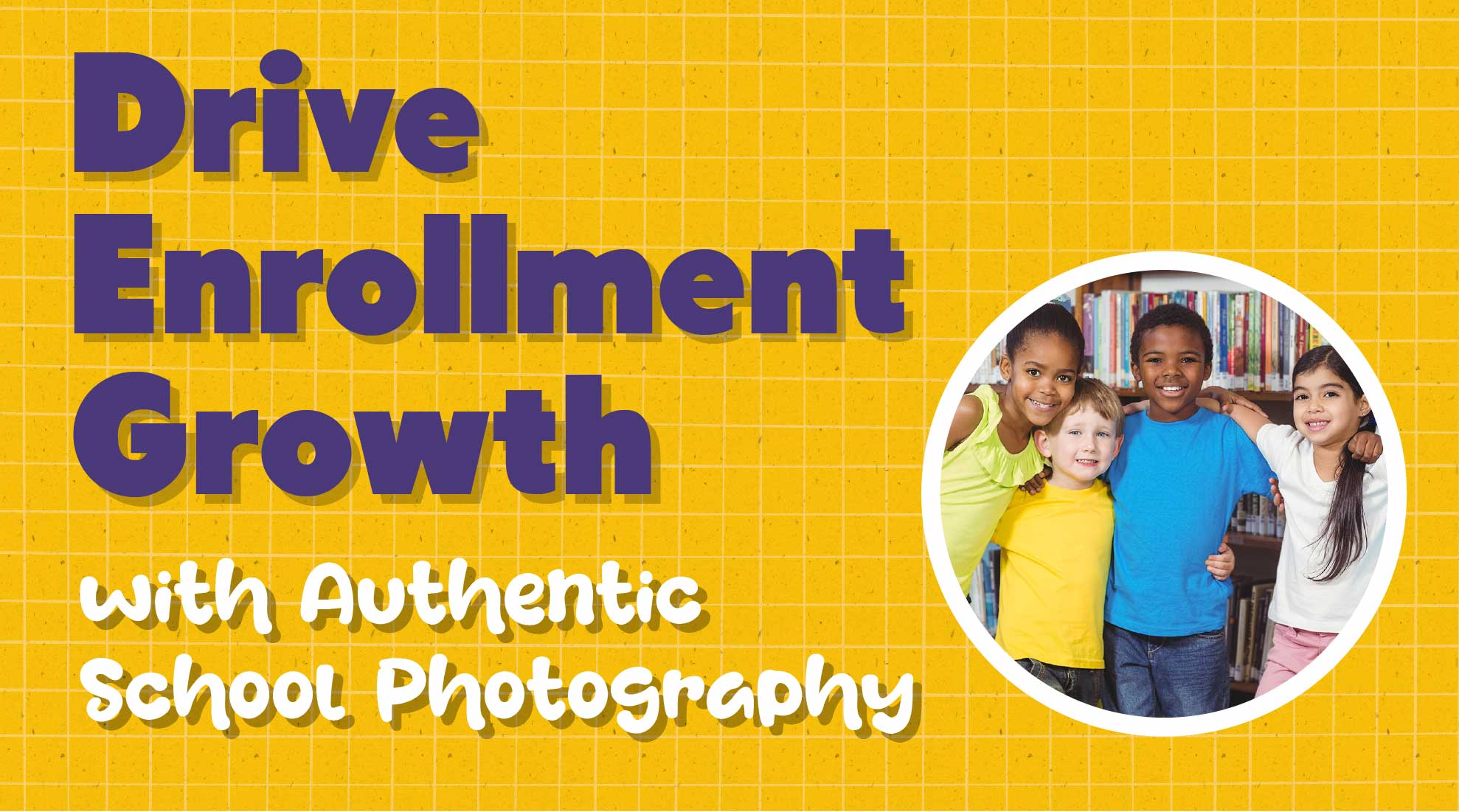
Here's a harsh truth that most private school marketing directors don't want to hear: your carefully curated stock photos aren't fooling anyone. Parents can spot a staged "diverse group of students having fun" from a mile away, and their trust evaporates faster than morning dew on artificial turf.
While you're busy perfecting your mission statement and polishing your curriculum descriptions, prospective families are making split-second decisions about your school based on a single factor: your photography. The average private school website conversion rate is less than 2%. However, by optimizing their websites for conversions, schools have increased their average conversion rates to over 5%.
The difference between schools that struggle to fill enrollment and those with waiting lists often comes down to one crucial element: authentic visual storytelling that connects emotionally with parents. In an era where "humans process visual information 60,000 times faster than text" (Source: Search Engine Journal), your photography isn't just decoration—it's your most powerful enrollment tool.
This guide will transform how you think about school photography, moving beyond pretty pictures to conversion-focused visual strategies that actually move enrollment numbers. Whether you're managing a $250,000 marketing budget or stretching $15,000 to cover everything, these research-backed techniques will help you capture images that turn website visitors into tour requests and tour requests into enrolled families.
Why Your Current School Photos Are Sabotaging Your Enrollment Goals
Let's start with some uncomfortable science. "A MIT study found that the human brain is able to process images in just 13 milliseconds, giving your customers a first impression of the quality of your brand" (Source: MIT News) before they've even read your school's name. That's faster than a hummingbird's wingbeat, and it's all the time you have to make or break a prospective family's interest.
The problem isn't that your photos are technically bad—most schools have figured out basic composition and lighting. The problem is that your photos are emotionally empty. They're showing parents what you want them to see instead of what they need to feel.
Parents don't choose schools based on rational feature comparisons. They choose based on emotional connection, and that connection starts with authentic visual storytelling.
But here's where most schools get it wrong: they confuse "polished" with "authentic." In 2024, the photography trends that convert best are moving away from overly staged perfection. "Portrait photography is set to become even more personal and emotional" (Source: The Influence Agency), with minimally edited images that showcase real skin textures, natural light, and unretouched moments becoming the new standard.
This shift toward authenticity isn't just aesthetic—it's strategic. Content strategists at Scaleflex said, "Visuals can evoke emotions and create a sense of connection with your audience. In particular, images with real human faces that show frustration or joy can help you connect your users emotionally with your brand." When parents see genuine moments of learning, discovery, and growth, they're not just evaluating your school—they're envisioning their child's future.
The concept of "visual hierarchy" becomes crucial here. Your photography should guide parents' attention to key conversion points, not just showcase your facilities. Every image should serve a purpose in moving families through your enrollment funnel, from initial interest to tour request to application submission.
School Photography Equipment and Setup That Won't Break Your Budget
Before we dive into strategy, let's address the elephant in the room: equipment. You don't need a $10,000 camera setup to create conversion-focused school photography, but you do need to understand when different tools make sense.
The Smartphone Reality Check
"Smartphone cameras have evolved into sophisticated imaging tools, rivaling traditional cameras in certain contexts." (Source: ProEDU) For schools operating on tight budgets, modern smartphones can absolutely deliver professional-quality results for social media, website headers, and candid classroom moments. The key is understanding their limitations and working within them.
Smartphones excel at:
- Natural light situations
- Close-up portraits and detail shots
- Social media content creation
- Spontaneous moment capture
- Quick turnaround documentation
They struggle with:
- Low-light environments (like gymnasiums)
- Fast-action sports photography
- Large group shots requiring precise focus
- Situations requiring telephoto capabilities
Budget-Conscious Equipment Recommendations
Under $1,000 Budget:
- Latest smartphone with portrait mode capabilities
- Smartphone gimbal for video content ($150-300)
- Portable LED light panel for indoor events ($100-200)
- Basic tripod and smartphone mount ($50-100)
- External microphone for video content ($100-200)
$1,000-$5,000 Budget:
- Entry-level DSLR or mirrorless camera ($500-800)
- Versatile 24-70mm lens ($400-600)
- 50mm prime lens for portraits ($200-400)
- Basic lighting kit with softboxes ($300-500)
- Memory cards, batteries, and accessories ($200-400)
$5,000+ Budget:
- Professional camera body ($1,500-3,000)
- Professional lens collection ($2,000-4,000)
- Professional lighting equipment ($1,000-2,000)
- Backup equipment and accessories ($500-1,000)
Lighting Fundamentals for School Environments
Most school photography happens in challenging lighting conditions. Fluorescent classroom lighting, dark gymnasiums, and mixed indoor-outdoor situations require specific approaches.
Natural light is best for photography, so if you're inside, try to take photos near windows with the shades open. Position students at 45-degree angles to windows for the most flattering light, and avoid shooting with windows directly behind subjects unless you're intentionally creating silhouettes.
For outdoor photography, the golden hours – shortly after sunrise or before sunset – offer the best lighting conditions, while overcast, cloudy days present the most consistent lighting.
Schedule important campus photography sessions during these optimal times rather than fighting the harsh midday sun.
Composition Basics That Convert
Photography experts with Essential Photo said, "A good tip is to follow the rule of thirds when preparing to take a photo. This means photographing so the image can be equally divided into thirds, and the student is at the intersection of these dividing lines." This creates more dynamic, visually interesting compositions that hold the viewer's attention longer.
Beyond the rule of thirds, consider these conversion-focused composition techniques:
- Leading lines: Use hallways, walkways, and architectural elements to guide viewers' eyes toward key subjects
- Framing: Use doorways, windows, and natural elements to frame your subjects
- Depth of field: Use shallow depth of field to isolate subjects and create professional-looking backgrounds
- Perspective: "Zoom with your feet, not with your phone! A camera with a great lens can zoom in, of course, but a smartphone photo quickly loses resolution quality when using fingers to zoom" (Source: SocialSchool4EDU)
Capturing Your School's Authentic Story Across Every Space
The most successful school photography programs understand that different environments require different approaches. Your strategy for classroom photography should differ dramatically from your approach to athletic events, and both should align with your overall enrollment goals.
Classroom Photography That Shows Learning in Action
Stop with the "teacher pointing at whiteboard while students stare adoringly" shots. Parents want to see their kids actually engaged, not performing for your camera.From collaborative learning interactions to emotional sports victories, these authentic visuals resonate more deeply with parents who want evidence of real engagement rather than performative poses. The most successful school visual storytelling focuses on documenting natural, unguarded moments that collectively illustrate the true student experience and school culture. By prioritizing authenticity over perfection, photographers can create an honest visual narrative that meaningfully connects with families and prospective community members.
Focus on capturing:
- Students actively problem-solving and collaborating
- Individual moments of discovery and understanding
- Technology integration in natural learning contexts
- Teacher-student interactions that show personalized attention
- Student work and creativity in progress
Excellence in photography hinges primarily on anticipation and presence. What separates standard images from memorable visual storytelling is the photographer's ability to anticipate meaningful moments before they occur. This requires not only technical proficiency but also developed intuition about when and where significant interactions might happen. Successful visual documentarians develop a sixth sense for positioning themselves strategically, arriving well before scheduled events and remaining after official conclusions. The most impactful images often emerge during transitions between formal activities—those unguarded moments when subjects forget they're being observed. Mastering this aspect of photography requires developing both patience and predictive instincts that come only through dedicated practice and careful observation of human behavior patterns.
Outdoor and Athletic Photography
Your campus photography should showcase the full educational experience, not just pretty buildings. Marketing trend analysts with The Influence Agency said, "Drone photography never left, but it's soaring back into the spotlight in 2025. As drone technology becomes bigger, better, and more accessible, brands are turning to aerial images to highlight scale, showcase unique angles, and capture dynamic movement."
For athletic photography, focus on:
- Team unity and school spirit
- Individual achievement and effort
- Coaching relationships and mentorship
- Spectator engagement and community support
- Facilities that enable student success
Seasonal considerations matter enormously for admissions photography. Your fall photos should capture the energy of new beginnings, while spring images should showcase growth and achievement. Plan your major photography sessions around admissions deadlines, ensuring fresh content when prospects are most actively researching.
Special Events and School Culture
Strategic school imagery requires intentional composition based on distribution channels. Effective visual storytelling begins with the end use in mind, as different platforms demand different approaches.
- Web galleries benefit from horizontal layouts that accommodate screen dimensions, while social media thrives on close-up emotional moments that create an immediate connection.
- Print publications require higher resolution and compositions that allow for potential cropping.
When documenting institutional traditions and milestone events, photographers should move beyond simple documentation to capture moments that embody the school's values and community spirit. These images serve as powerful evidence of the institution's unique identity, conveying more authenticity than any written description could achieve.
By approaching each shooting opportunity with clear intention about both technical requirements and storytelling goals, photographers transform from mere documentarians to essential brand storytellers.
Avoid over-documentation fatigue by being selective. One powerful image of genuine emotion during a school tradition is worth dozens of routine event photos. Focus on moments that demonstrate your school's values in action, not just its activities.
Permission and privacy considerations are crucial. "As long as parents are notified of the purposes for which the photographs or images will be used, there will be no conflict with data protection legislation." (Source: National Education Union) Establish clear policies and communicate them consistently to avoid complications later.
From Shutter Click to Enrollment Inquiry: The Photography Conversion Funnel
Here's where most schools completely miss the mark: they treat photography as decoration instead of conversion optimization. Every image on your website should guide prospective families toward a specific action, whether that's requesting a tour, downloading information, or submitting an application.
Homepage Heroes That Convert
Your homepage hero image is your most valuable real estate. Nielsen Norman Group's research reveals that users often decide to stay on a webpage for 10-20 seconds. This is where the power of impactful product images comes into play; clear, visually appealing images can communicate a product's value proposition almost instantly.
Test different approaches:
- Students actively engaged in learning vs. campus beauty shots
- Individual student focus vs. group activities
- Academic achievement vs. social connection
- Traditional classroom settings vs. innovative learning spaces
"Landing pages in the education industry see 6x more traffic from mobile devices, but desktop converts 17.6% better." (Source: Unbounce) This means your hero images need to work effectively on both mobile and desktop, with clear focal points that remain impactful when scaled down.
Program-Specific Photography Strategy
Different academic programs require different visual approaches to maximize conversion potential. Your arts program photography should emphasize creativity and individual expression, while STEM program images should showcase innovation and problem-solving.
For academic programs, capture:
- Students using advanced equipment and resources
- Collaborative project work and peer learning
- Teacher expertise and individual attention
- Real-world applications of classroom learning
- Student work and achievements
Athletic program photography should emphasize:
- Team culture and character development
- Individual improvement and achievement
- Coaching quality and mentorship
- Facilities and competitive opportunities
- Community support and school spirit
Call-to-Action Integration
FlippingBook stated, "Images shared on social media platforms should have links embedded that allow users to buy the product by clicking on the image." The same principle applies to school websites—your photography should naturally lead to conversion actions.
Position your strongest images adjacent to:
- Tour request forms
- Information download offers
- Application deadline reminders
- Contact information for admissions staff
- Social proof elements like testimonials
Create visual narratives that build toward action. A sequence of images showing a student's journey from confused to confident creates emotional investment that translates to enrollment interest.
Strategic Photo Planning That Aligns with Your Enrollment Calendar
Most schools approach photography reactively—scrambling to capture events as they happen instead of proactively building a content library that supports enrollment goals. Successful school marketing requires a strategic, calendar-driven approach to photography that aligns with your admissions timeline.
Fall Photography Priorities
Fall is your foundation-building season. Capture the energy of new beginnings, the excitement of returning students, and the traditions that define your school culture. This content will carry you through the winter admissions season when outdoor photography becomes challenging.
Focus on:
- Back-to-school energy and new student integration
- Fall sports in action with engaged spectators
- Classroom learning at its most dynamic
- School traditions and community events
- Campus beauty during peak seasonal appeal
Winter and Spring Photo Strategy
Bona Parle's findings suggest that there's a growing fascination with lesser-appreciated seasons and natural subjects in photography. Once considered off-peak periods for outdoor photography, times like winter present unique opportunities to capture nature's raw, stark beauty.
Spring photography builds toward decision time. Parents are comparing final options, and your images should showcase growth, achievement, and the outcomes of your educational approach. Document:
- Student presentations and project exhibitions
- Spring sports and outdoor activities
- Graduation preparation and senior achievements
- Alumni success stories and testimonials
- Summer program previews and opportunities
Building a Sustainable Photo Library
Your school photography has a shelf life. Students graduate, faculty change, and facilities are updated. Plan for a systematic refreshing of your visual content.
Create a rotation schedule:
- Hero images: refresh every 6-12 months
- Program-specific photography: annual updates
- Faculty headshots: biannual updates
- Campus beauty shots: seasonal rotation
- Student life photography: continuous capture
Budget allocation should reflect this timeline. Rather than spending your entire photography budget in one season, distribute investment across the academic year to maintain fresh, current content.
Proving Your Photography Investment Actually Works
The most successful school marketing directors understand that every expense must be justified with measurable results. Photography is no exception. The experience after a form submission also impacts conversions. Ensure prospective families who inquire or submit applications receive excellent service through quick response times and helpful follow-ups.
Key Performance Indicators for School Photography
Track these metrics to demonstrate photography ROI:
Website Performance:
- Page engagement time on photo-heavy pages
- Bounce rate improvements after photo updates
- Tour request conversion rates by page
- Mobile vs. desktop engagement differences
Social Media Metrics:
- Engagement rates on original vs. stock photography
- Share and save rates for different photo types
- Story completion rates for photo-heavy content
- Click-through rates from social to website
Lead Quality Improvements:
- Tour attendance rates from photo-driven inquiries
- Application completion rates by traffic source
- Parent feedback on school communication quality
- Time from inquiry to enrollment decision
A/B Testing Your Visual Content
"DueMaternity.com, an online retailer of items for pregnant women and new mothers, boosted their conversion rate by 27% thanks to 360° rotating images." (Source: CXL) While you're probably not implementing 360° photography, the principle applies: test different visual approaches to find what resonates with your audience.
Test these elements:
- Hero image subjects (students vs. campus vs. activities)
- Image style (professional vs. candid vs. artistic)
- Color palette consistency across the site
- Photo placement relative to calls-to-action
- Mobile image optimization approaches
Budget Justification Strategies
When defending your photography budget, focus on cost per conversion rather than cost per photo. The median conversion rate for education landing pages is 8.4%, which is roughly 27% higher than the 6.6% baseline for all industries. If your current conversion rate is below this benchmark, improved photography represents a clear opportunity for improvement.
Calculate:
- Cost per tour request before and after photography updates
- Revenue per enrolled student is influenced by visual content
- Time savings from professional photography vs. DIY approaches
- Competitive advantage value in your local market
- Long-term asset value of a quality photography library
Present photography as an investment in sustainable enrollment growth, not just a marketing expense. Quality visual content continues generating value long after the initial investment, unlike advertising spend that stops working the moment you stop paying.
Final Thoughts
The connection between quality school photography and enrollment success isn't coincidental—it's scientific. In an educational marketplace where parents have endless options and limited attention, your visual storytelling becomes the deciding factor between consideration and dismissal.
The schools that thrive in today's competitive environment understand that photography isn't just about documentation—it's about conversion optimization. Every image you capture should serve a strategic purpose in moving prospective families through your enrollment funnel, from initial awareness to final enrollment decision.
Your photography budget isn't a marketing expense—it's an investment in sustainable enrollment growth. Quality visual content continues generating value long after the initial investment, unlike advertising spend that stops working the moment you stop paying.
Ready to transform your school's photography from pretty pictures to powerful conversion tools? The strategies in this guide provide the foundation, but implementation success depends on understanding your unique school community and enrollment goals.
Contact me to discuss how these photography strategies can be customized for your school's specific needs and budget constraints. Let's create visual content that doesn't just look good—it works.
How often should we update our school's photography?
The refresh frequency depends on your content type and budget. Hero images and homepage photography should be updated every 6-12 months to maintain freshness and relevance. Program-specific photography should be refreshed annually, while faculty headshots need updating every 2-3 years or when significant staff changes occur.
For budget-conscious schools, focus on seasonal rotation of existing content rather than complete overhauls. Create a systematic approach where you refresh 25% of your photography each quarter, ensuring continuous improvement without overwhelming expenses.
Should we hire a professional photographer or handle photography in-house?
The decision depends on your budget, timeline, and quality requirements. Hiring a professional product photographer or company is low-hanging fruit for any e-commerce business. It won't break your budget, and it's guaranteed to yield positive results. The same principle applies to school photography.
Professional photography makes sense when you need:
- High-stakes hero images for website and marketing materials
- Consistent brand aesthetic across multiple platforms
- Technical expertise for challenging lighting situations
- Efficient capture of large-scale events or groups
In-house photography works well for:
- Daily social media content creation
- Spontaneous moment capture
- Budget-conscious regular content updates
- Building internal team capabilities
How do we handle photo permissions and privacy concerns?
The DfE advises that schools and local authorities are free to develop and implement their own policies regarding the use of cameras and videos by parents/carers at school events. Establish clear, written policies that address:
- Annual photo permission forms for all students
- Specific consent for marketing and promotional use
- Opt-out procedures for families with privacy concerns
- Social media posting guidelines and restrictions
- Third-party photographer agreements and limitations
Communicate these policies clearly during enrollment and reinforce them regularly. When in doubt, err on the side of caution and obtain specific permission rather than assuming general consent.
What's the most important type of photography for private school marketing?
Authentic classroom photography showing learning in action provides the highest conversion value. Parents want to see their children engaged, challenged, and supported in their educational environment. Teachers are there to teach, and the students are there to learn, but you have a mission — to capture the essence of your school.
Prioritize your photography budget in this order:
- Authentic classroom and learning environment photography
- Student life and community interaction images
- Faculty and staff portraits showing approachability
- Campus and facilities photography
- Special events and traditional documentation
How do we create a consistent visual style across all school photography?
Develop a simple brand photography guide that addresses:
- Color palette preferences and restrictions
- Lighting style (natural vs. dramatic vs. soft)
- Composition guidelines (close-up vs. wide shots)
- Subject matter priorities and restrictions
- Editing style and filter consistency
Train all staff photographers on these guidelines and provide examples of approved vs. problematic images. When you have the time, a little editing can be beneficial. Clean up background noise, add a filter for a consistent "look" (especially for Instagram), and consider adjusting brightness, color balance, contrast, and/or saturation.
Consider investing in preset editing filters that can be applied consistently across different photographers and devices to maintain visual coherence.